Chapter 2 – EVERYONE SAW IT
I made it into the manager’s office before my legs finally gave up.
I sat in the chair behind the desk and pressed a hand against my chest.
The pain was worse now.
Not unbearable.
But deep.
Every breath reminded me of what had happened.
Mr. Harris came in a moment later.
He closed the door.
“Lena.”
“I’m okay.”
“You don’t have to say that.”
I looked at him.
He crouched slightly so we were at eye level.
“Are you dizzy?”
“A little.”
“Any trouble breathing?”
“Not really.”
He nodded.
“We’re going to take care of you.”
I looked toward the door.
“What about him?”
Mr. Harris sighed.
“He’s still outside.”
“Is he leaving?”
“I asked him to.”
“And?”
“He said no.”
I closed my eyes.
Of course he had.
Richard Cole wasn’t used to being told no.
Mr. Harris pulled a chair closer.
“I’ve called the owner.”
My eyes opened.
“You did?”
“Yes.”
That made me nervous.
The restaurant had always been my workplace, but I cared about it more than that.
I had worked there for nearly four years.
I had learned the regular customers’ names.
I knew which cook liked extra coffee before the dinner rush.
I knew which table caught the afternoon sunlight.
I knew which elderly couples wanted quiet service and which families needed extra time.
The restaurant wasn’t perfect.
No workplace was.
But it had become part of my life.
And I knew incidents like this could become complicated when wealthy customers threatened to take their business elsewhere.
“Is he threatening to sue?”
Mr. Harris gave me a tired smile.
“He’s threatening everything.”
I almost laughed.
It hurt my chest, so I stopped.
“What exactly does he want?”
“He wants you fired.”
I stared at him.
“For what?”
“He says you deliberately delayed his meal and then embarrassed him.”
I couldn’t believe it.
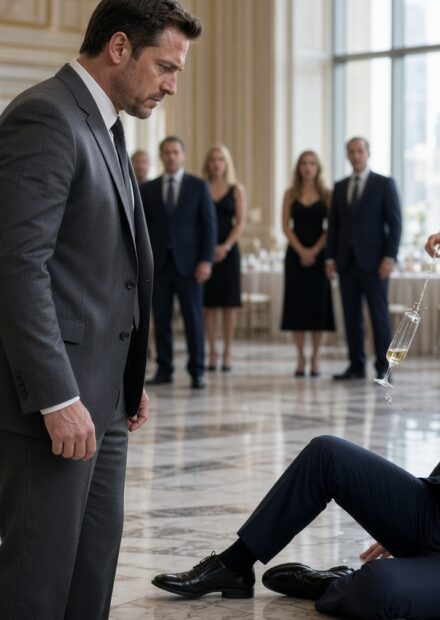
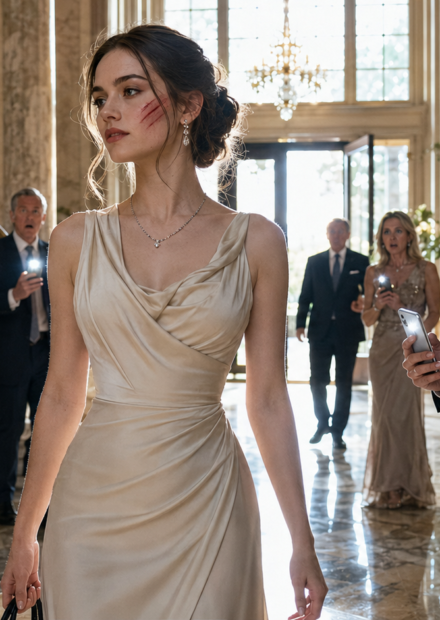
“He kicked me.”
“I know.”
“He kicked me because his steak was late.”
“I know.”
“Then how am I the one who embarrassed him?”
Mr. Harris didn’t answer.
He didn’t need to.
The answer was obvious.
People like Richard didn’t measure right and wrong by what happened.
They measured it by whether their authority had been challenged.
I looked down at my hands.
They were still shaking.
“I should have just walked away.”
Mr. Harris shook his head.
“No.”
“I could have asked another server.”
“You didn’t do anything wrong.”
“I should have known he was angry.”
“Being angry doesn’t give anyone permission to hurt you.”
I nodded.
But part of me still wondered whether I could have prevented it.
That is the strange thing about being mistreated.
Even when someone else is clearly responsible, your mind starts searching for the moment you might have done something differently.
Maybe I should have spoken softer.
Maybe I should have apologized again.
Maybe I should have brought bread.
Maybe I should have stayed away from his table.
Maybe.
Maybe.
Maybe.
Mr. Harris seemed to read my thoughts.
“Don’t do that to yourself.”
I looked at him.
“Do what?”
“Take responsibility for another man’s behavior.”
I looked away.
Outside the office, voices had grown louder.
Not shouting.
Just conversation.
People were talking about what they had seen.
The staff was moving carefully through the dining room.
No one was laughing anymore.
No one was pretending dinner was normal.
I heard Richard’s voice.
“I’m a customer.”
Then the older man’s voice answered.
“So are we.”
I smiled despite myself.
Mr. Harris heard it too.
“He’s still arguing.”
“Will he leave?”
“I think so.”
But he didn’t.
A few minutes later, Mr. Harris returned to the office.
“He wants to speak to you.”
“No.”
Mr. Harris nodded.
“I told him no.”
That surprised me.
“Thank you.”
“You don’t owe him a conversation.”
I looked at him.
“Do I have to go home?”
“Not until you decide.”
“I don’t want to give him the satisfaction of making me leave.”
“Then don’t.”
Those words gave me strength.
I stood slowly.
My chest still hurt, but I could breathe normally.
“I want to go back out there.”
Mr. Harris frowned.
“You sure?”
“No.”
I almost smiled.
“But I want to.”
He opened the door.
The dining room had changed.
The people who had stood were still standing in small groups.
Some had already spoken to Mr. Harris.
Some were writing down their contact information.
One woman had left her table to bring me a glass of water.
I took it.
“Thank you.”
She squeezed my hand.
“I’m sorry.”
That was all.
But it mattered.
Then Richard saw me.
His expression tightened.
“There she is.”
The entire room went quiet again.
I stopped.
Mr. Harris stood beside me.
Richard looked at him.
“Can we discuss this like adults?”
Mr. Harris answered, “We can.”
“Then send these people back to their tables.”
“They’re free to stand.”
Richard scoffed.
“This is becoming a circus.”
The older man near the window spoke.
“No, sir.”
Richard looked at him.
“This is a dining room.”
The old man gestured around.
“And these people are your witnesses.”
Richard’s jaw tightened.
He looked at me.
“I lost my temper.”
I said nothing.
“I shouldn’t have done it.”
Still nothing.
“I apologize.”
I finally spoke.
“Why?”
His eyes narrowed.
“What?”
“Why are you apologizing?”
“Because I was wrong.”
“No.”
I surprised myself with how steady my voice sounded.
“You’re apologizing because everyone saw you.”
A murmur moved through the room.
Richard’s face reddened.
“That is not true.”
“Then you would have apologized before you knew everyone was watching.”
He stared at me.
I didn’t look away.
For the first time since the kick, I felt something other than fear.
I felt clarity.
I wasn’t responsible for making him comfortable.
I wasn’t responsible for protecting his reputation.
I wasn’t responsible for making his mistake disappear.
Mr. Harris stepped forward.
“Your meal is canceled.”
Richard stared at him.
“You’re refusing to serve me?”
“Yes.”
“You know what this could cost you?”
“Yes.”
Richard pulled out his phone.
“I’ll make sure this restaurant loses every corporate account my company controls.”
Mr. Harris looked at him.
“If that is the price of protecting an employee, we’ll pay it.”
The room went completely still.
Richard lowered his phone.
“You’re making a serious mistake.”
Mr. Harris nodded.
“Maybe.”
The older man near the window stood straighter.
“I don’t think he is.”
Richard looked around.
One by one, people had started sitting down again.
But they weren’t sitting because they agreed with Richard.
They were sitting because they had decided the situation was no longer his to control.
And then something happened that I will never forget.
The woman who had given me water raised her glass.
“To Lena.”
Someone else raised theirs.
Then another.
Then another.
I stood there embarrassed, overwhelmed, and suddenly very close to tears.
Richard looked around the room.
He had wanted everyone to notice him.
Now everyone was looking at someone else.
Me.
Not because of my uniform.
Not because I was important.
Because I had been hurt.
And because they had decided that mattered.
Richard finally turned toward the door.
But before he reached it, his phone rang.
He glanced at the screen.
His expression changed.
He answered.
“Hello?”
He listened.
Then he looked back at me.
Whatever the caller had said, it had clearly changed something.
Richard’s face had gone pale.
He ended the call without saying goodbye.
The room watched him.
He put the phone into his pocket.
For the first time, he looked less like an angry executive and more like an ordinary man who had just realized that actions have consequences.
But he still didn’t leave.
Instead, he looked at me and said quietly, “You don’t understand what you’ve started.”
I stared at him.
And somehow, I believed him.
I just didn’t yet understand what he meant.