THE HOUSE WAS MINE, AND THEY WERE WAITING FOR ME TO DIE
Chapter 5 – WHAT BELONGED TO ME
The move-out agreement was signed on January 4.
Liam read every page.
Harper refused to sit in the room while he signed it.
She stayed upstairs, and I heard her moving furniture as if she were trying to prove that the house still belonged to her.
When Liam finished, he placed the pen on the table.
“Is this enough?”
“Yes.”
He looked at me.
“Mom, I know this isn’t what you wanted.”
I smiled faintly.
“I wanted you to be happy.”
“I am happy.”
“Then you have nothing to fear from leaving.”
He looked down.
I wanted to tell him that he could still come home.
That the door would always be open to him.
But I was no longer sure what I meant by home.
I had always thought it meant a place where someone was welcome.
Now I understood that it also meant a place where someone could feel safe.
And I needed to feel safe in mine.
The next few weeks were uncomfortable.
Harper complained about the agreement.
She complained about the January deadline.
She complained about the fact that I had asked her to stop inviting people over.
She complained about the fact that I had moved David’s chair back to the exact place where he had always kept it.
She complained that the house felt cold.
I did not respond to every complaint.
I began taking walks in the morning.
I joined a small book club at the library.
I called my friend Evelyn, who had been asking me for months to come over for lunch.
I started cooking smaller meals again.
Sometimes I made enough for two, because old habits were hard to break.
Then I remembered that I was the only person eating.
And I learned to make just enough for myself.
Liam began looking for an apartment.
He showed me photographs of places online.
Some were too expensive.
Some were too small.
Some were far from his work.
I helped him compare prices.
I answered his questions.
I did not offer to let him stay longer.
That was the hardest part.
Every time he looked tired, I wanted to tell him he could stay.
Every time Harper complained about the cost of moving, I wanted to offer money.
But I stopped myself.
Not because I wanted them to suffer.
Because I wanted them to build a life that did not depend on my surrender.
One evening, Liam came home from work and found me in the den.
I was sitting in David’s chair.
He stopped in the doorway.
“I haven’t seen you sit there in years.”
I looked up.
“I thought I’d try it.”
He smiled faintly.
“Does it still smell like Dad?”
I laughed softly.
“A little.”
He came in and sat on the sofa.
For a while, neither of us spoke.
Then he said, “I remember when Dad died.”
I looked at him.
“So do I.”
“I was so angry.”
“About what?”
“Everything. That he was gone. That you were alone. That I couldn’t fix it.”
I lowered my eyes.
“You were young.”
“I was thirty-two.”
“You were still my son.”
He nodded.
“I think I wanted to believe that if I could make you happy, I wouldn’t have to feel guilty.”
I looked at him.
“Guilty about what?”
He stared at his hands.
“About leaving.”
I said nothing.
He continued.
“After I married Harper, I felt like I was supposed to build my own life. But every time I came here, it felt like I was still a child. And then she started talking about the house, and I just… I didn’t know how to stop it.”
I took a breath.
“You knew it was wrong.”
He nodded.
“Yes.”
“Then why didn’t you?”
He looked up.
“Because I was afraid.”
The answer hurt.
Not because it was unexpected.
Because it was honest.
I had spent months thinking my son was choosing Harper over me.
Perhaps he had been choosing the path that required the least courage.
But the effect had been the same.
I reached for his hand.
“Liam, I can’t be responsible for your fear.”
“I know.”
“You have to learn how to stand beside the people you love, even when it’s uncomfortable.”
He squeezed my fingers.
“I know.”
I looked at him.
“Do you?”
He nodded.
“I do now.”
I wanted to believe him.
This time, I let myself hope.
Not because he had promised.
Because he had finally begun to understand what his choices had cost.
Harper’s attitude changed when she realized I was not going to reverse the agreement.
At first, she became colder.
Then she became careful.
She stopped moving my belongings.
She stopped inviting people without asking.
She even returned my blue towels to the kitchen.
I found them folded neatly in a drawer.
I did not know whether the gesture was sincere or strategic.
I did not ask.
I had learned that not every improvement needed to be rewarded with trust.
Trust was something that had to be rebuilt.
And I was no longer willing to rebuild it alone.
One Saturday afternoon, I was in the kitchen when Harper came downstairs.
“Can we talk?” she asked.
I turned off the faucet.
“About what?”
She hesitated.
“The house.”
I waited.
She pulled out a chair and sat.
I remained standing.
“I know you think I was trying to take it from you.”
I looked at her.
“Were you?”
She frowned.
“I never said that.”
“You talked about renovating it.”
“We were discussing possibilities.”
“You described it as yours.”
She looked down.
“I shouldn’t have said that.”
“No.”
She folded her hands.
“I was excited about our future.”
“I understand.”
“Do you?”
I looked at her.
“Yes. I understand wanting a home. Wanting stability. Wanting something that belongs to you.”
Her expression softened slightly.
“Then why are you treating us like we’re strangers?”
I felt a quiet sadness.
“Because you treated me like I was in the way.”
She looked up.
I continued.
“You came into my home and began changing things without asking. You invited people and expected me to feed them. You talked about my future as if it were a resource you were waiting to receive.”
Her eyes filled with tears.
I was not sure whether they were genuine.
But I let her speak.
“I never meant to hurt you.”
“I believe that you may not have meant to hurt me. But you did.”
She wiped her cheek.
“Liam loves you.”
“I know.”
“He’s been so upset.”
“I know.”
“Can we just move forward?”
I looked at her.
“Moving forward doesn’t mean pretending nothing happened.”
She nodded slowly.
“What do you want from me?”
I thought about it.
“Respect.”
She looked away.
“Anything else?”
“Honesty.”
She nodded.
“And space.”
Her face tightened.
“I understand.”
I hoped she did.
But I knew that understanding was not the same as changing.
Only time would show me which one she was capable of.
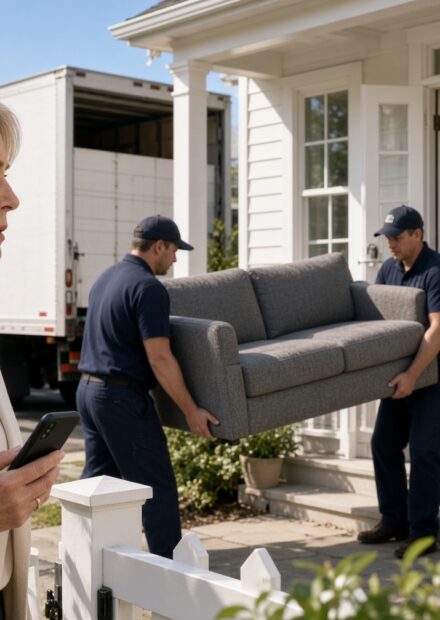
On January 28, Liam and Harper moved into their apartment.
The truck arrived at eight in the morning.
I stood on the porch while the movers carried boxes through the front door.
Harper had more belongings than I realized.
Boxes of dishes.
Decorations.
Clothing.
Furniture she had purchased during the months she lived with me.
She looked around the house one last time.
“I can’t believe we’re leaving.”
I did not answer.
She turned toward me.
“Are you happy?”
I looked at her.
“I’m relieved.”
She blinked.
The honesty seemed to surprise her.
Then she looked away.
Liam came out carrying the last box.
He set it inside the truck.
Then he came toward me.
I held out my arms.
He hugged me tightly.
For a moment, I felt the old ache.
My son.
My boy.
The child who had once fallen asleep against my shoulder.
The man who had hurt me without fully understanding what he was doing.
I held him.
“I love you,” he whispered.
“I love you too.”
He pulled back.
“Can I come for dinner next week?”
I smiled.
“Of course.”
“Just me.”
I laughed softly.
“Just you.”
He kissed my forehead.
Then he walked toward the truck.
I watched until the vehicle disappeared at the end of the street.
The house became quiet.
Not empty.
Quiet.
There was a difference.
I went inside.
The kitchen was mine again.
The cream towels were gone.
My blue towels hung beside the oven.
The coffee machine sat in its old place.
David’s chair stood in the den.
I touched its worn leather armrest.
For the first time in months, I felt the house settle around me.
I had not lost my son.
I had lost the illusion that loving him meant allowing him to make every decision for me.
And that was not the same thing.
A week later, I met Margaret at her office.
The revised documents were ready.
I sat across from her desk while she explained the changes.
I had decided to establish a trust that would allow me to remain in the house for the rest of my life. I would retain control over the property and my finances. The documents made my wishes clear and prevented anyone from assuming that living in my home gave them a claim to it.
I had also updated my will.
Liam would still receive an inheritance.
But the house would not simply become available for him to claim while I was alive.
My wishes would be documented.
My home would remain mine.
Margaret placed the final papers in front of me.
“Have you spoken to Liam?”
“Yes.”
“And does he know you’ve changed your plans?”
“He knows I’m taking steps to protect myself.”
Margaret nodded.
“Good.”
I signed the documents.
My hand trembled slightly.
Not from fear.
From the weight of the decision.
When I finished, I looked at the papers.
For years, I had believed that being a good mother meant leaving everything I owned to my child.
Now I understood that I could love my son and still decide what happened to my property.
I could help him without sacrificing my security.
I could leave him something without giving him the right to expect it.
I could be his mother without becoming his financial plan.
Margaret placed the documents in a folder.
“That’s done.”
I nodded.
I felt lighter.
Not happy.
Not triumphant.
Just lighter.
That evening, Liam came to dinner.
He arrived alone, carrying a small paper bag.
“What did you bring?” I asked.
“Dessert.”
I looked inside.
A slice of chocolate cake from the bakery near his apartment.
I smiled.
“Your father used to love that place.”
“I remember.”
We sat at the dining room table.
I made roast chicken, vegetables, and rice.
A simple meal.
No elaborate menu.
No guests.
No one expecting me to perform.
We ate slowly.
Liam told me about his new apartment.
The heating system was noisy.
The kitchen was small.
The upstairs neighbor played music late at night.
I listened.
I asked questions.
For the first time in months, our conversation was not about Harper’s demands or the house.
It was about his life.
And mine.
After dinner, he helped me clear the dishes.
We stood at the sink together.
“Mom,” he said.
“Yes?”
“I wanted to ask you something.”
I waited.
“Are you changing your will?”
I turned off the faucet.
He looked embarrassed.
“I know you don’t have to tell me.”
“No.”
“I just…”
I waited.
He took a breath.
“I want to understand.”
I dried my hands.
“I’m changing some of my estate planning.”
He nodded.
“Okay.”
“I want to be clear that this isn’t about punishing you.”
“I know.”
“I need to protect my home and my future.”
“I know.”
“And I need you to understand that I will decide what happens to my property.”
He looked at me.
“I understand.”
I studied his face.
“Do you?”
He nodded.
“Yes.”
I believed him more than I had before.
Not completely.
But enough to continue the conversation.
“I love you,” I said.
“I love you too.”
“Then don’t ever make me feel as though I have to choose between loving you and protecting myself.”
His eyes reddened.
“I won’t.”
I reached across the counter and touched his hand.
We stood there quietly.
It was not a perfect reconciliation.
There was no dramatic apology that erased the past.
There was no promise that every future disagreement would be easy.
But there was honesty.
And honesty was a place to begin.
Three months later, I hosted a small dinner.
Not fourteen people.
Not a gathering organized by someone else.
Just six friends from the neighborhood and my sister, Evelyn.
I cooked roast beef, potatoes, and a lemon cake.
Everyone helped.
Evelyn brought the salad.
Margaret brought wine.
My neighbor Susan brought bread.
We sat around David’s table and talked until the candles burned low.
At one point, Evelyn looked at me.
“You seem different.”
I smiled.
“How?”
“More present.”
I looked around the room.
At the table.
At the chairs.
At the people who had come because they wanted to spend time with me.
“I think I am.”
After dinner, I stood in the kitchen washing a plate.
I heard the front door open.
Liam had arrived to pick up a book he had left behind.
He stepped into the kitchen.
“Hey, Mom.”
“Hi.”
He looked around.
“Looks like you had a good evening.”
“We did.”
“Need help?”
I handed him a towel.
He smiled.
We worked side by side.
Then he looked at me.
“I’m proud of you.”
I laughed softly.
“You’re proud of me?”
“Yeah.”
“For what?”
“For standing up for yourself.”
I looked down at the plate in my hands.
I had wanted to hear those words for months.
But now that I heard them, they did not feel like permission.
They felt like recognition.
And I didn’t need his permission anymore.
EPILOGUE: THE WOMAN WHO SAT AT HER OWN TABLE
It has been nearly a year since New Year’s Eve.
Harper and Liam are still married.
They have their own apartment.
They are learning how to manage their expenses, their disagreements, and their future without relying on my house to solve every problem.
Harper and I speak occasionally.
We are civil.
Sometimes she comes for dinner.
When she does, she asks first.
She doesn’t move my belongings.
She doesn’t invite people without permission.
She doesn’t call my house hers.
I don’t know whether she has truly changed or whether she has simply learned where my boundaries are.
Perhaps time will tell.
Liam visits often.
He helps me with small repairs and calls on Sunday mornings.
Sometimes we discuss the past.
Sometimes we don’t.
There are days when I still feel hurt.
There are days when I remember the staircase and the words I heard in the dark.
There are days when I remember the Thanksgiving photograph and the caption beneath it.
Our beautiful home.
The memory no longer makes me feel powerless.
It reminds me of the moment I realized that silence had become a form of surrender.
I am sixty-nine now.
The house is still mine.
The maple tree in the backyard has grown taller.
David’s chair remains in the den.
My blue towels hang in the kitchen.
The coffee machine sits exactly where I want it.
And when I cook, I decide who sits at my table.
Sometimes it’s Liam.
Sometimes it’s a friend.
Sometimes it’s nobody.
On those evenings, I make a small dinner for myself and eat at the kitchen island.
I don’t feel guilty.
I don’t feel lonely in the way I once did.
I have learned that solitude and abandonment are not the same thing.
I have learned that a house can be full of people and still feel empty.
And I have learned that love does not require a woman to disappear inside the needs of everyone around her.
Last week, I opened the drawer beside the kitchen island.
The two envelopes were still there.
The first contained the legal documents that protected my home.
The second contained the letter I had written to Liam.
I read it again.
The words had not changed.
But I had.
I folded the letter and placed it back in the envelope.
Then I took out a fresh sheet of paper.
I wrote:
Dear Liam,
I love you. I always will.
But I want you to remember that your mother is not simply the person who feeds you, forgives you, opens her door, or leaves something behind.
I am a woman with a life of my own.
And I am still here.
I stopped writing.
Then I smiled.
I did not need to send the letter.
Not yet.
Perhaps one day I would.
Or perhaps the most important part of it had already been spoken.
I closed the drawer.
I went to the refrigerator.
I took out a ribeye steak.
I seasoned it with salt, pepper, and rosemary.
Then I turned on the stove.
The kitchen filled with the familiar sound of meat meeting heat.
Outside, the evening light fell across the backyard.
Inside, my home was quiet.
My home.
Not because I had defeated anyone.
Not because I had taken something from my son.
But because I had finally understood that I was allowed to keep what was mine.
I carried my dinner to the island.
I sat down.
And for once, I did not wait for anyone to tell me whether I deserved to eat.
I simply picked up my fork.
And I ate.