Chapter 5 – WHAT MY GRANDMOTHER REALLY LEFT ME
Two years after the vineyard disaster, Elena called me.
“I’m getting married.”
I smiled.
“To Daniel?”
“Very funny.”
It was Daniel.
They had spent eighteen months rebuilding.
No engagement announcement.
No luxury planning.
No social-media countdown.
Just work.
They chose a small garden ceremony behind a local restaurant.
Forty guests.
A simple dress.
No orchestra.
No custom champagne wall.
No imported flowers.
The entire wedding cost less than the deposit on her original venue.
Three weeks before the ceremony, I asked Elena to meet me.
I handed her an envelope.
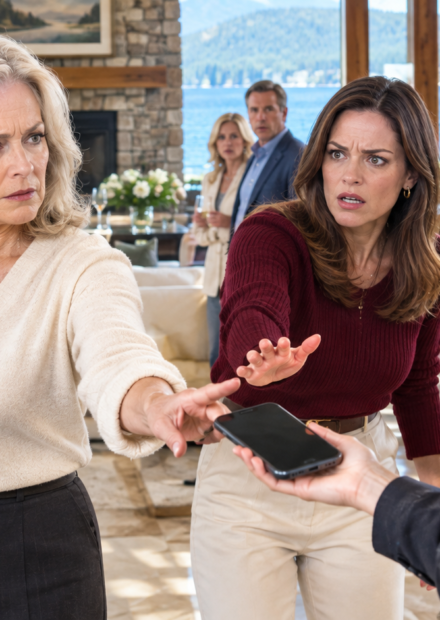
She immediately pushed it back.
“No.”
I laughed.
“You don’t even know what it is.”
“If it’s money, no.”
“It’s a gift.”
“No.”
“Elena.”
“I said no.”
For a second, we both froze.
Then laughed.
That word.
No.
Once, our family treated it like betrayal.
Now Elena was using it to protect something.
Herself.
Her progress.
Her independence.
I opened the envelope myself.
Inside was a gift certificate for a weekend trip at a small coastal inn.
Nothing extravagant.
She looked at me.
“You don’t have to.”
I smiled.
“I know.”
Her eyes filled.
I pushed it toward her.
**“That’s why this time it actually means something.”**
She accepted it.
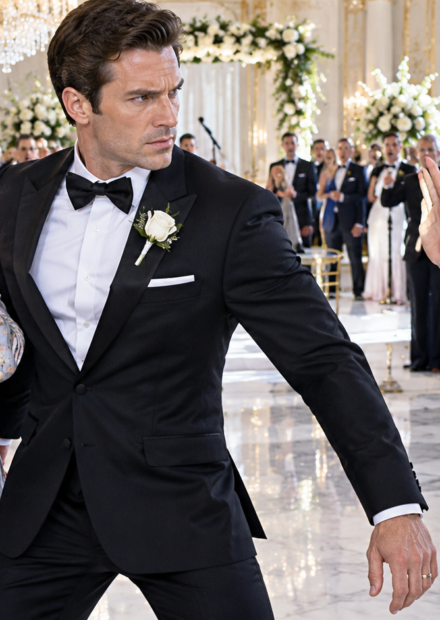
On the wedding day, Dad walked her down the aisle.
Mom cried.
Daniel cried more.
I cried the least, which everyone accused me of doing competitively.
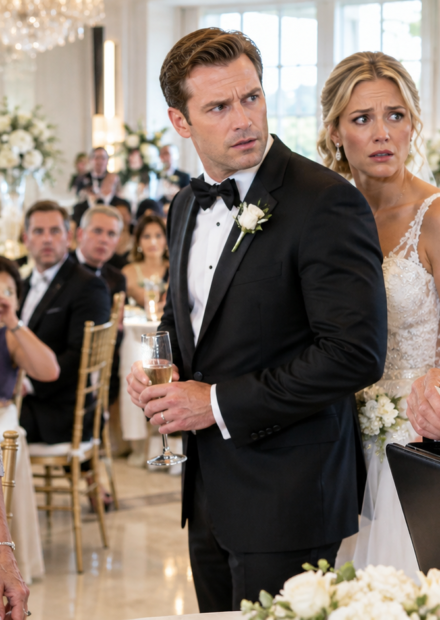
At the reception, Elena stood to make a toast.
She looked at Daniel.
Then Mom and Dad.
Then me.
“I spent most of my life believing love meant somebody would catch me before I hit the ground.”
She swallowed.
“I was wrong.”
Her eyes found mine.
“Sometimes love is the person who finally moves their hands away and says, ‘You need to learn to stand.’”
The room became quiet.
“I hated my sister when she did that.”
A few guests laughed.
“So much.”
I did too.
Elena continued.
“But if Claire had paid for my first wedding, I would have walked into marriage believing the same thing I believed about everything else.”
She looked at Daniel.
“That someone else was responsible for making my life work.”
Daniel took her hand.
She finished:
“Thank you for not paying.”
I raised my glass.
“You’re welcome.”
Everyone laughed.
But Dad didn’t.
He was crying.
—
Three months later, Mom called.
“We found something.”
That sentence had caused enough trouble in my family that I almost hung up.
“What?”
“One more letter.”
I groaned.
“Please tell me nobody stole another inheritance.”
Mom laughed.
“No.”
That was progress too.
We met at my parents’ apartment.
Dad made coffee.
Mom handed me an envelope.
Grandma Rose had addressed it:
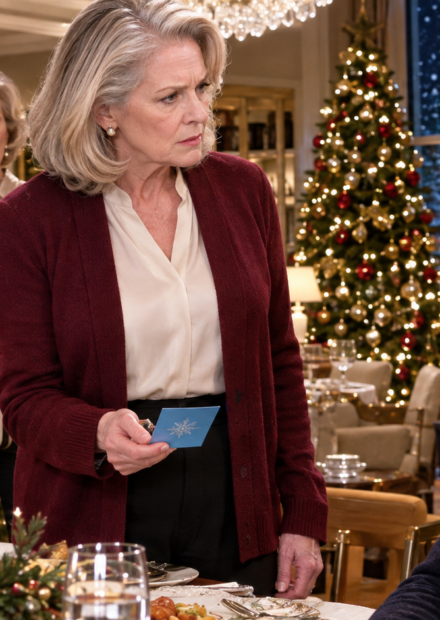
**TO BE OPENED WHEN CLAIRE FINALLY STOPS TRYING TO SAVE EVERYONE.**
I stared at the words.
“You’re kidding.”
Mom shook her head.
“She gave it to me with the other papers.”
“And you kept it.”
“Yes.”
“Why?”
Mom looked embarrassed.
“Because I thought the condition was insulting.”
Dad muttered:
“It was accurate.”
Mom glared at him.
I opened the letter.
Grandma’s handwriting was uneven.
She had written it shortly before she died.
**Claire,**
**If you are reading this, then either your mother finally listened to me or life forced her to. I suspect life.**
I laughed.
Mom covered her face.
I continued.
**There is something people rarely tell generous women. Giving is not automatically love. Sometimes giving is fear. Fear of being disliked. Fear of being called selfish. Fear that if you stop being useful, people will stop needing you.**
I stopped reading.
The words reached somewhere deep.
Somewhere I had avoided looking.
Because if I was honest, Dad had not been the only person who benefited from the old system.
So had I.
Being the fixer made me important.
Needed.
Indispensable.
If everyone required something from me, nobody had time to decide whether they simply wanted me.
I kept reading.
**You will eventually meet people who love you for what you provide and people who love you for who you are. The difficult part is that sometimes they will be the same people.**
**Do not hate them for learning the wrong lesson from your generosity. But do not continue teaching it either.**
My eyes blurred.
At the bottom, one final paragraph:
**A boundary is not a wall built to keep love out. It is a door that teaches love how to enter.**
I lowered the letter.
Nobody spoke.
Dad finally said:
“She always did have a flair for drama.”
Mom laughed through tears.
I folded the letter carefully.
For most of my life, I believed my value came from how much I could carry.
Money.
Responsibility.
Fear.
Other people’s mistakes.
Other people’s shame.
Other people’s emergencies.
I thought love meant stepping underneath whatever was falling and holding it there until everybody else was safe.
But love without boundaries had not made my family grateful.
It had made them dependent.
And dependency had slowly become entitlement.
My father stopped asking.
My mother stopped seeing me.
My sister stopped believing my consent mattered.
And I stopped noticing how exhausted I had become.
All because we had confused sacrifice with love.
That changed the night I said no.
Not because the word itself was powerful.
Because for the first time, I was willing to let the consequences remain where they belonged.
Dad had to face his debt.
Mom had to face what she had done to both daughters.
Elena had to face the kind of woman she had become.
And I had to face something too.
I had to admit that rescuing everyone had become my own way of controlling uncertainty.
If I fixed everything, nobody could fall apart.
If nobody fell apart, nobody could leave.
It had taken me thirty-six years to understand that keeping people dependent on your strength does not guarantee love.
Sometimes it only guarantees need.
Years later, Elena still tells the story of the dinner.
Her version gets more dramatic every time.
According to her, I stood up so fast the table shook.
It didn’t.
According to Dad, I looked “like a prosecutor.”
I probably did.
According to Mom, nobody breathed for thirty seconds.
Impossible.
But everyone agrees on the sentence.
**“Actually… all of you need to move out.”**
When Elena tells the story now, people usually laugh.
Then someone asks:
“Were you furious?”
She always says:
“Oh, absolutely.”
Then she looks at me.
“And thank God she did it.”
The first four-hundred-dollar check is framed in my office now.
Not because I needed the money.
Because it was the first thing Elena ever gave me that required something from her.
Dad eventually paid back every dollar he had borrowed from me after moving into the house.
It took years.
Mom returned Grandma’s forty-two thousand dollars from savings she and Dad rebuilt slowly.
I tried to refuse it.
She said:
“No.”
I laughed.
Then accepted.
Some debts are not about money.
Sometimes repayment is simply the physical proof that somebody has finally stopped expecting you to absorb the cost.
The original $164,000 wedding never happened.
The $300,000 loan never funded.
My house remained mine.
But the most important thing I recovered was not money.
It was not property.
It was not even Grandma’s letters.
It was the right to exist inside my own family without constantly proving my love through sacrifice.
For years, I thought saying no would make me selfish.
Instead, saying no finally made honesty possible.
And if there is one thing I learned from everything that happened, it is this:
**Love is not measured by how much of yourself you are willing to give away.**
**Being strong does not mean you deserve less protection.**
**Being successful does not turn your life into a family emergency fund.**
**And being related to someone does not give them unlimited access to your money, your home, your time, your forgiveness, or your future.**
Sometimes the most loving thing you can do is stop rescuing someone from the consequences that might finally teach them how to stand.
Because the night I told my family to leave was not the night I abandoned them.
**It was the night I stopped abandoning myself.**