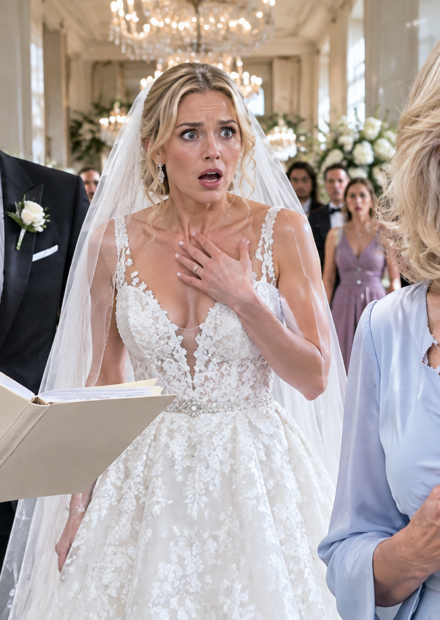
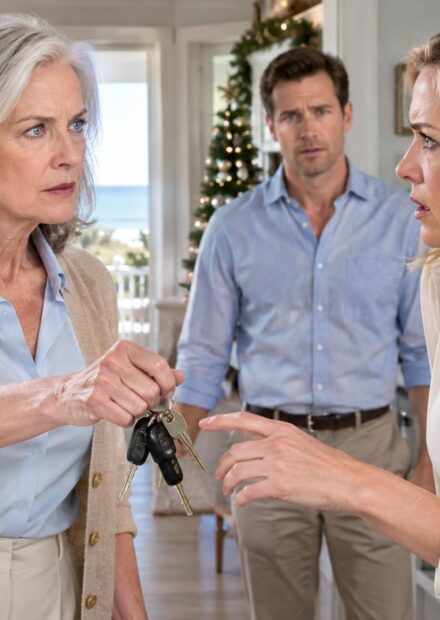
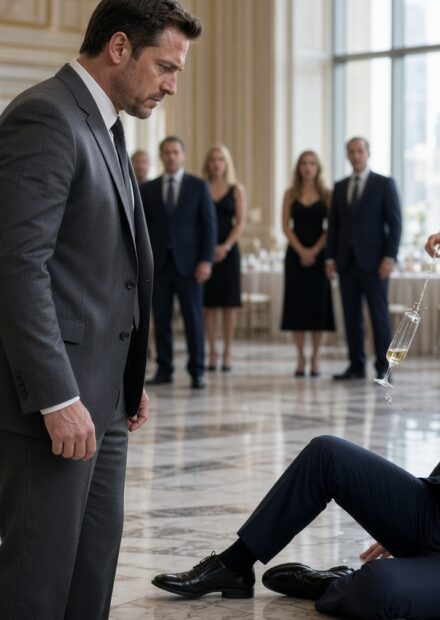
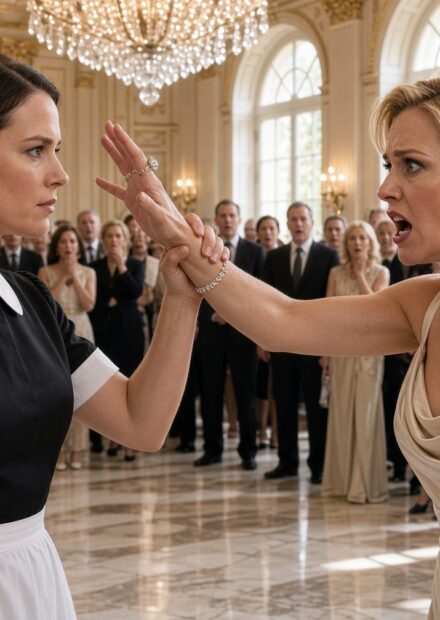
The House They Thought Was His Mother Slapped Me at Dinner. Then the Deed Came Out
Chapter 4 – WHAT THE HOUSE HAD BEEN HIDING
For three days, I did not see my husband.
I saw evidence of him everywhere.
His shoes beside the mudroom bench.
His razor in the bathroom.
His coffee beans in the pantry.
The book he had been reading face-down beside his chair.
Marriage is strange that way.
A person can be absent and still occupy every room.
On the second night, I stood in the kitchen and cried over a jar of mustard because Evan always bought the kind with seeds and I hated it.
Not because I missed mustard.
Because grief is humiliatingly ordinary.
I missed the man who kissed my forehead before work.
I missed hearing him complain about conference calls.
I missed the way he sang the wrong lyrics to songs and refused to admit it.
I missed him so much that for fifteen minutes I almost convinced myself the dinner could be repaired.
Then I looked at my reflection in the dark window.
The mark on my cheek had faded.
The memory had not.
She’s teaching you how you’re expected to behave in this family.
I heard it exactly as he said it.
Not shouted.
Not panicked.
Calm.
That sentence mattered more than Marian’s slap because Marian had never promised to love me.
Evan had.
On Thursday, he asked to meet.
I agreed.
Not at Ridgeview.
At Thomas’s office.
Evan hated that.
“I want to talk to my wife, not sit in front of your lawyer.”
“Thomas will not be in the room.”
“Then why there?”
“Because I feel better there.”
That should have told him everything.
He said fine.
When I arrived, Evan was already waiting in a small conference room.
He stood when I entered.
For one second, we just looked at each other.
He appeared exhausted.
Dark circles.
Unshaven jaw.
Wrinkled shirt.
My body reacted before my mind did.
Concern.
That old instinct.
Take care of him.
I sat instead.
Evan remained standing.
“Can I hug you?”
The question surprised me.
Before the dinner, he would simply have done it.
“No.”
He nodded.
Then sat across from me.
“I told Mom the truth.”
“About the house?”
“Everything.”
“What does everything mean?”
“That you bought it before we married. That your money paid for the restoration. That I signed those documents.”
“How did she react?”
He laughed once.
“Badly.”
I waited.
“She accused me of humiliating her.”
Of course.
“What did you say?”
“That she humiliated herself by hitting you.”
That was new.
I looked at him carefully.
“And?”
“And she said you provoked her.”
“What did you say?”
He looked down.
“I told her it didn’t matter.”
Something loosened inside my chest.
Not forgiveness.
Recognition.
Maybe he was finally seeing it.
“I should have said that that night.”
“Yes.”
“I know.”
Silence.
Then Evan pushed a folded paper toward me.
“What is this?”
“A list.”
I did not touch it.
He looked embarrassed.
“Things I’m willing to change.”
My heart sank.
“What things?”
“Mom doesn’t get a key. She doesn’t come over without asking. We stop hosting big family dinners for a while. I’ll correct anyone who thinks I bought Ridgeview.”
All good things.
All too late to be used as bargaining chips.
“And?”
“I’ll go to counseling.”
“Individual?”
“Marriage.”
I looked at him.
“Individual first.”
He frowned.
“Why?”
“Because your relationship with your mother existed before me.”
“Rachel.”
“You let her hit your wife and called it discipline.”
His face tightened.
“I already said that was wrong.”
“I’m not asking you to confess again. I’m telling you why couples counseling cannot be the first place you investigate that.”
He leaned back.
“So you’ve already decided everything.”
“No.”
“It sounds like it.”
“I have decided I am not coming back to the old marriage.”
“We can change it.”
“Maybe.”
His face softened.
“Then come home.”
I almost smiled.
“Evan, I am home.”
He looked away.
The truth still injured him.
Good.
Not because I wanted pain.
Because denial needs friction.
After a moment, he said, “Do you know what Mom told me?”
“No.”
“She said you planned the whole thing.”
I stared.
“Apparently I arranged for her to hit me?”
“She thinks Thomas’s timing proves you were waiting for an excuse.”
“Do you?”
He hesitated.
My stomach turned.
“Evan.”
“I don’t know.”
“Then we are done here.”
I stood.
He reached across the table but stopped before touching me.
“Wait.”
I looked at him.
“I’m trying.”
“Then answer.”
He swallowed.
“No.”
“No what?”
“No, I don’t think you planned for her to hit you.”
“Do you think I wanted Thomas there to embarrass you?”
His eyes lowered.
“Partly.”
I sat again.
“Good. That’s honest.”
He looked surprised.
“Yes, I wanted the documents in the house because I knew your mother had crossed a line by taking another key and I knew you were refusing to correct the ownership lie.”
“I didn’t know you’d bring him into the dining room.”
“I didn’t.”
“What?”
“Thomas was supposed to come after eight. Quietly.”
Evan frowned.
“Then why did he walk in like that?”
“Because when he arrived, he saw Uncle James outside on the phone and heard there was a fight.”
Evan stared.
“Thomas asked the housekeeper what happened. She told him your mother hit me.”
His face changed.
“So he came in.”
“Yes.”
The reveal had not been staged.
But maybe some part of Evan needed it to be.
A planned humiliation would allow him to share victimhood.
An unplanned exposure meant the facts stood alone.
He rubbed his face.
“I am sorry.”
I waited.
“No but,” he added.
That almost hurt more.
Because that was the apology I had wanted three days earlier.
“I am sorry I sat there. I’m sorry I said what I said. I’m sorry I let Mom think you were living in my house because I liked how she looked at me when she believed it.”
His voice broke slightly.
“I am sorry I used your success to make myself feel bigger.”
My eyes filled.
Evan continued.
“And I’m sorry I made you small to do it.”
That was the sentence.
The real one.
I looked away because crying in front of him felt dangerous.
He knew every version of my softness.
“Rachel.”
“I heard you.”
“Is it too late?”
I closed my eyes.
“I don’t know.”
That was true.
For another two weeks, we lived apart.
Evan stayed in a furnished apartment near his office.
Marian called me twice.
I did not answer.
Then a handwritten letter arrived.
I knew her handwriting from birthday cards.
For an hour, it sat unopened on my kitchen counter.
Finally I read it.
Rachel,
I was wrong to strike you.
There is no excuse for putting my hand on another adult.
I was angry because I felt that you had disrespected me in front of my family, but anger does not make what I did acceptable.
I also understand now that Ridgeview was yours before you married Evan.
He should have told me.
I should have asked questions instead of making assumptions.
I am not asking you to forgive me.
I am asking whether someday you might allow me to apologize to you in person.
Marian
I read it three times.
No but after the apology.
There was explanation.
But not excuse.
That mattered.
I placed the letter in a drawer.
I was not ready.
My relatives-in-law gradually stopped messaging.
The scandal became less interesting when I refused to feed it.
Evan did something I had not expected.
He corrected people.
Not once.
Repeatedly.
At his uncle’s house.
At work.
With cousins.
With his mother’s church friends.
I knew because three separate people apologized to me.
“I thought Evan bought Ridgeview,” Beth said when she called.
“I know.”
“He told us he let everyone believe it because he was embarrassed.”
“Yes.”
“That’s awful.”
“Yes.”
Then she said something important.
“But even if he had bought it, Aunt Marian had no right to hit you.”
I closed my eyes.
“Thank you.”
That was what I had wanted somebody in that room to understand.
Ownership was not what made the slap wrong.
It only exposed the system that made everyone comfortable ignoring it.
Thomas helped me review practical matters.
Not revenge.
Not secret traps.
Bank accounts.
Insurance.
Beneficiaries.
Company shares.
Household bills.
The boring machinery of a marriage.
I learned Evan and I were financially less entangled than I expected.
We had a joint account for expenses.
Separate retirement accounts.
Separate business interests.
The house was mine.
The mortgage had been paid off two years earlier.
Nothing dramatic.
No hidden debt.
No secret account.
No affair.
Part of me had expected another betrayal simply because one betrayal makes every shadow look suspicious.
There wasn’t one.
That complicated things.
Evan was not secretly monstrous.
He was weak in a place that had finally become dangerous.
That was enough.
One afternoon, Thomas sat across from me with the property file open.
“Do you want to file?”
He meant divorce.
I looked at the old acknowledgment.
Evan’s signature.
Six years earlier.
Strong.
Confident.
A man in love who had no idea that one day the document would become evidence in an argument about dignity.
“I don’t know.”
Thomas nodded.
“You don’t have to decide today.”
“Everyone keeps saying that.”
“Because it’s true.”
I touched the paper.
“Do you think people change?”
Thomas looked at me.
“Yes.”
The answer surprised me.
“You didn’t hesitate.”
“No.”
“Do you think Evan will?”
“That is a different question.”
I smiled sadly.
“What do you think?”
“I think he has spent six years avoiding discomfort with his mother by transferring it to you.”
That was painfully precise.
“He can stop.”
“But?”
“But stopping because he fears losing his marriage is not the same as changing the belief underneath it.”
“What belief?”
Thomas leaned back.
“That your discomfort is easier to tolerate than his mother’s disappointment.”
I went very still.
There it was.
The entire marriage in one sentence.
Every holiday.
Every key.
Every unannounced visit.
Every time Evan said, Just let it go.
My pain had been cheaper.
Not because he didn’t love me.
Because he trusted me to absorb it.
Love had made me the safer person to disappoint.
That night, Evan came to Ridgeview.
By invitation.
The first time in nearly three weeks.
He stopped in the foyer as though unsure how far he was allowed to enter.
“Can I come in?”
The question hurt.
“Yes.”
He stepped inside.
His eyes moved around the house.
“I miss this place.”
I looked at him.
“Do you miss me?”
His face crumpled.
“Every minute.”
We sat in the living room.
No Thomas.
No mother.
No family.
Just us.
Evan told me he had started individual therapy.
I believed him.
He showed me the appointment card without being asked, then seemed embarrassed and put it away.
“I don’t want credit for going.”
“Good.”
He smiled weakly.
“I deserved that.”
We talked for two hours.
About Marian.
His father.
Ridgeview.
Money.
Pride.
The wedding.
The years before.
At some point, Evan began crying.
Not dramatically.
Quietly.
“I think I liked that they believed I was taking care of you.”
I said nothing.
He continued.
“You never needed me financially.”
“No.”
“I knew that.”
“Yes.”
“I told myself it didn’t bother me.”
“But it did.”
He nodded.
“I wanted to be necessary.”
My anger softened into sadness.
“You were.”
He looked at me.
“Evan, I never needed you to buy the house. I needed you beside me.”
His face twisted.
“And I failed at that.”
“Yes.”
He cried harder.
I almost moved toward him.
Almost.
Then I remembered the dining room floor.
I stayed where I was.
At the end of the night, Evan stood near the front door.
“Can I ask you something?”
“Yes.”
“If Mom had never hit you, would we still be married?”
The question followed me like a shadow.
I thought about it carefully.
“Probably.”
He looked devastated.
“So one moment destroyed everything.”
“No.”
He looked up.
“One moment revealed everything.”
That was different.
“The slap didn’t create the problem. It made it impossible to keep pretending the problem was small.”
He swallowed.
“Is there anything I can do?”
“I don’t know.”
“Do you still love me?”
That one hurt.
“Yes.”
Hope flashed across his face.
I stopped it.
“But love is not the question I’m struggling with.”
“What is?”
I looked at him.
“Whether I trust you to protect our marriage when protecting it makes your mother unhappy.”
He closed his eyes.
For once, he did not offer an answer he had not earned.
He simply nodded.
Then he left.
A week later, Marian came to Ridgeview.
Invited.
For the first time since I married Evan, she rang the doorbell.
That sound nearly made me cry.
I opened the door.
She stood on the porch holding nothing.
No flowers.
No food.
No peace offering designed to buy forgiveness.
Just herself.
“May I come in?”
I looked at her for several seconds.
“Yes.”
We sat in the same dining room where she had hit me.
The table was bare.
No relatives.
No birthday cake.
No audience.
Marian folded her hands.
“I am sorry.”
I waited.
She looked directly at me.
“I hit you because I believed I had authority over you.”
My chest tightened.
She continued.
“I told myself it was about respect. It wasn’t. It was about control.”
I had not expected that level of honesty.
She swallowed.
“I thought this was Evan’s home. That is true. But I have had to admit something worse.”
“What?”
“If it had been his home, I still would have been wrong.”
My eyes burned.
Marian’s voice shook.
“You were right.”
I looked away.
“I don’t need you to say that.”
“I do.”
Silence.
Then she said, “I raised him to keep me happy.”
I turned back.
Marian looked older than she had three weeks earlier.
“I called it loyalty. I called it family. But I punished him emotionally whenever he chose something I didn’t like.”
That was not an excuse.
She knew it.
“I think he learned early that the easiest person to disappoint should be the person who loves him most.”
Thomas’s sentence.
Different words.
Same truth.
Marian continued.
“And then he married you.”
I closed my eyes.
For the first time, the entire pattern felt visible.
Not mysterious.
Not inevitable.
Visible.
“I am not asking you to stay married to him,” Marian said.
That surprised me.
“Then what are you asking?”
“Nothing.”
She stood.
“I wanted to say this in your house because I spent too many years calling it his.”
At the door, she stopped.
“I will never put my hands on you again.”
“I know.”
She looked uncertain.
“How?”
I opened the door.
“Because if you do, you will never enter this house again.”
For a second, Marian stared.
Then she nodded.
“Fair.”
She left.
I closed the door behind her.
And for the first time, I knew forgiveness and reconciliation were not the same thing.
I could believe her apology.
I could even forgive her someday.
That did not mean I had to return everything to the way it was.
Some lessons cost access.
Some apologies arrive after the door has already changed.