Chapter 3 – WHAT WERE THEY SUPPOSED TO HAVE SOMEDAY?
By March, the snowbanks had begun collapsing into themselves.
Vermont does not surrender winter gracefully.
It loosens its grip one muddy inch at a time.
I walked through the house one gray morning carrying a notebook.
Not because of Brittany.
That distinction mattered.
Christmas had forced me to notice things, but what I decided next belonged to me.
Property taxes.
Heating oil.
Roof maintenance.
Insurance.
Snow removal.
Landscaping.
Plumbing for three bathrooms when I regularly used one.
Five bedrooms, four of which spent most of the year holding furniture and memories.
I stood in the upstairs hallway and realized I was maintaining a small hotel for guests who were increasingly behaving like investors.
So I called a realtor.
Her name was Megan.
She came on a Thursday afternoon, walked slowly through the rooms and told me the property would likely attract families looking to relocate from Boston or New York.
“Are you emotionally ready?” she asked.
I appreciated the question.
“I think so.”
“Thinking isn’t always knowing.”
“No.”
I looked through the dining-room doorway.
Thomas’s chair was still there.
I had never been able to move it.
“List it.”
Two weeks later, a FOR SALE sign appeared beside my driveway.
Louise texted me a photograph from her window.
It has begun, she wrote.
I knew exactly what she meant.
Brittany called before lunch.
“You’re selling the house?”
“Yes.”
“Why?”
“Because I want to.”
“You didn’t tell us.”
“I just did.”
“No, I mean before you listed it.”
“I’m not required to request approval.”
“Mark grew up there.”
“Yes.”
“Thomas loved that house.”
“Yes.”
“This is the Carter family home.”
I looked around my kitchen.
“No. It’s my home.”
She exhaled hard.
“You can’t just sell it.”
“Watch me.”
That conversation lasted six minutes.
The real argument happened between Brittany and Mark later.
I did not hear it.
Mark told me about it weeks afterward.
Brittany had demanded that he stop me.
He asked how.
She said he needed to remind me what the house meant.
He said I knew exactly what it meant.
Then she said something that finally reached him in a way none of my warnings had.
“It’s the only thing Thomas left you.”
Mark corrected her.
“Dad left the house to Mom.”
“You know what I mean.”
“No, I don’t.”
“He bought it for the family.”
“They bought it together.”
“And you’re their only child.”
“Okay?”
Brittany became frustrated.
“Then what are we supposed to have someday?”
Mark told me he had stared at her.
Not because he’d never considered inheritance.
He had.
He admitted that freely.
Of course he had.
Most children understand that they may inherit something when their parents die.
The shock was hearing his wife speak as though my continued ownership represented a delay in delivery.
What were we supposed to have?
Not what would you like your mother to enjoy?
Not where will she live?
Not is she happy?
What do we get?
Mark said he left the room.
A week later, he asked whether Brittany and he could discuss buying the house.
That, at least, was reasonable.
I told them to speak with the realtor and get financing information.
Brittany arrived at my kitchen table with enthusiasm that almost made me sad.
“I knew you’d understand.”
“I haven’t agreed to anything.”
“We just want to keep it in the family.”
“At market value, I’m willing to consider an offer like any other.”
Her smile tightened.
“Market value.”
“Yes.”
“We’d still have closing costs.”
“Most buyers do.”
“We thought maybe because we’re family—”
I raised a hand.
“Get the numbers first.”
They did.
The numbers solved what sentiment could not.
Their Massachusetts house still had a substantial mortgage.
The Vermont property came with taxes, insurance, maintenance and winter costs far beyond what Brittany had ever considered when she called it “basically theirs someday.”
The bank would lend them far less than they needed.
Suddenly keeping the house in the family required somebody to pay for it.
Brittany returned with Plan Two.
“What if you sold it to us for less?”
“How much less?”
The figure she named was so low I thought I had misheard.
“You want me to reduce the price by almost a third.”
“It could be considered an early inheritance.”
I stared at her.
She rushed ahead.
“It would save realtor fees, and Mark would get it eventually anyway—”
“You don’t get an inheritance early because you can’t afford the thing you planned to inherit.”
Her cheeks flushed.
“That’s a harsh way to put it.”
“It’s an accurate way.”
“We’re trying to preserve something important.”
“So am I.”
“What?”
“My finances.”
She looked offended by the concept.
Then came Plan Three.
Seller financing.
Very small down payment.
Monthly payments to me.
Terms far more generous than any bank would offer.
I listened until she finished.
Then I laughed.
I didn’t intend to.
It simply escaped.
Brittany looked furious.
“What’s funny?”
“Let me see if I understand.”
I counted on my fingers.
“I sell you the house below market value.”
She opened her mouth.
“Then I finance most of the purchase myself.”
“Evelyn—”
“And I accept almost no down payment.”
“Families help each other.”
“So I give you part of the house, lend you the money to buy the rest and then wait for you to repay me.”
“It’s not like that.”
“It sounds a lot like me buying you my house.”
Mark looked miserable.
He finally said, “Mom’s right.”
Brittany turned toward him.
“Of course you’d say that.”
“No. I mean mathematically. This doesn’t work.”
She stood.
“Fine.”
I recognized that “fine.”
Nothing was fine.
The house went on the market properly in April.
The first open house brought more people than expected.
I spent the afternoon with Louise while Megan handled visitors.
At four-thirty, my phone rang.
Megan.
I answered cheerfully.
“How did it go?”
There was a pause.
“We had an issue.”
“What kind of issue?”
“Your daughter-in-law came.”
My body went cold.
“What?”
“She arrived about twenty minutes ago. I assumed you’d sent her.”
“I did not.”
“She started talking to one of the couples.”
“What did she say?”
Another pause.
“She told them the property was involved in a family dispute.”
I stood up.
Louise looked at me.
“She said ownership might be contested later,” Megan continued. “I corrected that immediately and told them title was clear, but—”
“Is Brittany still there?”
“Yes.”
“Put her on.”
Megan hesitated.
Then Brittany’s voice came through.
“Hello?”
“Leave my property.”
“Evelyn, I was just explaining—”
“You told buyers there is a family dispute.”
“There is.”
“No. There isn’t.”
“You know Mark wants the house.”
“Wanting something does not create a legal dispute.”
“They deserve to understand—”
“Leave.”
“I think you’re being impulsive.”
“Leave my property now, or Megan will call the police.”
Silence.
“You’d call the police on family?”
“If family refuses to leave after being told, yes.”
She inhaled.
“Evelyn—”
“And hear me clearly. You are no longer permitted inside my home unless I personally invite you.”
“You’re banning me?”
“I’m establishing a boundary you apparently require in writing.”
Mark called that evening.
He wasn’t defending her.
Not this time.
“I can’t believe she did that.”
“I can.”
“I told her she crossed a line.”
“She’s crossed several.”
“We had a huge fight.”
I didn’t ask for details.
He gave them anyway.
Their argument had moved quickly from the open house to Brittany’s habit of calling my property “our future.”
Mark had finally asked her to stop.
She said he was an only child and expecting inheritance was normal.
Mark said something I never thought I would hear him say.
“Expecting that your mother might leave you something one day is not the same as planning your life around your mother dying.”
When he told me, I closed my eyes.
“I’m sorry, Mom.”
“For what?”
“I’ve said versions of the same thing.”
Not as bluntly.
But he had.
Someday the house will probably be mine.
It had sounded harmless.
Maybe it had even been harmless when he first said it.
But expectations become dangerous when they harden into ownership.
A month later, I received an offer.
A young couple.
Rachel and Ben.
Two children, both under ten.
They loved the backyard.
They loved the old maple near the porch.
They loved the mudroom.
And, to my surprise, they loved the dining table.
It was an old solid-wood piece Thomas and I had bought at an estate sale when Mark was eleven.
It had been scratched by homework, scorched by one Thanksgiving casserole, stained by red wine, dented by toy cars and polished more times than I could count.
I had planned to sell it separately.
Rachel asked if I might consider leaving it.
“Our kids have never had a real dining table,” she said. “Not one where everyone fits.”
The sentence touched something inside me.
I said I would think about it.
Before closing, I told Mark he could have one weekend to go through his childhood belongings.
Old yearbooks.
Trophies.
Winter clothes.
Boxes of baseball cards.
A guitar he’d abandoned at nineteen.
He arrived with Brittany.
I nearly told her to leave.
Then I decided to let it happen once.
“Mark’s things only,” I said.
Brittany nodded.
Within twenty minutes, I found small paper labels attached to my belongings.
Antique dresser.
Silver service.
Two framed prints.
A Christmas ornament box.
And the dining table.
KEEP IN FAMILY, Brittany had written.
I peeled the labels off one by one.
She caught me holding the last one.
“What are you doing?”
“Removing these.”
“I was just marking what we’d like.”
“You’re here for Mark’s things. Not my things.”
“But you’ll have nowhere to put all this in a condo.”
“Then I’ll decide what happens to it.”
She glanced toward the dining room.
“We should at least have the table.”
“No.”
Her eyes widened.
“Seriously?”
“I’m selling it with the house.”
“You’re what?”
“The buyers love it.”
“That table has sentimental value.”
“To whom?”
“To all of us.”
I looked at her.
“Tell me the last Christmas you washed every dish used at that table.”
She blinked.
“What?”
“The last time you washed the serving platters. Or polished the silver. Or stripped the tablecloth. Or scrubbed gravy off the floor beneath it.”
“That’s not the point.”
“When?”
She couldn’t answer.
I ran my fingers over one of the scratches in the wood.
“Sentimental value is easy when somebody else does the labor attached to the memory.”
Her face hardened.
“You act like nobody appreciated you.”
“I think you appreciated what I provided.”
“That’s the same thing.”
“No.”
It wasn’t.
That was one of the most painful things I had learned.
Being needed is not the same as being valued.
Being useful is not the same as being loved well.
The sale closed in June.
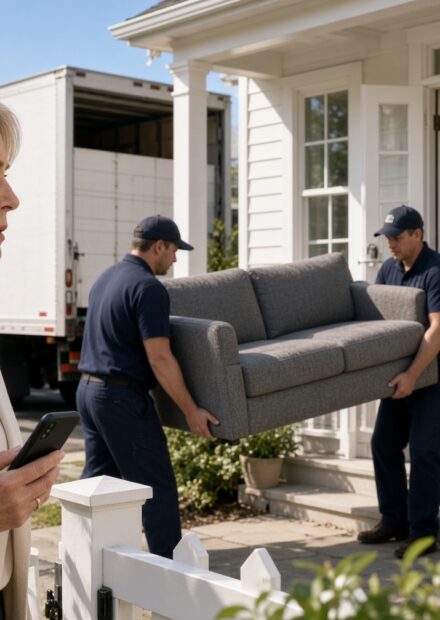
The buyers received the house.
The table stayed.
I took my photographs, Thomas’s watch, his letters, a few pieces of furniture I genuinely loved and the ornaments that belonged to my own memories.
Everything else was sold, donated or given away by my choice.
The proceeds from the house went into accounts in my name.
Not Mark’s.
Not Brittany’s.
Mine.
I bought a two-bedroom condo in Burlington.
One bedroom for me.
One guest room.
One.
That number brought me an unreasonable amount of joy.
The first time Brittany visited, she walked through the condo slowly.
Kitchen.
Living room.
Balcony.
My bedroom.
Guest room.
Then back into the hall.
“That’s it?”
“That’s it.”
“No basement?”
“No.”
“No formal dining room?”
“No.”
“Where would everybody stay for Christmas?”
I looked at her.
“Wherever they book.”
Louise nearly choked on her coffee.
And just like that, the house that had once held thirty years of obligation belonged to somebody else.
I expected grief.
I felt some.
But mostly I felt space opening around me.
Not empty space.
Mine.