Chapter 1 – THE CHRISTMAS I WASN’T INVITED TO
I found out I was hosting Christmas for twenty-five people while standing barefoot in my own kitchen, holding a cup of coffee that had already gone cold.
The strange part was that nobody had invited me.
It was twelve days before Christmas.
Snow had been falling since before dawn, laying a clean white sheet across the back field and softening the dark line of pines behind my house. For almost thirty-five years, I had loved mornings like that. Thomas used to stand at the kitchen window and say Vermont looked honest under snow. No weeds. No mud. No dead grass. Everything covered. Everything quiet.
Thomas had been gone three years by then.
The house was still large enough to echo without him.
Five bedrooms. Three bathrooms. A formal dining room that could seat fourteen if we squeezed. A basement family room where children had spent decades sleeping in sleeping bags while their parents occupied the upstairs rooms. A mudroom built for ski boots. Two refrigerators. A pantry big enough to disappear into.
For years, all of that had made our house perfect for Christmas.
After Thomas died, apparently it made it public property.
My son Mark and his wife Brittany had driven up from Massachusetts for the weekend. They were in the breakfast room while I stood around the corner in the kitchen. Brittany’s phone was on speaker.
I wasn’t trying to listen.
At first.
Then I heard my name.
“So we’re definitely doing Evelyn’s,” Brittany said.
A woman’s voice answered through the phone. I recognized her sister, Claire.
“She said yes?”
There was a pause.
Then Brittany laughed.
“She doesn’t need to say yes. She always hosts.”
My hand stopped halfway to the sink.
Claire said something I couldn’t make out.
Brittany continued.
“There’s tons of space. Mom and Dad can take the downstairs guest room. You guys can have the blue room. Jared’s family can use the basement. The kids don’t care where they sleep.”
Then another voice joined the call.
“What about everybody else?”
Brittany laughed again.
“We’ll make it work.”
I heard Mark shift in his chair.
“Britt, maybe we should actually ask Mom.”
My heart gave one small, hopeful beat.
It embarrasses me now, remembering that.
At sixty-eight years old, after spending forty-one years raising that boy, I was still grateful for the possibility that he might say something obvious on my behalf.
Brittany sighed.
“Mark, your mother loves Christmas.”
“Yeah, but twenty-five people—”
“She’ll be thrilled.”
“That’s not what I’m saying.”
“Your mom gets lonely.”
I set my coffee down very carefully.
Brittany lowered her voice in that way people do when they believe lowering it makes cruelty private.
“It’ll make her feel useful.”
Claire laughed.
My fingers tightened around the counter.
Then they started discussing meals.
Not whether I would cook.
What I would cook.
Brittany had apparently decided I would make prime rib Christmas Eve, turkey Christmas Day, two breakfasts, appetizers, desserts, and “those cheesy potato things Evelyn does.”
Someone asked where Brittany expected me to sleep if all the bedrooms were occupied.
There was a beat of silence.
Then Brittany said, “She can sleep in the laundry room.”
Laughter burst through the speaker.
“Oh my God,” Claire said.
“I’m kidding,” Brittany said, still laughing. “Relax. Mostly. She could put a cot in there. She’s lonely anyway. She’ll be running around serving everybody, so she probably won’t sleep.”
More laughter.
I didn’t hear Mark laugh.
I wish I could say that helped.
It didn’t.
Because he also didn’t say, Stop.
He didn’t say, That’s my mother.
He didn’t say, This is her home.
He didn’t even repeat his weak suggestion that perhaps the woman who owned the house should be asked whether twenty-five people could descend on it for three days.
He went silent.
That silence hurt more than Brittany’s joke.
I had heard jokes before.
I had lived long enough to understand that people often reveal the truth by putting a laugh after it.
But Mark’s silence told me something I had spent years refusing to understand.
He knew.
He knew how much work Christmas was.
He knew I washed every sheet after they left.
He knew I started shopping in November.
He knew I cooked for days.
He knew I woke before everyone else to make coffee and went to bed after everyone else because somebody always needed towels, another blanket, pain reliever, batteries, tape, scissors, a wine opener, a clean glass, a place to charge a phone.
He knew.
And he had decided it was easier for me to do all of that than for him to disagree with his wife.
I stood alone in the kitchen Thomas and I had renovated together in 1997 and understood, with astonishing clarity, that I did not want to host Christmas.
Not that Christmas.
Not anymore.
So I didn’t confront them.
That surprised even me.
The Evelyn Carter of ten years earlier would have walked straight into the breakfast room, hands on hips, and demanded an explanation.
The Evelyn Carter of three years earlier—the newly widowed version of me—would probably have agreed to everything because a full house would have been less painful than an empty one.
But grief changes shape.
At first, it makes you afraid of silence.
Later, if you’re lucky, it teaches you how valuable silence can be.
I went upstairs.
I closed my bedroom door.
And I booked a cruise.
Seven nights.
Christmas departure.
A balcony cabin.
At sixty-eight, I had never taken a cruise without Thomas.
The fact made my finger hover above the booking button.
Then I heard Brittany downstairs laughing about whether I had enough serving platters.
I pressed confirm.
After that, I became extremely practical.
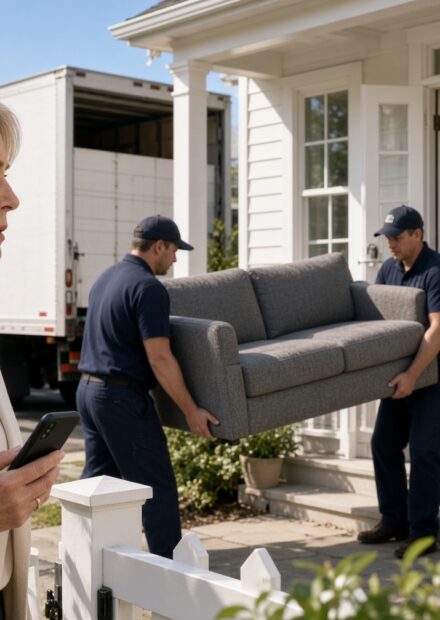
I called a locksmith.
Not because I wanted drama.
Because Brittany and Mark both had spare keys.
So did two former babysitters, my late sister’s daughter, and possibly a contractor who had replaced the porch railing in 2012.
I had no idea how many copies existed anymore.
The locksmith came two days later.
Every exterior lock was replaced.
I gave one spare key to Louise Bennett, my neighbor and closest friend.
Louise was seventy, sharp-eyed, silver-haired, and had spent thirty years living close enough to know when our furnace broke, when Thomas bought me roses, and when Mark first snuck home after midnight as a teenager.
When I explained why I needed her to watch the house, she stared at me for three full seconds.
Then she smiled.
“You’ve finally lost your mind.”
“No.”
“No?”
“I may finally have found it.”
She hugged me.
I also hired a small private security company to drive by the property during the holiday weekend, because I knew Brittany.
She was not dangerous.
She was persistent.
There is a difference.
Persistent people can cause an astonishing amount of trouble when they believe the word no is negotiable.
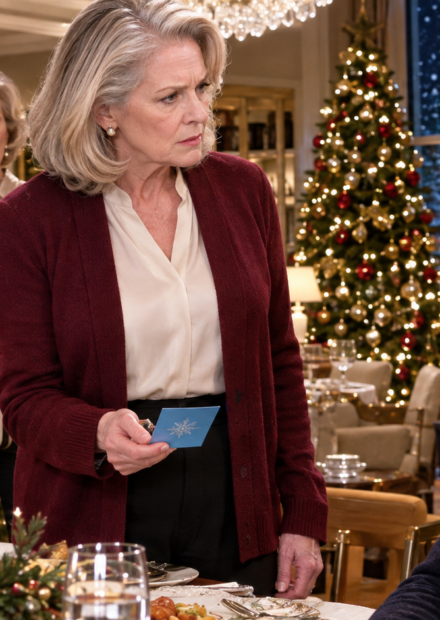
Finally, on the morning of Christmas Eve, I placed an envelope on the dining room table.
BRITTANY, I wrote on the front.
Inside was a single sheet of paper.
I did not write an angry letter.
I simply wrote:
This house was never offered for Christmas.
I will not be hosting.
I hope you enjoy the holiday you planned.
—Evelyn
I left the envelope there because I knew Brittany well enough to imagine that, at some point, she would find a way inside or convince herself she could.
Then I packed my suitcase.
By two in the afternoon, snow had begun again.
Large flakes drifted against the windows.
I put on my wool coat.
Before leaving, I stood in the dining room.
The table was bare.
No red runner.
No candles.
No folded napkins.
No twenty-five place settings.
For decades, that sight would have made me feel guilty.
That day, it made me feel light.
My phone rang at 3:47.
Brittany.
I let it ring twice before answering.
“Hello?”
“Why are the locks changed?”
No greeting.
No Merry Christmas.
Just outrage.
I pictured the driveway without needing to see it: SUVs crowded beside the snowbanks, luggage carriers open, children stamping boots, coolers on the ground, relatives staring toward the front door while Brittany repeatedly tried a key that no longer belonged to my house.
“Because they’re my locks,” I said.
“What?”
“You asked why the locks were changed. They’re my locks.”
“Evelyn, everybody is here.”
“I assumed they might be.”
“We planned Christmas here.”
“No,” I said. “You planned Christmas here.”
Silence.
Then her voice sharpened.
“What is that supposed to mean?”
“It means exactly what I said.”
Mark was speaking in the background.
“Britt. Give me the phone.”
She ignored him.
“We have twenty-five people standing outside in the snow.”
“Yes.”
“Children, Evelyn.”
“I know what children are.”
“Why would you do this?”
That was when I finally told her.
“I heard the phone call.”
Nothing.
“The speakerphone call,” I continued. “The one where you invited your entire family to my home. The one where you decided what I would cook, where everyone would sleep and what would happen if there wasn’t a room left for me.”
Her voice dropped.
“Oh my God.”
“Yes.”
“The laundry-room thing was a joke.”
“I know.”
“Then why are you acting like—”
“I also heard you say hosting would make me feel useful.”
She stopped.
Behind her, I could hear doors slamming and someone asking what was going on.
“Evelyn,” Brittany said, “you completely misunderstood.”
“No. I understood every word.”
“We thought you’d be happy.”
“You didn’t ask.”
“Because you’ve always hosted.”
“Always is not a contract.”
Mark finally got the phone.
“Mom.”
His voice sounded tired already.
“Hi, Mark.”
“You left?”
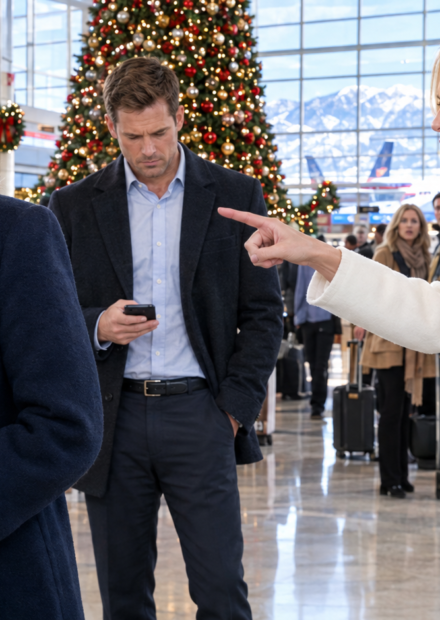
“I’m on my way to the airport.”
“The airport?”
“I’m taking a Christmas cruise.”
For a moment, he said nothing.
Then, quietly, “You’re serious.”
“Very.”
Brittany grabbed the phone back.
“What are we supposed to do now?”
I looked through my windshield at the road curving white between the trees.
“I expect you to solve the problem you created.”
She made a sound of disbelief.
“Do you have any idea what hotels cost up here on Christmas Eve?”
“No.”
“Everything’s probably booked!”
“Then I suggest you start calling.”
“This is unbelievable.”
“No,” I said. “What’s unbelievable is driving twenty-five people to somebody else’s house without asking.”
Her anger turned cold.
“Mark said this house would be his someday.”
That sentence changed the temperature in the car.
For a moment, I forgot Brittany.
I saw Thomas.
Young Thomas, standing beside me in front of that house thirty-three years earlier, both of us terrified by the mortgage.
Thomas replacing shingles himself one summer because we couldn’t afford a roofer.
Thomas sanding the dining-room floor.
Thomas carrying Mark through the front door when he was seven after he’d fallen asleep in the car.
Thomas dying in our bedroom while I held his hand.
And suddenly Brittany’s claim felt larger than Christmas.
It explained Christmas.
“Someday isn’t today,” I said.
She inhaled sharply.
“You’re leaving your family outside on Christmas?”
“No,” I said. “You brought your family to a house that wasn’t yours.”
Then I ended the call.
My hands shook afterward.
Not from guilt.
From adrenaline.
I pulled into a gas station ten minutes later and sat beneath the fluorescent canopy while snow blew sideways across the parking lot.
My phone started lighting up.
Mark.
Brittany.
Mark again.
Unknown number.
Brittany.
Group messages.
I switched it to silent.
Then Louise called.
I answered immediately.
“I can see them,” she said.
“How bad?”
“Oh, honey.”
That worried me.
“What?”
“There are cars everywhere. Your driveway looks like a dealership.”
Despite myself, I laughed.
Louise lowered her voice dramatically.
“Brittany is standing on the porch waving her arms.”
“At whom?”
“No idea. Possibly Vermont.”
“What about everyone else?”
“Confused. Cold. One little boy is making a snow angel.”
“At least someone’s enjoying himself.”
Louise snorted.
Then her voice softened.
“You okay?”
I looked at my suitcase in the passenger seat.
At my boarding documents.
At the snow.
“I don’t know yet.”
“You will be.”
I wanted to believe her.
At the airport, I learned what happened next in pieces.
Louise called twice.
Mark texted me once.
Denise—Brittany’s mother—did not contact me at all.
Later I discovered she had been too busy asking her daughter questions.
The first hotel Brittany called had four rooms.
The second had none.
Vacation rentals required minimum stays or had holiday premiums.
One inn could accommodate seven people, but not together.
Another was forty minutes away.
By seven that evening, Brittany’s twenty-five-person Christmas had scattered across three hotels and one rental condo at prices high enough to make people stop pretending the situation was funny.
Apparently the turning point came when Denise asked Mark directly, in front of everyone, “When did Evelyn agree to all this?”
Mark could have lied.
He didn’t.
Maybe something had finally become too humiliating even for his instincts.
“She didn’t,” he said.
Denise stared at him.
“What do you mean, she didn’t?”
“We never actually asked.”
Brittany immediately jumped in.
“Because she always does Christmas.”
Denise turned toward her daughter.
“So you made twenty-five people drive to Vermont for a Christmas nobody invited us to?”
Brittany said it was more complicated.
It wasn’t.
Families can tolerate extraordinary amounts of confusion until somebody asks the correct simple question.
Had Evelyn agreed?
No.
Everything after that became harder to defend.
When my flight finally boarded, I had seventeen unread messages.
I opened only one.
It was from Mark.
Mom, I’m sorry. This got out of hand.
I stared at the words.
Got out of hand.
As though Christmas had grown legs and invited twenty-five people by itself.
As though nobody had made decisions.
As though he had not sat ten feet from me and let his wife plan where I would sleep inside my own home.
The flight attendant asked me to put my phone away.
I did.
For the first time in nearly forty years, I was leaving on Christmas Eve without checking whether a turkey was thawed.
Without wondering whether I had enough pillows.
Without calculating oven space.
Without setting an alarm for six in the morning.
The plane lifted above the storm.
Vermont disappeared beneath cloud.
And somewhere behind me, twenty-five people were learning a lesson I had spent too many years avoiding:
A tradition is something people share.
It is not something one person provides while everyone else assumes she’ll keep providing it forever.
By the time we reached cruising altitude, I had made one more decision.
I would listen carefully to whatever Mark said next.
Not because I intended to punish him.
Because I needed to know whether my son was sorry that he had hurt me—
or merely sorry that Christmas had become expensive.
I got my answer two days later.