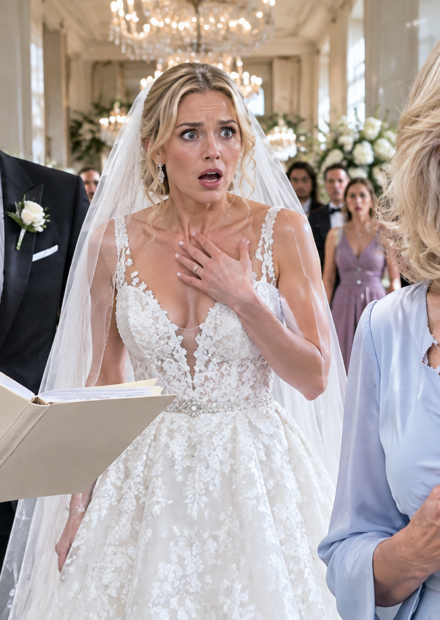
THE NAME ON MY PHONE MADE MY HUSBAND STEP BACK
Chapter 1 – THE FOUR WORDS
I was eight months pregnant when my mother-in-law slapped me across the face in my own kitchen.
But the moment that ended my marriage came a few seconds later.
It wasn’t the slap.
It wasn’t even when my husband grabbed my arm and shoved me backward hard enough for my lower back to strike the edge of the counter.
It was when I reached for my phone.
Ryan saw the name at the top of my favorites.
MOM.
And the color disappeared from his face.
That was the first time I understood something I should have understood years earlier.
Ryan had never been afraid of hurting me.
He was afraid of someone finding out.
The argument had started with four simple words.
“Apologize to my mother.”
Ryan stood in the middle of our kitchen with his arms folded.
Behind him, Diane sat at the table drinking coffee from the blue ceramic mug I had handed her less than an hour earlier. She had stopped crying by then, although every few minutes she lifted a tissue to the corner of one perfectly dry eye.
I stood near the sink with one hand pressed beneath my stomach.
Our daughter had been using my ribs as a punching bag all morning.
Normally, it annoyed me.
That day, every little kick reassured me.
“Apologize for what?” I asked.
Ryan’s jaw tightened.
“Claire.”
“No. Tell me exactly what I’m supposed to apologize for.”
Diane inhaled sharply.
Ryan gave me the look I knew too well.
It was the look that said I was making things difficult.
“You’re upset,” he said.
“I’m not asking whether I’m upset.”
“Then stop talking over me.”
“I didn’t—”
“See?” Diane interrupted. “This is exactly what I mean.”
I looked at her.
She wore a cream sweater, pearl earrings, and the expression of a woman who had been deeply wounded by someone else’s unreasonable cruelty.
Her crime?
Apparently, caring too much.
My crime?
Telling her that fourteen members of Ryan’s extended family could not come to our house the first Saturday after I gave birth.
Not visit for an hour.
Not drop off food.
Fourteen people.
In our house.
For what Diane had already started calling the baby’s “proper welcome.”
She had made plans without asking me.
She had called relatives.
She had discussed food.
She had apparently told Ryan’s aunt that there would be “plenty of room if people wanted to stay late.”
Then she mentioned it to me that morning as if she were informing me what time the mail arrived.
I had stared at her.
“Diane, no.”
She had laughed.
Actually laughed.
“What do you mean, no?”
“I mean we aren’t having fourteen people here right after I give birth.”
“They’re family.”
“I know who they are.”
“They’ll want to meet the baby.”
“They can meet her later.”
Diane’s smile disappeared.
“Later when?”
“When I’m ready.”
She stared at me for several seconds.
Then she said, “It isn’t only about you, Claire.”
That sentence had been following me through my entire pregnancy.
Nothing was only about me.
Not my body.
Not my sleep.
Not my labor.
Not the hospital.
Not breastfeeding.
Not who could visit.
Not who could touch my stomach.
Apparently, not even the first days I would spend bleeding, exhausted, sleep-deprived and terrified while learning how to keep another human being alive.
I tried to explain.
I didn’t yell.
I didn’t insult her.
I said I expected to be exhausted. I said I didn’t know how I would feel physically. I said newborns didn’t need a welcoming committee.
Then I made my mistake.
I said, “This decision is mine and Ryan’s.”
Diane had gone very still.
“Of course.”
The words sounded harmless.
Her face didn’t.
Less than an hour later, Ryan came home from work early.
Diane was crying.
I didn’t hear whatever she told him before I walked into the kitchen.
I only knew that by the time I got there, he had already decided what had happened.
I was guilty.
His mother was hurt.
The facts were administrative details.
“You embarrassed her,” Ryan said.
“I told her we weren’t hosting fourteen people.”
“You could have said it differently.”
“How?”
“With some gratitude.”
“For something I didn’t ask for?”
He exhaled.
Diane looked down.
“I was only trying to make your daughter feel welcomed,” she said softly.
My daughter.
Interesting.
When there was something joyful to claim, the baby belonged to everyone.
When there was discomfort, risk, nausea, insomnia, swelling, blood tests, fear, or pain, somehow all of that belonged only to me.
“You invited fourteen people without asking,” I said.
“Family doesn’t need an invitation.”
“To our house, they do.”
Diane’s eyes lifted.
“Our?”
I almost laughed.
That one word said more than she probably realized.
For five years, Diane had referred to our home as Ryan’s house.
Not every time.
Just often enough.
At first I corrected her.
Then I stopped because correcting her somehow became its own argument.
The house was ours.
My name was on the mortgage.
My savings had paid almost half of our down payment.
I had painted the downstairs bathroom myself and spent three weekends sanding the nursery dresser because Ryan said we could save money if we restored the old one.
But in Diane’s mind, I lived in her son’s home.
And lately, Ryan had stopped correcting her too.
Pregnancy made that change impossible to ignore.
Before I was pregnant, Diane’s interference had been irritating.
Afterward, it became constant.
The nursery color was too dull.
The crib was too expensive.
The stroller was impractical.
My maternity clothes were too tight one week and too shapeless the next.
I drank too much coffee even when the coffee was decaf.
I walked too much.
I rested too much.
I worked too late.
I was too sensitive.
The pediatrician I had chosen was too far away.
The baby name Ryan and I loved was, according to Diane, “trying too hard.”
I should have ignored most of it.
I tried.
That was the problem.
I tried so hard to keep the peace that eventually there was no peace left inside me.
That morning, before the argument about the family visit, Diane had walked into our bedroom without knocking.
I had been asleep.
Or trying to be.
At eight months pregnant, sleep came in miserable little pieces between heartburn, bathroom trips, hip pain and a child who apparently believed three in the morning was an excellent time for gymnastics.
I woke to the curtains being yanked open.
Sunlight flooded the room.
“Rise and shine,” Diane said.
I blinked at her.
For several seconds, I honestly thought I was dreaming.
“Diane?”
“It’s almost nine.”
“So?”
She stared at me.
“So you should get up. Sleeping half the morning will only make you more tired.”
I pulled the blanket over my chest.
“You can’t just come into our bedroom.”
She frowned.
“I knocked.”
“No, you didn’t.”
“Well, you were sleeping.”
“Then how would knocking have helped?”
She made an irritated sound.
I pushed myself upright.
“Please knock next time and wait for me to answer.”
Her expression changed immediately.
“In my son’s house?”
There it was.
My son’s house.
I looked at her.
“No. In our bedroom.”
She walked out without another word.
Apparently, that was the true beginning of my terrible behavior.
By the time Ryan arrived home, I had already become an ungrateful daughter-in-law determined to exclude his family from our baby’s life.
Ryan turned to his mother.
“Mom, can you give us a minute?”
Diane didn’t move.
“No,” I said.
Ryan looked at me.
“What?”
“If this is about something I said to her, she can stay.”
His mouth tightened.
“Fine.”
He turned back to me.
“She was trying to do something nice.”
“For who?”
“For us.”
“No. Hosting fourteen people days after giving birth is not nice for me.”
“They’re not strangers.”
“That doesn’t make my body heal faster.”
“Nobody is asking you to entertain them.”
I stared at him.
“They’re coming here.”
“They’ll help.”
“With what?”
“The baby.”
I laughed once.
I couldn’t help it.
“Fourteen people are going to help me with one newborn?”
“Don’t twist what I’m saying.”
“Then explain it.”
Diane stood.
“Do you hear how she talks to me?”
Ryan pointed at me.
“Enough.”
Something inside my chest went cold.
I had heard him use that tone with the dog.
With telemarketers.
Once with a drunk man who had been bothering us outside a restaurant.
He had never used it with me.
Not like that.
“Don’t point at me,” I said.
“Then stop.”
“Stop what?”
“This.”
He gestured at all of me.
As if my existence had become the problem.
I felt my daughter move.
I pressed my palm against the spot.
For months, I had been choosing every sentence carefully.
I never wanted Ryan to feel trapped between his wife and his mother.
I had softened every complaint.
Maybe your mom could call before coming over.
Could you ask her not to buy more furniture for the nursery?
I know she’s excited, but I’d like us to make the hospital decisions.
Could you please tell her not to touch my stomach without asking?
Could you tell her we already chose a name?
Could you tell her—
Could you ask—
Would you mind—
Maybe—
Please.
I had spent months protecting Ryan from discomfort.
Standing in that kitchen, I realized he had never spent the same energy protecting me.
Not once.
Whenever I complained about Diane, he gave me the same answer.
“You know Mom.”
At first it meant don’t take her seriously.
Then it meant don’t challenge her.
Eventually it meant endure whatever she does because confronting her is harder for me than watching it happen to you.
I looked at him.
“So maybe you should live here with her.”
Silence.
Ryan froze.
Diane’s face changed instantly.
That sentence finally frightened them.
“What did you say?” Ryan asked.
“I said if everything in this house is supposed to revolve around what your mother wants, maybe she should be the one living here with you.”
“Take it back.”
I almost didn’t recognize him.
“What?”
“Take it back.”
“No.”
He stepped closer.
“Claire.”
“No.”
His voice dropped.
“Apologize. To my mother.”
Our daughter shifted beneath my ribs.
I covered my stomach with one hand.
“No.”
Diane moved before I understood what she intended.
One second she stood beside the table.
The next she was in front of me.
Her hand rose.
Her palm struck the left side of my face.
The sound was unbelievably loud.
Sharp.
Flat.
Final.
My head turned with the force of it.
For a second, the entire kitchen seemed to disappear.
I heard the refrigerator humming.
A car passed outside.
Somewhere a faucet dripped.
My cheek burned.
I touched it.
I looked at Diane first.
Her chest rose and fell quickly.
She looked shocked by what she had done.
Then I turned to my husband.
I expected horror.
I expected him to grab his mother.
I expected him to ask whether I was okay.
I expected something.
Anything.
Instead, Ryan looked irritated.
“See what you do?” he said.
I stared at him.
“What?”
“If you had just apologized—”
“Your mother hit me.”
“Because you keep pushing.”
I looked from him to Diane.
Neither of them seemed to understand why I was staring.
That was the moment something inside me broke.
Not dramatically.
There was no sudden burst of courage.
No music.
No revelation from the heavens.
It was quieter than that.
A thread snapped.
The thread connecting me to every excuse I had made for Ryan.
My feet moved before I consciously decided where I was going.
My purse was on the small console table near the hall.
My phone was inside.
Ryan stepped in front of me.
“We’re finishing this conversation.”
“Move.”
“Not until you calm down.”
“Move.”
“Claire—”
“I said move.”
I tried to go around him.
His hand closed around my upper arm.
Hard.
Pain shot beneath his fingers.
“Let go of me.”
“Stop acting like this.”
“You’re hurting me.”
I pulled away.
His grip tightened.
“Ryan.”
Diane stepped closer.
“Both of you need to stop being dramatic.”
I looked at her.
“Tell him to let me go.”
“He barely has you.”
“I said let me go!”
I twisted.
Ryan shoved me.
It wasn’t a massive movement.
That was what he would say later.
That he barely pushed.
That I stumbled.
That it happened too fast.
But I knew what I felt.
His hand released my arm with force behind it.
My body moved backward.
My lower back slammed into the edge of the kitchen counter.
Pain tore through me.
A white flash exploded behind my eyes.
Both hands flew to my stomach.
I gasped.
Ryan’s face changed.
For half a second, I saw fear.
Then he covered it.
“You backed into it.”
I couldn’t answer.
I was waiting.
Waiting for the movement beneath my ribs.
Nothing.
“Baby,” I whispered.
I rubbed my stomach.
“Come on.”
Nothing.
Ryan took one step toward me.
I flinched.
He stopped.
“I barely touched you.”
“Don’t.”
“Claire—”
“Don’t come near me.”
Diane rolled her eyes.
“Babies sleep.”
I looked at her.
“What?”
“She was probably already asleep.”
“You hit me.”
“And you were screaming.”
“You hit me while I’m eight months pregnant.”
“You were out of control.”
I stared at the two people standing in my kitchen.
My husband.
His mother.
People who had spent months telling me how much they loved this baby.
People who criticized my coffee, my sleep, my stroller and my doctor because everything I did apparently affected the baby.
Now my daughter had stopped moving after Ryan shoved me into a counter, and somehow neither of them looked as afraid as I was.
My eyes landed on the glass of water beside me.
I picked it up.
Before Diane could react, I threw the water into her face.
She screamed.
Ryan moved toward me.
I reacted.
My palm struck his cheek.
The sound was smaller than Diane’s slap had been.
Ryan stopped.
He touched his face.
His expression was pure disbelief.
“You hit me.”
“You shoved me into a counter.”
“I was trying to stop you from leaving.”
“That’s not better.”
“You just assaulted me.”
I almost laughed.
Instead, I reached for my purse.
Ryan started forward again.
I pulled out my phone and held it between us.
“Don’t come closer.”
He stopped.
My hands were shaking so badly it took me two tries to unlock the screen.
I opened my favorites.
Ryan saw the first name.
MOM.
His face went pale.
“You’ve been talking to her?”
His voice had changed.
That was what I noticed.
Not anger anymore.
Fear.
For years, Ryan had told me my mother interfered too much.
She was intimidating.
Judgmental.
Controlling.
She never respected him.
She treated everything like an operation.
She asked too many questions.
She made him feel like he was constantly being evaluated.
Some of that had been true.
My mother was Colonel Evelyn Bennett.
At fifty-seven, she could still walk into a room and make people sit straighter without saying a word.
She had spent most of my childhood solving problems quickly because hesitation in her world could have consequences.
After my father died when I was nineteen, that part of her became even stronger.
When I married Ryan, Mom struggled to keep her opinions to herself.
Ryan struggled to believe she had opinions she wasn’t sharing.
I had spent years acting as the bridge between them until eventually I got tired.
Ryan said we needed boundaries.
I agreed.
Then somehow boundaries became fewer phone calls.
Fewer visits.
Shorter conversations.
Eventually, I stopped telling my mother when Ryan and I fought because Ryan said sharing marital problems with family was betrayal.
I told myself he was right.
Three weeks earlier, after Diane announced she planned to be in the delivery room, I had called Mom crying from my car.
That had been the beginning.
We’d spoken four times since.
Ryan hadn’t known.
For the first time in years, I didn’t feel guilty about that.
“Yes,” I said.
“How long?”
“That doesn’t matter.”
“Claire, don’t call her.”
I looked at him.
Then I understood.
He wasn’t ashamed.
He wasn’t sorry.
He was afraid.
I pressed the call button.
Mom answered on the second ring.
“Claire?”
The second I heard her voice, everything holding me upright began to collapse.
“Mom.”
My voice broke.
“I need you.”
There was one second of silence.
Then my mother’s entire tone changed.
No panic.
No questions about why I sounded upset.
Just calm precision.
“Are you injured?”
“My back.”
“What happened?”
“Ryan shoved me into the counter.”
Ryan immediately said, “I did not shove her.”
Mom heard him.
“How many weeks pregnant are you?”
“Thirty-four.”
“Is the baby moving?”
My throat closed.
“No.”
That one word finally made Ryan look scared.
Mom didn’t raise her voice.
“Claire, listen carefully. Where is Ryan standing?”
“Across the kitchen.”
“Is Diane there?”
“Yes.”
“Do you have your purse?”
“Yes.”
“Identification?”
“Yes.”
“Keys?”
I checked.
“Yes.”
Then she asked the question that changed the room.
“Is he preventing you from leaving?”
Ryan went completely still.
“No!” he shouted. “I am not preventing her from leaving.”
Mom ignored him.
“Claire?”
I looked at my husband.
Minutes earlier, he had stood between me and the hallway.
He had grabbed my arm because I tried to leave.
Now he stepped aside.
Slowly.
“No,” I said.
“Good. Take your purse, take your phone, and walk outside now.”
Ryan’s eyes met mine.
I moved.
Neither he nor Diane tried to stop me.
At the front door, Ryan said my name.
I didn’t turn around.
“Claire.”
I opened the door.
Cool air hit my face.
“Claire, don’t do this.”
My hand tightened around the phone.
Mom’s voice came through the speaker.
“Keep walking.”
So I did.
For the first time since the argument began, Ryan no longer looked like the man controlling the room.
He looked like a man who had just realized someone else had finally seen inside it.
And for the first time in years, I kept walking even though he told me not to.