MY SON BOUGHT ME A LAKE HOUSE. SOMEONE ELSE STOLE TWO YEARS OF MY LIFE.
Chapter 1 – THE GIFT I NEVER RECEIVED
Two hundred and twenty wedding guests applauded when my millionaire son announced that he had bought me a lake house two years earlier.
I was his mother.
I had never seen it.
For a few seconds, I thought I had misunderstood him.
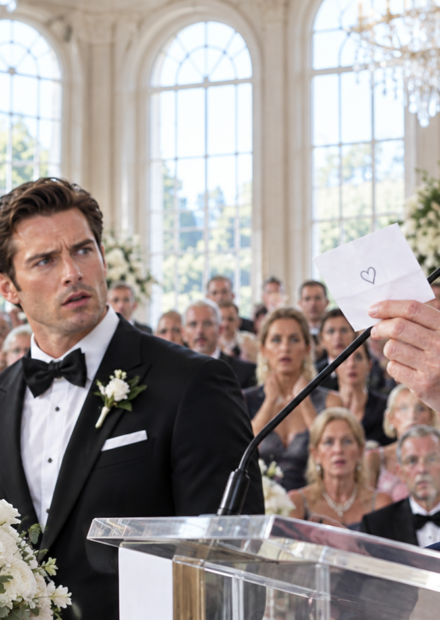
The ballroom was glowing with candlelight and crystal. White roses spilled from tall glass vases. A string quartet had stopped playing while David stood beside his new wife, Victoria, holding a champagne glass and thanking everyone who had helped them reach that day.
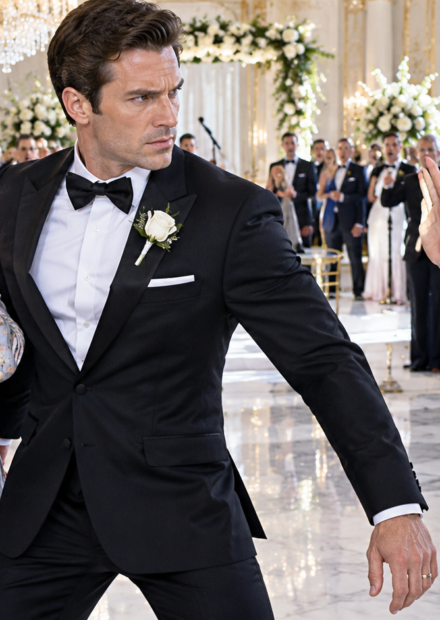
He looked impossibly handsome in his black tuxedo.
Proud.
Successful.
Happy.
I had spent most of the evening watching him from my table and remembering a skinny ten-year-old boy who used to leave his muddy shoes beside my kitchen door.
Then he raised his glass toward me.
“And Mom,” he said, smiling, “I know you hate being thanked in public, but I hope you finally admit I was right about the Willow Lake house.”
People laughed.
I smiled because everyone else did.
David continued.
“She fought me on it, but buying that place for her was still one of the best things I’ve ever done.”
The room erupted in applause.
A woman beside me touched my arm.
“How wonderful,” she whispered.
I looked at David.
Then at Victoria.
Then back at my son.
“David,” I said.
My voice somehow carried farther than I expected.
“What lake house?”
The applause died unevenly.
A few people kept clapping before realizing no one else was.
David stared at me.
Victoria went completely still beside him.
The happiest room I had ever stood in became so quiet I heard someone place a champagne glass onto a table.
David gave a small laugh.
It was the kind of laugh people use when they believe they are standing inside a misunderstanding that will be funny in thirty seconds.
“Mom,” he said. “The Willow Lake house.”
I waited.
He lowered his glass.
“You’ve lived there for two years.”
A strange heat moved through my face.
“I live in the same apartment I’ve lived in for years.”
The smile weakened on David’s mouth.
I could see him searching my expression for a joke.
“You’re kidding.”
“No.”
“Mom.”
“I’m not kidding.”
“Twenty-four months.”
“I’m telling you the truth.”
He pulled his phone from his pocket.
Victoria caught his wrist.
“David, please. Not here.”
He looked at her hand until she let go.
Then he called his executive assistant.
“Rachel,” he said when she answered. “I need you to check something immediately.”
I wanted him to stop.
Not because I was afraid of the truth.
Because I was ashamed.
I had spent years making sure David never felt responsible for me.
After his father left, I worked mornings in a school cafeteria and evenings cleaning offices. Later I moved into classroom cleaning because the hours were steadier. I packed David’s lunches, attended every parent conference I could, and learned how to make twenty dollars last three days when it needed to.
When his business took off, I promised myself I would never become one of those mothers who treated a successful child like a retirement plan.
So I never asked.
Not when my rent increased.
Not when my car needed a transmission.
Not when my doctor changed one of my prescriptions and the copay made me stare too long at my bank balance.
Sometimes I waited until payday.
Sometimes I told myself I could stretch things another week.
And all that time, I had assumed David simply didn’t know.
Or didn’t notice.
Or had become too busy.
Rachel’s voice came through the phone.
David put her on speaker.
“Yes,” she said. “The monthly family support transfers have gone out on schedule.”
“To what account?”
There was typing.
“Mercer Household Services.”
I looked at Victoria.
So did half the room.
Victoria’s parents were seated two tables from the head table.
Her father, Charles Mercer, had built Mercer Household Services into a luxury property-management company that handled estates, vacation homes, domestic staffing, and private residences for wealthy families.
David had mentioned the company before.
I had never used it.
Victoria spoke quickly.
“There’s an explanation.”
David turned toward her.
He had not accused her of anything.
That frightened me.
Then I looked at Charles Mercer.
He did not look surprised.
He lowered his eyes toward the table.
That frightened me more.
David’s voice became quiet.
“Rachel. Who authorized Mercer to receive my mother’s support payments?”
“I’d have to pull the original setup documents.”
“Do it.”
“David,” Charles said.
It was the first time he had spoken.
“This really isn’t the place.”
I almost laughed.
Everyone suddenly cared about privacy after discussing my supposed house, my supposed money, and my supposed life in front of two hundred and twenty people.
Before David could answer, a man near the ballroom entrance approached us carrying a black document case.
I recognized him only vaguely.
He had been seated several tables away.
“Mrs.—”
He stopped, perhaps realizing he did not know whether he should address me in front of everyone.
“I’m Martin Hale,” he said instead. “I’m a property attorney.”
I stared at him.
“I know who you are,” David said. “We met at the Willow Lake closing.”
Martin nodded.
Then he looked at me.
“I’ve been trying to reach you for months.”
My stomach tightened.
“Me?”
“Yes.”
He placed the case on an empty chair and opened it.
Inside was a thick folder.
He removed a recorded deed.
Then he turned it toward me.
My full legal name was printed across the page.
I read it twice.
Owner.
Me.
The county records said I had owned the Willow Lake property for almost two years.
According to the county, I had a lake house.
According to my own life, I had spent that morning deciding whether I could put off replacing a cracked pair of work shoes until the following Friday.
“I don’t understand,” I whispered.
Martin removed several more documents.
Property-tax notices.
Insurance correspondence.
Maintenance records.
Then an authorization form.
“This allowed Mercer Household Services to handle correspondence and certain property matters on your behalf.”
“I never signed that.”
My answer came so quickly that Martin stopped speaking.
At the bottom of the page was a signature.
It resembled mine.
From a distance, it might have convinced someone.
But I had spent a lifetime signing school permission slips, checks, birthday cards, lease agreements, medical forms, report cards, job applications, and Christmas cards.
I knew the shape of my own hand.
The first letter was wrong.
The final stroke was wrong.
Even the pressure looked wrong.
“That isn’t mine.”
Victoria whispered, “David—”
Martin pointed to the notary seal.
“There’s another problem.”
Charles looked up.
Martin’s expression had changed.
“The notary listed here died six months before the date on this authorization.”
No one spoke.
I felt the paper trembling in my hands.
David turned to Charles.
“What do you know about this?”
Charles pushed his chair back slightly.
“I’m not discussing business records in a ballroom.”
“My mother’s signature is forged.”
“You don’t know that.”
“I know my own signature,” I said.
Charles looked at me for the first time.
There was irritation in his eyes.
Not sympathy.
Not concern.
I understood something then.
Maybe it was small.
Maybe it meant nothing.
But when an innocent person hears that a dead notary supposedly witnessed a forged signature, they usually ask how that could have happened.
Charles did not ask.
He wanted the conversation to stop.
David looked back at me.
His face had lost all color.
Then he asked a question I would remember for the rest of my life.
“Mom, when was the last time you got a birthday card from me?”
The forged document suddenly felt heavier.
“I don’t know.”
“Think.”
“David—”
“Please.”
I thought.
His birthday cards had once been ridiculous things with cartoons on the front because he knew I loved stupid jokes.
Later they became elegant cards from expensive stationery stores.
I kept them all.
There was a box beneath my bed filled with them.
I searched my memory.
“Maybe two years ago.”
David closed his eyes.
“I sent one three weeks ago.”
I said nothing.
“Last year too. Christmas cards. Mother’s Day. Flowers twice. I sent you a bracelet for your birthday last year.”
“I never got a bracelet.”
His eyes opened.
The expression on his face broke something inside me.
For two years I had quietly believed success had changed my son.
I believed the dinners he canceled meant his work mattered more.
I believed the missing cards meant he no longer thought about small things.
I believed the silence meant he was building a life where I no longer fit easily.
And David had apparently believed something about me too.
“You never answered,” he said.
“I never received them.”
“I thought you were angry.”
“At what?”
“I didn’t know.”
His voice cracked.
“I thought maybe you hated the house. I thought maybe I pushed too hard.”
“What house?”
He almost laughed, but there was no humor in it.
“The one I thought you were living in.”
The cruelty of it became clear all at once.
Someone had not merely taken money.
Someone had created two different realities.
David believed I had moved into a beautiful lake house, received his support, opened his letters, accepted his gifts, and chosen not to answer.
I believed my son had become distant, stopped sending personal things, and slowly left me behind.
Neither of us had confronted the other because each of us had been trying not to intrude.
Someone had understood us well enough to use that.
David stepped toward me.
I stepped back.
Not because I blamed him.
Because I could not process any more.
“Mom.”
“I need to see the house.”
“Tomorrow,” he said. “I’ll take you.”
“No.”
His face tightened.
“I want to come.”
“I know.”
“Then why—”
“Because I’m tired of people explaining my own life to me before I’ve had a chance to look at it.”
He became silent.
Martin took a pen from his case and wrote an address on a piece of paper.
He handed it to me.
Forty-three minutes from my apartment.
For almost two years, a house had existed forty-three minutes away with my name on its deed.
I folded the address into my purse.
Victoria had not moved.
She was still standing beside the wedding table, surrounded by white roses, staring at me.
Charles had stopped looking irritated.
For the first time, he looked afraid.
And as I left my son’s wedding reception before the cake had been cut, I understood that by sunrise I would be standing at the door of a home that legally belonged to me.
I just had no idea whose life I was going to find on the other side.