SHE HUMILIATED MY MOTHER AT OUR WEDDING. BY MORNING, I KNEW WHY SHE HAD REALLY WANTED TO MARRY ME.
Chapter 1 – THE WEDDING THAT NEVER HAPPENED
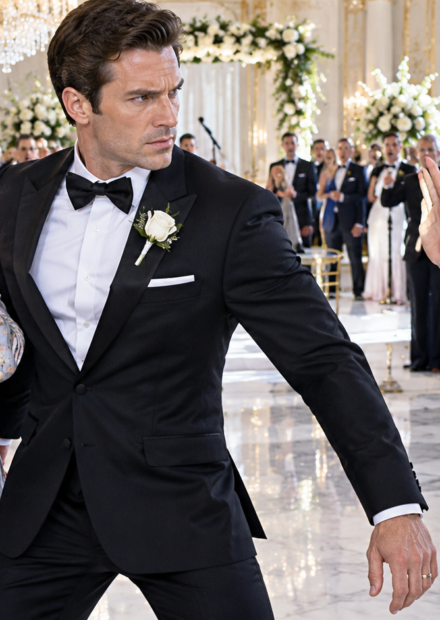
My wedding ended before I ever said “I do,” because my bride shoved my sixty-nine-year-old mother away from her and said, “Don’t hug me. You smell like manure.”
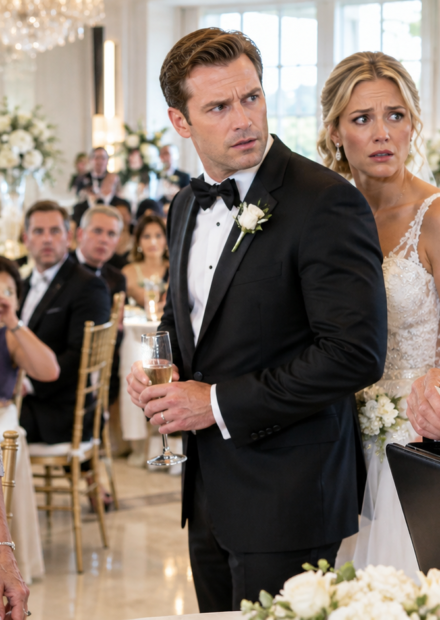
Two hundred and sixty guests heard her.
Some gasped.
A few laughed.
And my mother apologized.
That was the moment everything inside me changed.
My name is Charles Hartwell. I was forty-four years old, an engineer, and until that afternoon at St. Mary’s, I genuinely believed I was about to marry the woman I would grow old with.
Stephanie Whitmore stood at the front of the church in a wedding gown that probably cost more than my first car.
She looked perfect.
That was the word everyone had been using all morning.
Perfect flowers.
Perfect dress.
Perfect church.
Perfect photographs.
Perfect family.
Her father, Richard Whitmore, had spent months making sure everyone knew what the wedding cost without ever saying the actual number.
My mother, Margaret, stood near the first pew in a blue dress she had sewn herself.
Her gray hair was carefully pinned.
My grandmother’s pearl earrings hung from her ears.
She looked nervous, proud, and happier for me than I deserved.
Mom had spent most of her life working Willowbrook Farm, the eighty-seven acres where I grew up.
My father died when I was twelve.
After that, there had been nobody but her.
She woke before sunrise.
She sold vegetables at roadside markets.
She repaired fences when we couldn’t afford help.
She boarded horses.
She learned how to fix a tractor because paying someone else would have meant choosing between repairs and my school expenses.
When I got accepted to college, I found her sitting at the kitchen table with three piles of bills and a calculator.
She looked up and smiled.
“Looks like we’re going to make it.”
Years later, I learned she had sold nearly every piece of jewelry my father had ever given her except her wedding ring.
That was my mother.
And somehow, on the day that was supposed to begin my new family, I had allowed her to stand in a church filled with people who treated her like something embarrassing.
Mom had approached Stephanie just before the ceremony.
“You look beautiful,” she said.
Then she opened her arms.
Stephanie recoiled.
Not subtly.
She actually pushed Mom’s hands away.
“Don’t hug me.”
Mom stopped.
Stephanie looked down at her dress as though dirt had already appeared on it.
“You smell like manure.”
The words traveled farther than Stephanie probably intended.
Or maybe exactly as far as she intended.
Several people turned.
My mother’s face changed.
Stephanie gave an irritated laugh.
Then she looked toward one of her bridesmaids and added, “Please keep that peasant away from me before she gets something on the dress.”
Someone behind Stephanie laughed.
Mom lowered her arms.
“I’m sorry.”
Those two words hit me harder than Stephanie’s insult.
I’m sorry.
My mother had been humiliated, and she was apologizing for it.
For months, I had ignored warning signs.
Richard liked calling me “the farm boy” at dinners.
He said it with a smile, so I pretended it was affectionate.
Stephanie’s mother, Elaine, once suggested Mom might be “more comfortable” skipping dinner at their country club because she probably wouldn’t know anyone.
Stephanie had repeatedly talked about Willowbrook as though it were an ugly building occupying a valuable parking lot.
“Eighty-seven acres that close to town?” she had said one evening. “Do you understand what developers would pay for that?”
“It isn’t for sale.”
“Everything is for sale for the right number.”
“Not Willowbrook.”
She had kissed my cheek.
“You’re so sentimental.”
Whenever I objected to something her family said, Stephanie had the same explanation.
They don’t mean it that way.
Standing inside St. Mary’s, I finally understood.
They meant it exactly that way.
“Stephanie.”
She turned.
“Apologize to my mother.”
Her expression shifted from annoyance to disbelief.
“What?”
“You heard me.”
The room around us seemed to shrink.
“Charles, please.”
“Apologize.”
“Oh my God. It was a joke.”
Nobody laughed this time.
Richard stood near the altar with his face completely still.
Elaine looked offended.
Not because her daughter had humiliated my mother.
Because I had challenged Stephanie publicly.
Mom touched my sleeve.
“Charlie.”
I looked at her.
Her eyes were wet.
“Please,” she whispered. “It’s your wedding.”
That nearly broke me.
Even then, she was trying to protect my happiness.
She was willing to swallow her humiliation so two hundred and sixty people wouldn’t have to feel uncomfortable.
And suddenly I realized she had spent her whole life making cruel people comfortable.
Lately, I had been helping them do it.
I held out my hand to Stephanie.
“Take off the ring.”
Her face went blank.
“What?”
“The ring.”
“Charles.”
“This wedding is over.”
The quartet stopped playing.
The silence that followed was so complete I heard somebody shift in a pew halfway down the church.
Stephanie stared at me.
Then she leaned closer.
“Don’t do this.”
“Give me the ring.”
Her voice dropped.
“Do you understand how humiliating this is?”
I looked at Mom.
Then back at Stephanie.
“You just humiliated the woman who raised me.”
Stephanie’s jaw tightened.
“Charles, stop being dramatic.”
“Apologize.”
“No.”
There it was.
Not confusion.
Not regret.
Not heartbreak.
No.
A simple refusal.
I extended my hand again.
“Then give me the ring.”
Richard stepped forward.
“Charles, perhaps we should have a private conversation.”
“No.”
“This is a family matter.”
“It was a family matter when your daughter called my mother a peasant in front of two hundred and sixty people.”
His expression hardened.
“You’re making a mistake.”
Maybe he expected those words to frighten me.
Instead, they made something click.
Stephanie had just lost her wedding, yet she wasn’t crying.
She wasn’t asking whether I still loved her.
She wasn’t asking how we could fix this.
She looked furious.
“You’ll regret this,” she said.
A woman who loved me should have been devastated.
Stephanie looked cheated.
After several seconds, she ripped off the engagement ring.
She dropped it into my palm.
I closed my fingers around it.
Then I turned to Mom.
“Let’s go home.”
I walked my mother down the same aisle I had expected to walk with my wife.
Nobody stopped us.
Outside, rain had begun falling.
Mom stood under the church awning, trembling.
Then she covered her mouth and started crying.
“I ruined your wedding.”
“No, Mom.”
“I shouldn’t have gone near her. I should’ve known she was nervous.”
I pulled her into my arms.
“You saved me from it.”
She cried harder.
I drove us back to Willowbrook through pouring rain.
Neither of us said much.
The farmhouse appeared beyond the maple trees just before sunset, its porch light glowing against the storm.
I had spent years believing that house was too small.
That day it felt like the safest place in the world.
By midnight, my phone had become unbearable.
Stephanie called eleven times.
Richard called four.
Elaine left a voicemail saying that “reasonable adults” did not destroy marriages over “one unfortunate remark.”
People I barely knew texted me.
Some told me I had done the right thing.
Others said weddings were stressful and Stephanie deserved forgiveness.
One of her cousins accused me of embarrassing “two respected families.”
I almost laughed at that.
As though Mom and I had somehow arrived without one.
I turned my phone facedown.
Mom was upstairs.
I sat alone at her kitchen table, staring at the scratches in the wood I remembered from childhood.
Then the phone vibrated again.
11:48 p.m.
This time, the message was from Stephanie’s younger sister.
Emma.
Emma and I had never been particularly close.
She was thirty-six, quiet, observant, and almost invisible whenever Richard took control of a room.
At family dinners, Stephanie talked over her.
Richard corrected her.
Elaine told her not to “make things awkward.”
Emma usually smiled tightly and disappeared into the kitchen.
The first message made me sit upright.
Charles, I think you need to know what Stephanie has really been planning.
A second appeared.
Don’t tell her I’m contacting you.
Then a third.
And don’t sign anything she sends you.
I stared at the screen.
What are you talking about?
The typing bubbles appeared.
Disappeared.
Returned.
Finally Emma sent one word.
Willowbrook.
My stomach tightened.
Willowbrook wasn’t merely where Mom lived.
It was where my father taught me to drive a tractor.
Where Mom buried our old sheepdog beneath the pear tree.
Where Dad’s ashes had been scattered along the western field.
It was eighty-seven acres of memories.
And increasingly valuable land.
Before I could type another question, Emma sent another message.
Meet me tomorrow morning at Stephanie’s apartment. Come alone.
I looked across the kitchen.
A thick cream envelope sat near the fruit bowl.
It had been there for two weeks.
Daniel Mercer, my late father’s old attorney, had handed it to me shortly before the wedding.
He had represented my parents years ago and occasionally helped Mom with farm paperwork.
When he gave me the envelope, he had looked unusually serious.
“You should understand the farm’s legal history before you marry.”
I had laughed.
“Daniel, I’m getting married, not invading a country.”
“I’m serious, Charles.”
“I’ll read it.”
“Before the wedding.”
I promised.
Then work became hectic.
Wedding arrangements became worse.
Stephanie complained that every free evening I spent dealing with paperwork was an evening I wasn’t helping her.
So the envelope remained unopened.
I reached for it.
Before I could break the seal, I heard footsteps.
Mom came downstairs wearing her old robe.
She looked exhausted.
“Can’t sleep?”
“No.”
She sat across from me.
For a few seconds, she watched the rain hitting the kitchen window.
Then she said, “Stephanie called me.”
My hand stopped.
“When?”
“About twenty minutes ago.”
“What did she want?”
Mom hesitated.
“She wanted to know whether I’d signed those health documents yet.”
I put down my coffee.
“What health documents?”
“She brought some papers last week. Said they were for insurance.”
“What insurance?”
“I’m not sure.”
“Mom.”
“She said you knew about them.”
“I didn’t.”
Mom’s face changed.
“What?”
“Did you sign anything?”
“No. I told her I wanted Daniel to look at them.”
Relief came first.
Then suspicion.
“Where are they?”
“In the kitchen drawer.”
I opened it.
Receipts.
Rubber bands.
Batteries.
An old flashlight.
No documents.
“They were right there,” Mom said.
“When was Stephanie here?”
“Tuesday.”
“Was she alone?”
“For a while. You were at work.”
I looked at her.
“She went through this drawer?”
“I don’t know.”
I thought about Emma’s message.
Don’t sign anything she sends you.
Then I thought about the cream envelope.
And Willowbrook.
I barely slept.
At eight the next morning, I drove into town.
Emma was waiting outside Stephanie’s apartment building.
She looked like she hadn’t slept either.
“Is Stephanie here?”
“No. She’s at my parents’ house.”
“How do you know?”
“She called me at six this morning.”
Emma swallowed.
“She thinks you destroyed her life.”
“I’m starting to think she was planning to destroy mine.”
Emma didn’t answer.
That frightened me more than if she had.
We entered the apartment.
I had been there dozens of times.
But Emma led me past the living room and toward Stephanie’s private office.
I had never been allowed inside.
Stephanie always said it contained confidential client material.
Emma unlocked the door.
“How did you get a key?”
“She gave me one months ago to water her plants.”
Emma opened the door.
Then she stepped aside.
“You need to see this yourself.”
There was a marble desk in the center of the room.
And covering almost every inch of it were documents bearing my mother’s name.
Margaret E. Hartwell.
I moved closer.
Survey maps.
Property records.
Photographs of Willowbrook.
Aerial images.
A folder marked PHASE ONE.
Another marked HARTWELL ACCESS.
My mouth went dry.
I reached toward the nearest folder.
Emma caught my wrist.
“Charles.”
I looked at her.
Her eyes were full of fear.
“Once you read that, you’re going to understand why Stephanie needed the wedding to happen.”