SHE SAID I HADN’T PAID A DIME—SO I STOPPED PAYING
Chapter 5 – THE BILL THAT MONEY COULDN’T PAY
The rest of the week was not peaceful.
But it was honest.
That was better.
Vanessa avoided me for two days.
I did not chase her.
I ate breakfast alone.
I spent one afternoon reading beside the adults-only pool.
I walked into town with the woman from Chicago.
I bought a ridiculous straw hat.
I called an old friend back home and told her we were taking the trip to Santa Fe we had talked about for three years.
The world did not collapse because my daughter-in-law was angry with me.
That discovery should not have been revolutionary.
For me, it was.
Michael texted occasionally.
Not to ask for money.
Just small things.
Saw whales from the balcony.
Restaurant downstairs is great.
Hope the sailing went well.
I answered without turning each message into a referendum on our relationship.
Vanessa and I crossed paths on the third morning.
She was sitting alone at an outdoor table with coffee.
Michael was nowhere around.
I could have walked past.
She looked up.
“Carol.”
I stopped.
“Yes?”
“Sit down.”
It wasn’t warm.
But it wasn’t hostile either.
I sat.
For a while, she stirred her coffee.
Then she said, “Michael and I had a huge fight.”
“I’m sorry.”
“Are you?”
“Yes.”
She studied me.
“You probably think it proves something.”
“No.”
“It does.”
“What?”
“That you were right.”
I shook my head.
“I don’t need your marriage to fail so I can win.”
She looked away.
“That’s not what I meant.”
“I know.”
Silence.
Then she said, “He told me I use him to avoid saying things directly to you.”
I said nothing.
“He said I make him choose.”
Still nothing.
“And then I told him he uses you to avoid telling me no.”
That one surprised me.
I looked at her.
She smiled without humor.
“So I guess everybody had a fun night.”
“I’m sorry.”
“No, you’re not.”
“I am. I don’t like seeing Michael hurt.”
“You really don’t, do you?”
“No.”
“That’s part of the problem.”
I almost smiled.
“Apparently.”
She took a sip of coffee.
Then said, “I knew you paid for everything.”
“I know.”
“I shouldn’t have said you didn’t.”
“No.”
“I was angry.”
“I know.”
She frowned.
“You’re making this difficult.”
“How?”
“You’re supposed to say it’s okay.”
I looked at her.
That was the most self-aware thing I had ever heard her say.
“It isn’t okay.”
She nodded slowly.
“I know.”
There it was.
Not a full apology.
But a crack.
I waited.
She rubbed one finger along the edge of her cup.
“When that woman asked about the trip, I was embarrassed.”
“Michael told me.”
“I didn’t want to say my mother-in-law paid twelve thousand dollars for our anniversary.”
“I understand.”
“It made me feel pathetic.”
Her voice had changed.
The anger was still there.
But so was something vulnerable.
I leaned back.
“Why?”
“Because we’re adults.”
“Yes.”
“We should be able to afford our own vacation.”
“Maybe not that vacation.”
She shot me a look.
I smiled slightly.
She almost smiled back.
Then her face grew serious.
“I knew we couldn’t.”
“So why did you want it?”
She shrugged.
“Because everyone else seems to have everything.”
That answer was so human it disarmed me.
“Friends are buying houses. People at work are going to Europe. My sister just remodeled her kitchen. Every time I open my phone, somebody is on a beach.”
I listened.
“And then Michael says we need to save, and I know he’s right, and I hate it.”
“So when I offered…”
“It felt good.”
“And bad.”
“Yes.”
I nodded.
“That I understand.”
She looked at me.
“But then you decided to come.”
“Michael asked me.”
“I know that now.”
“You knew then.”
“No.”
I frowned.
She looked irritated.
“He told me you were thinking about coming.”
That was not what Michael had told me.
“What exactly did he say?”
“That you’d heard there was another room and thought it might be fun.”
I closed my eyes.
Of course.
Of course he had.
Not Mom asked to come.
Not I invited Mom.
A vague version where nobody had made a decision and therefore nobody could be blamed.
Vanessa laughed.
“That face means he told you something different.”
“He said he invited me.”
She shook her head.
“Unbelievable.”
For the first time in six years, my daughter-in-law and I shared the same exasperation.
It was almost funny.
“Apparently,” I said, “Michael’s commitment to peace has created a surprising amount of conflict.”
Vanessa laughed.
Actually laughed.
Then stopped herself.
“Don’t make me like you right now.”
“I wouldn’t dream of it.”
She looked at the ocean.
“I still think you interfere.”
“That’s fair.”
Her head snapped toward me.
“What?”
“I said that’s fair.”
“You agree?”
“Sometimes.”
She stared.
“I offer too much.”
She said nothing.
“I do it because I love him. But loving someone doesn’t mean every problem is an invitation to help.”
Her expression softened slightly.
“And I probably haven’t always noticed when helping Michael made you feel like I was stepping into your marriage.”
She looked down.
“Thank you.”
“But.”
“There’s always a but.”
“But none of that gives you permission to humiliate me.”
She nodded.
“I know.”
“Or lie about me.”
“I know.”
“Or accept something expensive and then treat me like I’m disgusting for being able to give it.”
Her mouth tightened.
“That’s fair.”
We sat quietly.
Then she said, “I’m sorry.”
Two words.
Simple.
No dramatic speech.
No tears.
“I’m sorry I said you didn’t pay. And I’m sorry I said you invited yourself.”
I felt my throat tighten.
“Thank you.”
“I was trying to make you feel small.”
The honesty shocked me.
“Why?”
“Because I felt small.”
That sentence changed something.
Not everything.
I did not suddenly forget six years.
But understanding the wound beneath someone’s cruelty can help you stop carrying it as proof of your own worth.
“I’m sorry you felt that way,” I said. “But next time you feel small, tell me. Don’t try to shrink me.”
She looked at me.
“Okay.”
Then, after a pause, “Are you ever going to pay for another vacation?”
I burst out laughing.
So did she.
For the first time, the laughter between us did not have teeth.
“No,” I said.
“Probably wise.”
“Definitely wise.”
We finished coffee together.
Not as friends.
Not yet.
Maybe never.
But as two adults who had finally stopped using Michael as translator, shield, messenger, and hostage.
That afternoon, Michael found me by the pool.
He looked suspicious.
“I heard you had coffee with my wife.”
“I did.”
“Am I in trouble?”
“Yes.”
He groaned.
I smiled.
“We discovered something.”
“What?”
“You lie by omission constantly.”
He sat down heavily in the chair beside me.
“Oh, good.”
“You told Vanessa I was thinking about coming.”
He covered his face.
“I was going to tell her properly.”
“When?”
“Eventually.”
“And you told me she’d be fine.”
“I thought she would.”
“No, you hoped she would.”
He groaned again.
I handed him my water.
“Your father called this avoiding the bill.”
“What?”
“He said you wanted peace without paying for it.”
Michael stared out at the pool.
“That man is bullying me from the grave.”
“Efficient.”
He laughed.
Then his expression turned serious.
“I called someone.”
“Who?”
“A therapist.”
That surprised me.
“For you?”
“For us. Maybe me. I don’t know yet.”
I nodded.
“That sounds like a good idea.”
“Vanessa agreed.”
“That sounds like an even better idea.”
He glanced at me.
“I don’t want to keep doing this.”
“Doing what?”
“Trying to make everybody happy and then lying just enough that everyone ends up furious.”
I reached over and squeezed his hand.
“That would be a good thing to stop.”
“I’m sorry, Mom.”
“I know.”
“No. For more than the airport.”
I waited.
“For letting you be the easy one.”
My eyes burned.
He continued.
“I knew you’d forgive me. I knew if she was rude, you’d let it go. I knew if I canceled dinner with you because she wanted something else, you’d say it was fine. I knew you wouldn’t make me pay for hurting you.”
I looked away toward the ocean because I did not want to cry.
“I took advantage of that.”
I swallowed.
“Yes.”
“I’m sorry.”
I turned back.
“I forgive you.”
His eyes filled.
“But forgiveness is not the same as returning to the way things were.”
He nodded.
“I know.”
“I’m going to say no more often.”
“Terrifying.”
“I’m serious.”
“I know.”
“I am not paying for things because it’s easier than asking whether you actually want to spend time with me.”
His face changed.
“Mom.”
“That doesn’t mean you didn’t love me.”
“I do love you.”
“I know.”
“But?”
“But sometimes I made myself useful because I was afraid usefulness was safer than asking to be wanted.”
He stared at me.
I hadn’t realized the truth until I said it.
After David died, I had become the mother who paid for dinner.
The mother who sent gift cards.
The mother who covered the emergency plumber.
The mother who said, Don’t worry, I’ve got it.
Generosity was love.
But sometimes it had also been insurance.
If I was useful, maybe nobody would leave me behind.
Michael reached across the gap and took my hand.
“You don’t have to buy time with me.”
“I know.”
“Do you?”
“I’m learning.”
He squeezed my fingers.
“Good.”
That evening, the three of us had dinner together.
Not the private sunset dinner I had originally booked.
No flowers.
No champagne package.
No dedicated waiter.
Just a table at one of the resort restaurants.
And Michael paid.
When the check arrived, I automatically reached for my purse.
He slapped his hand over the folder.
“No.”
“Michael—”
“Nope.”
“It’s expensive.”
“So?”
I laughed.
He pulled out his card.
Vanessa watched us.
Then said, “Carol.”
“Yes?”
“Let him.”
I raised my hands.
“Fine.”
Michael looked absurdly proud of himself.
The meal cost a fraction of what the private dinner would have cost.
And somehow it meant more.
On their actual anniversary, I spent the day alone.
On purpose.
I booked a beach chair far from their section of the resort.
I read.
I swam.
I drank something served inside a pineapple and refused to ask how much it cost.
That evening, I watched the sunset from my balcony.
Michael and Vanessa had made their own dinner reservation in town.
They paid for it.
I hoped they had a beautiful evening.
I did not ask.
At almost eleven, my phone buzzed.
A photo.
Michael and Vanessa standing beside the marina.
Her head rested against his shoulder.
His arm circled her waist.
Neither looked perfect.
They looked tired.
Real.
Happy enough.
Underneath, Michael had written:
Six years. Still learning.
I smiled.
Then another message arrived.
From Vanessa.
Thank you for the flights and the deposit. I should have said that three months ago.
I read it twice.
Then typed:
You’re welcome. Happy anniversary.
I did not add a heart.
Neither did she.
It was enough.
The flight home was quieter.
At the Cabo airport, Vanessa bought her own coffee.
Michael carried his own suitcase.
When her bag came in overweight again, she opened it on the floor and moved shoes without waiting for me.
I pretended not to notice.
At the gate, Michael sat beside me while Vanessa went to buy a magazine.
“Mom?”
“Yes?”
“I keep thinking about that woman in Denver.”
“What woman?”
“The one who asked about Cabo.”
“Oh.”
“What do you think she thought?”
I laughed.
“Michael, I hope that woman has spent exactly zero minutes thinking about our family.”
He smiled.
“Probably.”
“That’s one of the things I learned this week.”
“What?”
“Strangers are not thinking about us nearly as much as we imagine.”
He nodded.
“And family?”
“Family thinks about us too much.”
He laughed.
Then his expression became serious.
“I wish I’d said it.”
“What?”
“You know.”
I did.
Mom paid for it.
The three words.
The ones I had waited for.
“I wish you had too.”
He looked down.
“I can’t fix that moment.”
“No.”
“But I can do better next time.”
I studied my son.
Forty-one years old.
Gray beginning at his temples.
His father’s eyebrows.
My tendency to worry.
A grown man who had disappointed me terribly and was still my child.
“That’s all any of us can do.”
Vanessa returned.
She sat beside him.
For a few minutes, nobody spoke.
Then the same woman from our flight down walked past us.
The one with the silver-streaked hair and mystery novel.
She recognized me.
“How was your trip?”
I smiled.
“Very educational.”
She laughed.
“Aren’t they all?”
Her eyes moved toward Michael and Vanessa.
Vanessa stiffened slightly.
The woman smiled at them politely.
“Anniversary trip, right?”
“Yes,” Vanessa said.
“Was it lovely?”
Vanessa glanced at me.
Then at Michael.
For half a second, I saw the old instinct.
The polished answer.
The image.
Instead, she smiled.
“It was complicated.”
The woman laughed.
“Those are usually the memorable ones.”
She walked away.
Michael leaned toward Vanessa.
“Complicated?”
“What?”
“You could’ve just said yes.”
She shrugged.
“I’m trying honesty.”
I laughed before I could stop myself.
Vanessa looked at me.
Then she laughed too.
When boarding began, I stood.
Michael reached for my carry-on.
“I’ve got it.”
He looked at me.
“I know.”
Then he took it anyway.
I let him.
Not because I needed help.
Because there is a difference between dependence and allowing someone to love you.
Three weeks after we returned, the last hotel charge appeared on my credit card.
The original deposit.
Nothing more.
No suite balance.
No spa.
No anniversary package.
No sunset dinner.
I looked at the statement for a long time.
Months earlier, spending twelve thousand dollars had made me feel generous.
Removing my card had made me feel cruel.
But the truth was more complicated.
Money had not created the problem.
It had only exposed it.
Vanessa had resented accepting something she could not afford.
Michael had used silence to avoid choosing between honesty and peace.
And I had confused endless accommodation with unconditional love.
We had all benefited from the arrangement.
Until suddenly we didn’t.
My relationship with Vanessa did not transform overnight.
She still irritated me.
I am certain I irritated her.
We did not begin having weekly lunches or exchanging affectionate texts.
But she stopped making comments about my money.
And I stopped offering it so freely.
When Michael mentioned six months later that their water heater had failed, my first instinct was automatic.
How much do you need?
I didn’t say it.
Instead, I asked, “What are you going to do?”
He laughed.
“We’re replacing it.”
“Good.”
“You aren’t going to offer?”
“No.”
“Progress.”
“Enormous progress.”
“Dad would be proud.”
“Yes.”
A few months after that, I went to Santa Fe with my friend.
Then Charleston.
Then, the following spring, Portugal.
I used money I had spent years saving for “someday.”
I sent Michael photographs.
He never once asked how much anything cost.
Vanessa occasionally responded with recommendations or restaurant suggestions.
Our family did not become perfect.
Families rarely do.
But the rules changed.
And because the rules changed, so did I.
For years I had believed keeping the peace meant swallowing hurt quickly enough that nobody else had to taste it.
Now I understood that peace built on one person’s silence is not peace.
It is convenience.
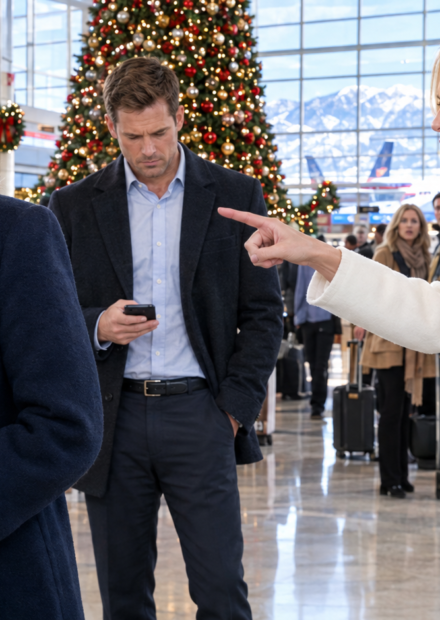
At Denver International Airport, my daughter-in-law told a gate full of strangers that I hadn’t paid a dime for her vacation.
At the time, the humiliation felt enormous.
Months later, I could almost be grateful for it.
Not for her cruelty.
Not for Michael’s silence.
But for what the moment forced me to see.
My son loved me.
Vanessa did not need to become my daughter.
And I did not need to purchase a place in either of their lives.
The money was never the real bill.
The real bill was every insult I had swallowed to remain easy.
Every disappointment I had hidden so Michael wouldn’t feel guilty.
Every time I had told myself love meant expecting less.
That week in Cabo, I finally stopped paying it.
And I haven’t picked up that tab since.