MY STEPDAUGHTER RIPPED UP MY PASSPORT AT THE AIRPORT—BUT SHE FORGOT WHO PAID FOR EVERYTHING
Chapter 5 – THE SEAT BESIDE ME
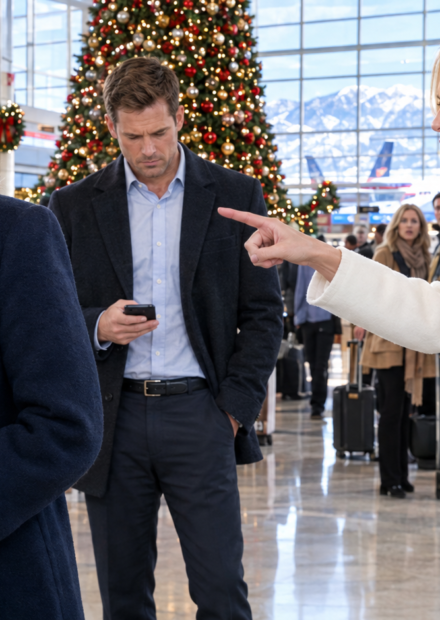
Six weeks later, I stood in Chicago O’Hare again.
Same terminal.
Same rolling suitcases.
Same departure boards.
Different woman.
My replacement passport was tucked inside a zippered compartment in my purse.
I checked it three times.
Then four.
Old habits.
My coral suitcase rolled behind me.
When I approached the first-class counter, I recognized Maria.
The agent who had canceled the original reservation.
She recognized me too.
Her eyes widened.
“Well,” she said, smiling. “You came back.”
“I did.”
“Going somewhere nice?”
“Maui.”
Her smile grew.
“Good for you.”
I handed her my passport.
She inspected it.
“Looks intact.”
I laughed.
“Let’s keep it that way.”
She printed my boarding pass.
“One passenger?”
“One.”
Saying it aloud felt strange.
Not sad.
Just new.
I went through security.
Bought coffee.
Sat near the gate.
My phone buzzed.
A message from Emily.
Have an amazing trip. Send pictures. I love you.
Then Sophie.
GRANDMA FIND A TURTLE FOR ME!!!
Ben sent six turtle emojis.
I smiled.
Then another message appeared.
Vanessa.
I stared at her name before opening it.
I hope you have the room with the balcony.
I read the sentence twice.
Then typed:
I do.
Three dots appeared.
Disappeared.
Returned.
Finally:
Good. You should have had it the first time.
That mattered more than I expected.
Vanessa and I were not magically repaired.
Real life does not work that way.
She and Derek sold one of their cars.
Derek took a salaried position with a logistics company while winding down most of his business.
They kept the house, though barely.
Vanessa started managing their finances herself.
The first time she told me they had made an entire month’s expenses without borrowing anything, I congratulated her.
I did not offer money.
Emily changed too.
She started saying no.
Not only to Vanessa.
To me.
That was how I knew the change was real.
Healthy boundaries work in both directions.
Once, I offered to pay for Sophie’s summer camp.
Emily said, “No, Mom. We’ve got it.”
A year earlier, that would have hurt my feelings.
Now it made me proud.
And the strangest change happened in me.
I discovered how much of my identity had been built around being useful.
When nobody needed a check, a ride, a rescue, or a solution, I had to ask a question I had avoided for years.
What did I want?
The answers were surprisingly ordinary.
I wanted to travel.
I wanted to take watercolor classes.
I wanted to replace the old chairs on my patio.
I wanted to read novels in the afternoon without feeling guilty.
I wanted Sunday dinners where nobody brought bills.
I wanted my grandchildren to visit because they wanted my stories, not because their parents needed childcare.
I wanted to miss Richard without treating my remaining years as a waiting room.
The gate agent announced boarding.
First class.
Group one.
I stood.
Then my phone rang.
Vanessa.
I considered ignoring it.
Instead, I answered.
“Hello?”
“Are you boarding?”
“Yes.”
“Okay.”
She sounded nervous.
“Is something wrong?”
“No.”
A pause.
Then she said, “I wanted to tell you something before you leave.”
“I’m listening.”
“I was awful.”
I closed my eyes.
“You already apologized.”
“I know. But I don’t think I said the right thing.”
I moved away from the boarding line.
“All right.”
She inhaled.
“I kept telling myself the passport was the problem.”
I waited.
“It wasn’t.”
“No.”
“The problem was that I thought your kindness belonged to me.”
My throat tightened.
She continued.
“I thought because you always helped, you always would. And because you always forgave me, I didn’t have to think about what forgiveness cost you.”
I said nothing.
“I’m sorry for ripping your passport. But I’m more sorry I thought you were the easiest person to sacrifice.”
People moved around me toward the gate.
I looked through the enormous windows at the airplane waiting outside.
“That’s what hurt,” I said.
“I know.”
“I would have given you almost anything if you had asked.”
“I know.”
“That was the problem.”
“I know that too.”
For a moment, we were both silent.
Then Vanessa laughed softly.
“Dad would be yelling at me.”
“He rarely yelled.”
“He’d make that disappointed face.”
I smiled.
“Yes.”
“Worse.”
“Much worse.”
She laughed.
Then her voice became quiet.
“I love you, Maggie.”
I swallowed.
“I love you too.”
“Go to Hawaii.”
“I’m trying.”
“And don’t bring us anything expensive.”
I laughed.
“That may be the most convincing evidence of personal growth I’ve heard.”
“Very funny.”
“I might bring the children something.”
“Fine.”
“Something small.”
“Good.”
“And Vanessa?”
“Yes?”
“Take care of yourself.”
“You too.”
I ended the call.
Then I boarded.
My seat was beside the window.
There was nobody beside me yet.
I placed my purse beneath the seat and touched the passport through the leather.
Whole.
Mine.
Safe.
As the plane taxied toward the runway, I thought about the first trip.
Five tickets.
Five people.
Thousands of dollars.
A villa.
Excursions.
Plans.
I had believed generosity guaranteed togetherness.
It didn’t.
Money can purchase seats beside you.
It cannot make the people sitting in them respect you.
The engines grew louder.
Chicago began sliding past the window.
Then we lifted.
For the first time since Richard died, I felt something I had almost forgotten.
Anticipation.
Not obligation.
Not responsibility.
Not usefulness.
Anticipation.
When I arrived in Maui, warm air wrapped around me the moment I stepped outside.
It smelled faintly of flowers and salt.
A driver held a sign with my name.
MARGARET COLLINS.
Not Mom.
Not Grandma.
Not Maggie, can you help?
Margaret Collins.
I smiled.
“That’s me.”
The villa was even more beautiful than the photographs.
The manager showed me through the kitchen, living room, patio, and finally the master suite.
He opened the balcony doors.
The Pacific stretched beyond the railing.
Blue beyond anything I had imagined.
For several seconds, I couldn’t move.
“Will this room work for you?” he asked.
I laughed.
“Yes.”
After he left, I placed my suitcase beside the bed.
Then I walked onto the balcony.
The sun was beginning to sink.
Gold spilled across the water.
I thought of Richard.
I wished he were there.
That grief would always be part of me.
But for once, wishing for him did not make the moment feel empty.
It made it precious.
I took out my phone.
Sophie had sent another message.
TURTLE YET???
I replied:
I’ve been here eleven minutes. Give your grandmother a chance.
Then I took a photograph of the ocean.
I sent it to the family group chat.
Emily responded with hearts.
Sophie demanded turtle pictures.
Ben wanted to know whether there were sharks.
Derek wrote:
Beautiful view. Enjoy it, Maggie.
Then Vanessa replied.
Dad would have loved that.
I looked at the ocean.
“Yes,” I whispered.
“He would.”
The next morning, I went snorkeling.
I was the oldest person in my group.
Derek would have been shocked.
Our guide helped us into the water near a reef.
At first, my breathing sounded too loud inside the mask.
Then I looked down.
The world changed.
Blue water.
Sunlight.
Coral.
Fish flashing silver and yellow.
And then, beneath me, a green sea turtle moved slowly through the water.
Beautiful.
Ancient.
Completely unconcerned with anyone’s schedule.
I laughed into my snorkel.
The guide pointed toward it.
I already had my underwater camera ready.
For Ben.
For Sophie.
For myself.
The turtle disappeared into deeper water.
I floated there for another minute.
Then I thought about the airport.
The trash can.
The torn passport.
Vanessa’s smile.
Emily looking at the floor.
Derek saying I would slow them down.
At the time, it had felt like one of the worst moments of my life.
Maybe it was.
But terrible moments can reveal things comfortable ones hide.
If Vanessa had simply asked me to watch her cats, I might have done it.
If she had complained enough, I might even have canceled Hawaii myself.
I might have handed over the master bedroom.
I might have paid for everyone and thanked them for allowing me to come.
That was the frightening part.
The passport forced me to see what gradual disrespect had made invisible.
When I returned to the boat, the guide helped me aboard.
“You did great,” he said.
“Not too slow?”
He looked confused.
“Slow?”
I smiled.
“Never mind.”
That evening, I attended the luau alone.
At first, I felt self-conscious.
Families surrounded me.
Couples held hands.
Children ran between tables.
Then an older woman sitting nearby introduced herself.
Her name was Carol.
She was seventy-one and traveling alone after a divorce.
We talked through dinner.
She had been to fourteen countries.
Alone.
“You get used to it,” she said.
“To being alone?”
She shook her head.
“To not waiting.”
That sentence stayed with me.
The following days were filled with small freedoms.
I ate breakfast whenever I wanted.
I read beside the pool.
I booked a sunset cruise.
I bought Sophie a turtle necklace and Ben a ridiculous shark T-shirt.
For Emily, I found a pair of handmade earrings.
For Vanessa, I bought nothing expensive.
Just a postcard.
On the front was a photograph of the ocean.
On the back, I wrote:
Family should be a place where love is given freely, not where kindness becomes a debt.
I stared at the sentence.
Then added:
We’re learning.
That felt more honest.
On my final night, I sat on the balcony with a glass of wine.
Richard’s old photograph rested beside me.
I had carried it in my planner.
“You were right,” I told him.
The ocean answered.
“You usually were.”
That was not entirely true.
Richard would have argued.
I smiled.
“I finally came.”
The sun touched the horizon.
I thought of all the money I had spent over the years.
Some of it I regretted.
Most of it I didn’t.
Helping my family had never been the mistake.
Believing help had to continue regardless of how I was treated—that had been the mistake.
Generosity without boundaries does not always create gratitude.
Sometimes it creates expectation.
And expectation, fed long enough, can become entitlement.
I had learned that in the ugliest possible way.
But I had learned something else too.
Boundaries did not destroy my family.
They revealed it.
Emily remained.
The grandchildren remained.
Even Vanessa remained.
Different.
Uncomfortable.
Imperfect.
But trying.
Derek had stopped asking me for money.
For the first time, our conversations were about ordinary things.
Weather.
Work.
Ben’s soccer games.
The Bears losing.
I discovered I liked him better when I wasn’t financing him.
Maybe he liked himself better too.
Six months after Hawaii, Vanessa invited me to dinner.
I almost said no.
Then I went.
The meal was homemade.
Nothing fancy.
No expensive restaurant.
No expectation that I would pay.
After dinner, Sophie showed me a school project.
Ben made me watch a video about sharks.
Derek talked about his new job.
Then Vanessa brought out coffee.
“We have something to tell you.”
I raised an eyebrow.
“No business proposal, I hope.”
Derek laughed.
“No.”
Vanessa sat across from me.
“We made a budget.”
I stared at her.
“A real one?”
She nodded proudly.
“Emergency fund too.”
I looked at Derek.
“Whose idea?”
“Vanessa’s.”
“Smart woman.”
Vanessa smiled.
“We paid off one credit card.”
“That’s wonderful.”
“And we’re not asking you for anything.”
“Even more wonderful.”
Everyone laughed.
Then Vanessa became serious.
“There is one thing.”
I waited.
She reached into a drawer.
For half a second, old instincts returned.
A bill?
A request?
Instead, she placed a small box in front of me.
I opened it.
Inside was a passport holder.
Dark blue leather.
Simple.
Embossed in small gold letters:
MARGARET — GO WHERE YOU WANT
I stared at it.
Vanessa looked nervous.
“I know it doesn’t fix anything.”
“No.”
“I know.”
I touched the leather.
“It’s beautiful.”
Her eyes filled.
“I’m sorry.”
This time, I reached across the table.
I took her hand.
“I forgive you.”
She cried.
So did I.
Forgiveness did not mean I restored the old financial arrangements.
I never did.
That mattered.
Because if forgiveness requires returning to the conditions that allowed someone to hurt you, it is not forgiveness.
It is surrender.
We built something different instead.
Slower.
Less expensive.
More honest.
A year after the airport incident, Sophie asked me to tell the story at dinner.
“The passport story?”
Vanessa groaned.
“No.”
Ben laughed.
“Yes!”
Derek covered his face.
Emily, who had joined us that evening, nearly spit out her drink.
Sophie looked at me.
“Grandma, were you really going to let them go without you?”
I thought about it.
“No.”
Vanessa pointed at me.
“She canceled everything in about six minutes.”
“Seven,” I corrected.
Emily laughed.
“Of course she knows the exact time.”
“I’m an accountant.”
Ben stared at Vanessa.
“Mom, why did you rip Grandma’s passport?”
The table became quieter.
Vanessa looked at me.
I let her answer.
She took a breath.
“Because I was selfish.”
Ben considered this.
“That was dumb.”
Derek choked on his water.
Vanessa nodded.
“Yes. It was.”
Sophie looked at me.
“And Grandma canceled everything?”
“Yes.”
“Was that mean?”
Another silence.
Everyone looked at me.
I thought carefully.
“I was angry.”
“That’s not an answer.”
Twelve-year-olds are dangerous that way.
I smiled.
“Sometimes consequences feel mean when we don’t like them.”
Sophie considered that.
Then nodded.
“Did you really go by yourself later?”
“Yes.”
“Were you scared?”
“A little.”
“Was it fun?”
“Very.”
“Did you see turtles?”
“You have photographic evidence.”
She smiled.
Then she asked, “Would you go alone again?”
I looked around the table.
At Emily.
At Vanessa.
At Derek.
At my grandchildren.
At the family that had nearly broken itself because we had confused money with love and silence with peace.
“Yes,” I said.
“I would.”
Vanessa smiled.
“Good.”
Later that night, I drove home alone.
My house was quiet when I entered.
Once, quiet had frightened me.
Now it felt peaceful.
I placed my purse on the counter.
Inside it was my passport.
I carried it more often than necessary.
Maybe because I liked knowing I could leave.
Not leave my family.
Leave expectation.
Leave obligation.
Leave any place where love demanded I disappear.
I went upstairs.
On my bedroom wall was a framed photograph from Maui.
The sunset from the villa balcony.
Beside it was another photograph.
A sea turtle beneath blue water.
And beneath those pictures sat the blue passport holder Vanessa had given me.
GO WHERE YOU WANT.
Sometimes I still thought about that first morning at O’Hare.
I remembered Vanessa ripping the passport.
Derek laughing.
Emily staring at the floor.
And me standing there with my coral suitcase, humiliated in front of strangers.
If I could speak to that woman now, I would tell her something.
I would tell her not to cry.
Not because what happened wasn’t cruel.
It was.
Not because family betrayal doesn’t hurt.
It does.
I would tell her not to cry because the sound she had just heard was not only a passport being torn apart.
It was something else breaking too.
An old agreement.
One I had never consciously made.
The agreement that I would always pay.
Always forgive immediately.
Always make things easier.
Always absorb the discomfort so everyone else could remain comfortable.
Always stay home if someone needed me there.
That agreement had been destroyed in the same instant as my passport.
And unlike the passport, I never replaced it.
I replaced something else instead.
My sense of myself.
A woman who could say no.
A mother who could love without rescuing.
A stepmother who could forgive without surrendering.
A grandmother whose grandchildren knew her as a person, not simply the woman who paid.
A widow who finally took the trip she and her husband had postponed for too many years.
A sixty-four-year-old woman sitting in first class with a new passport, a coral suitcase, and an empty seat beside her that no longer felt empty.
Vanessa had thought tearing my passport would keep me home.
For a few hours, it did.
But in the end, she gave me something neither of us expected.
A reason to stop waiting for permission.
A reason to look at everything I had been paying for and ask what it was actually costing me.
A reason to discover that being loved and being useful were not the same thing.
And a reason to finally understand what Richard had tried to tell me years before.
You can love people without financing their disrespect.
I still loved my family.
I probably always would.
But now, when we traveled together, everyone paid what they could.
When someone had a problem, I listened before reaching for my checkbook.
When someone asked me for something, I allowed myself to say no without providing a three-page explanation.
And when I wanted something for myself, I no longer waited to see whether someone else needed the money first.
The following spring, I booked Italy.
One ticket.
My ticket.
When Sophie found out, she gasped.
“You’re going alone again?”
“Yes.”
“Grandma!”
“What?”
“You’re becoming one of those traveling grandmas.”
I smiled.
“I certainly hope so.”
Vanessa was standing behind her.
Our eyes met.
For one tiny moment, I think we both remembered the airport.
The trash can.
The pieces of blue paper.
Then she smiled.
“Keep your passport away from me.”
I laughed.
“Oh, believe me.”
She laughed too.
And this time, the laughter didn’t hurt.
I zipped my passport safely inside my purse.
Whole.
Valid.
Mine.
Just like the life I had finally remembered belonged to me.