CHAPTER 1: THE CHRISTMAS I WASN’T INVITED TO
I found out I was hosting Christmas for twenty-five people while standing barefoot in my own kitchen, holding a cup of coffee that had already gone cold.
The strange part was that nobody had invited me.
It was twelve days before Christmas.
Snow had been falling since before dawn, laying a clean white sheet across the back field and softening the dark line of pines behind my house.
For almost thirty-five years, I had loved mornings like that.
Thomas used to stand at the kitchen window and say Vermont looked honest under snow. No weeds. No mud. No dead grass. Everything covered. Everything quiet.
Thomas had been gone three years by then.
The house was still large enough to echo without him.
Five bedrooms. Three bathrooms. A formal dining room that could seat fourteen if we squeezed.
A basement family room where children had spent decades sleeping in sleeping bags while their parents occupied the upstairs rooms.
A mudroom built for ski boots. Two refrigerators. A pantry big enough to disappear into.
For years, all of that had made our house perfect for Christmas.
After Thomas died, apparently it made it public property.
My son Mark and his wife Brittany had driven up from Massachusetts for the weekend.
They were in the breakfast room while I stood around the corner in the kitchen. Brittany’s phone was on speaker.
I wasn’t trying to listen.
At first.
Then I heard my name.
“So we’re definitely doing Evelyn’s,” Brittany said.
A woman’s voice answered through the phone. I recognized her sister, Claire.
“She said yes?”
There was a pause.
Then Brittany laughed.
“She doesn’t need to say yes. She always hosts.”
My hand stopped halfway to the sink.
Claire said something I couldn’t make out.
Brittany continued.
“There’s tons of space. Mom and Dad can take the downstairs guest room.
You guys can have the blue room. Jared’s family can use the basement. The kids don’t care where they sleep.”
Then another voice joined the call.
“What about everybody else?”
Brittany laughed again.
“We’ll make it work.”
I heard Mark shift in his chair.
“Britt, maybe we should actually ask Mom.”
My heart gave one small, hopeful beat.
It embarrasses me now, remembering that.
At sixty-eight years old, after spending forty-one years raising that boy, I was still grateful for the possibility that he might say something obvious on my behalf.
Brittany sighed.
“Mark, your mother loves Christmas.”
“Yeah, but twenty-five people—”
“She’ll be thrilled.”
“That’s not what I’m saying.”
“Your mom gets lonely.”
I set my coffee down very carefully.
Brittany lowered her voice in that way people do when they believe lowering it makes cruelty private.
“It’ll make her feel useful.”
Claire laughed.
My fingers tightened around the counter.
Then they started discussing meals.
Not whether I would cook.
What I would cook.
Brittany had apparently decided I would make prime rib Christmas Eve, turkey Christmas Day, two breakfasts, appetizers, desserts, and “those cheesy potato things Evelyn does.”
Someone asked where Brittany expected me to sleep if all the bedrooms were occupied.
There was a beat of silence.
Then Brittany said, “She can sleep in the laundry room.”
Laughter burst through the speaker.
“Oh my God,” Claire said.
“I’m kidding,” Brittany said, still laughing. “Relax. Mostly. She could put a cot in there. She’s lonely anyway. She’ll be running around serving everybody, so she probably won’t sleep.”
More laughter.
I didn’t hear Mark laugh.
I wish I could say that helped.
It didn’t.
Because he also didn’t say, Stop.
He didn’t say, That’s my mother.
He didn’t say, This is her home.
He didn’t even repeat his weak suggestion that perhaps the woman who owned the house should be asked whether twenty-five people could descend on it for three days.
He went silent.
That silence hurt more than Brittany’s joke.
I had heard jokes before.
I had lived long enough to understand that people often reveal the truth by putting a laugh after it.
But Mark’s silence told me something I had spent years refusing to understand.
He knew.
He knew how much work Christmas was.
He knew I washed every sheet after they left.
He knew I started shopping in November.
He knew I cooked for days.
He knew I woke before everyone else to make coffee and went to bed after everyone else because somebody always needed towels, another blanket, pain reliever, batteries, tape, scissors, a wine opener, a clean glass, a place to charge a phone.
He knew.
And he had decided it was easier for me to do all of that than for him to disagree with his wife.
I stood alone in the kitchen Thomas and I had renovated together in 1997 and understood, with astonishing clarity, that I did not want to host Christmas.
Not that Christmas.
Not anymore.
So I didn’t confront them.
That surprised even me.
The Evelyn Carter of ten years earlier would have walked straight into the breakfast room, hands on hips, and demanded an explanation.
The Evelyn Carter of three years earlier—the newly widowed version of me—would probably have agreed to everything because a full house would have been less painful than an empty one.
But grief changes shape.
At first, it makes you afraid of silence.
Later, if you’re lucky, it teaches you how valuable silence can be.
I went upstairs.
I closed my bedroom door.
And I booked a cruise.
Seven nights.
Christmas departure.
A balcony cabin.
At sixty-eight, I had never taken a cruise without Thomas.
The fact made my finger hover above the booking button.
Then I heard Brittany downstairs laughing about whether I had enough serving platters.
I pressed confirm.
After that, I became extremely practical.
I called a locksmith.
Not because I wanted drama.
Because Brittany and Mark both had spare keys.
So did two former babysitters, my late sister’s daughter, and possibly a contractor who had replaced the porch railing in 2012.
I had no idea how many copies existed anymore.
The locksmith came two days later.
Every exterior lock was replaced.
I gave one spare key to Louise Bennett, my neighbor and closest friend.
Louise was seventy, sharp-eyed, silver-haired, and had spent thirty years living close enough to know when our furnace broke, when Thomas bought me roses, and when Mark first snuck home after midnight as a teenager.
When I explained why I needed her to watch the house, she stared at me for three full seconds.
Then she smiled.
“You’ve finally lost your mind.”
“No.”
“No?”
“I may finally have found it.”
She hugged me.
I also hired a small private security company to drive by the property during the holiday weekend, because I knew Brittany.
She was not dangerous.
She was persistent.
There is a difference.
Persistent people can cause an astonishing amount of trouble when they believe the word no is negotiable.
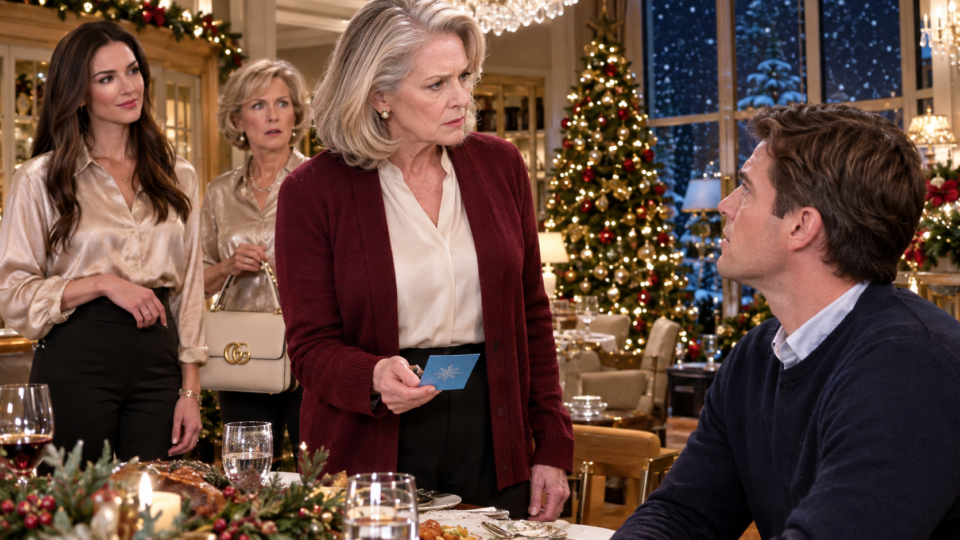
Finally, on the morning of Christmas Eve, I placed an envelope on the dining room table.
BRITTANY, I wrote on the front.
Inside was a single sheet of paper.
I did not write an angry letter.
I simply wrote:
This house was never offered for Christmas.
I will not be hosting.
I hope you enjoy the holiday you planned.
—Evelyn
I left the envelope there because I knew Brittany well enough to imagine that, at some point, she would find a way inside or convince herself she could.
Then I packed my suitcase.
By two in the afternoon, snow had begun again.
Large flakes drifted against the windows.
I put on my wool coat.
Before leaving, I stood in the dining room.
The table was bare.
No red runner.
No candles.
No folded napkins.
No twenty-five place settings.
For decades, that sight would have made me feel guilty.
That day, it made me feel light.
My phone rang at 3:47.
Brittany.
I let it ring twice before answering.
“Hello?”
“Why are the locks changed?”
No greeting.
No Merry Christmas.
Just outrage.
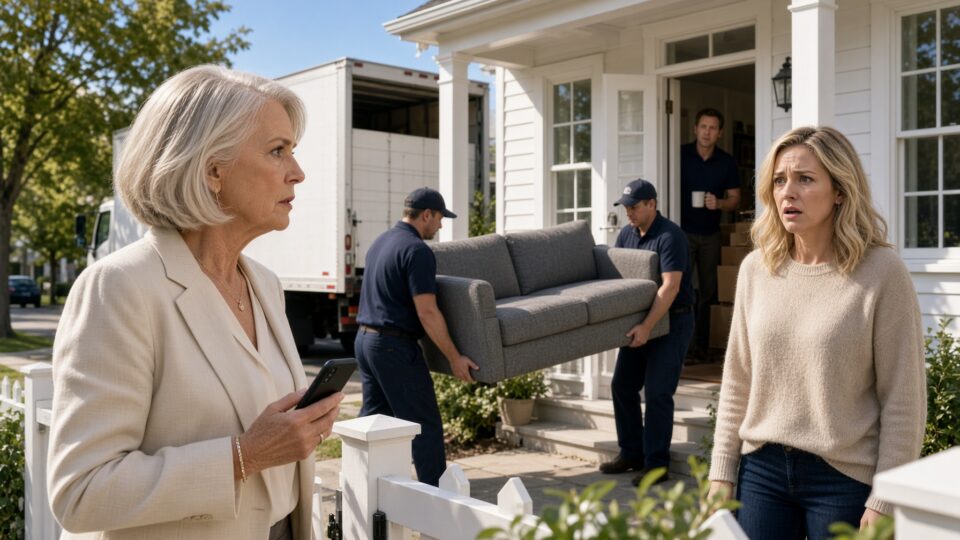
I pictured the driveway without needing to see it: SUVs crowded beside the snowbanks, luggage carriers open, children stamping boots, coolers on the ground, relatives staring toward the front door while Brittany repeatedly tried a key that no longer belonged to my house.
“Because they’re my locks,” I said.
“What?”
“You asked why the locks were changed. They’re my locks.”
“Evelyn, everybody is here.”
“I assumed they might be.”
“We planned Christmas here.”
“No,” I said. “You planned Christmas here.”
Silence.
Then her voice sharpened.
“What is that supposed to mean?”
“It means exactly what I said.”
Mark was speaking in the background.
“Britt. Give me the phone.”
She ignored him.
“We have twenty-five people standing outside in the snow.”
“Yes.”
“Children, Evelyn.”
“I know what children are.”
“Why would you do this?”
That was when I finally told her.
“I heard the phone call.”
Nothing.
“The speakerphone call,” I continued. “The one where you invited your entire family to my home. The one where you decided what I would cook, where everyone would sleep and what would happen if there wasn’t a room left for me.”
Her voice dropped.
“Oh my God.”
“Yes.”
“The laundry-room thing was a joke.”
“I know.”
“Then why are you acting like—”
“I also heard you say hosting would make me feel useful.”
She stopped.
Behind her, I could hear doors slamming and someone asking what was going on.
“Evelyn,” Brittany said, “you completely misunderstood.”
“No. I understood every word.”
“We thought you’d be happy.”
“You didn’t ask.”
“Because you’ve always hosted.”
“Always is not a contract.”
Mark finally got the phone.
“Mom.”
His voice sounded tired already.
“Hi, Mark.”
“You left?”
“I’m on my way to the airport.”
“The airport?”
“I’m taking a Christmas cruise.”
For a moment, he said nothing.
Then, quietly, “You’re serious.”
“Very.”
Brittany grabbed the phone back.
“What are we supposed to do now?”
I looked through my windshield at the road curving white between the trees.
“I expect you to solve the problem you created.”
She made a sound of disbelief.
“Do you have any idea what hotels cost up here on Christmas Eve?”
“No.”
“Everything’s probably booked!”
“Then I suggest you start calling.”
“This is unbelievable.”
“No,” I said. “What’s unbelievable is driving twenty-five people to somebody else’s house without asking.”
Her anger turned cold.
“Mark said this house would be his someday.”
That sentence changed the temperature in the car.
For a moment, I forgot Brittany.
I saw Thomas.
Young Thomas, standing beside me in front of that house thirty-three years earlier, both of us terrified by the mortgage.
Thomas replacing shingles himself one summer because we couldn’t afford a roofer.
Thomas sanding the dining-room floor.
Thomas carrying Mark through the front door when he was seven after he’d fallen asleep in the car.
Thomas dying in our bedroom while I held his hand.
And suddenly Brittany’s claim felt larger than Christmas.
It explained Christmas.
“Someday isn’t today,” I said.
She inhaled sharply.
“You’re leaving your family outside on Christmas?”
“No,” I said. “You brought your family to a house that wasn’t yours.”
Then I ended the call.
My hands shook afterward.
Not from guilt.
From adrenaline.
I pulled into a gas station ten minutes later and sat beneath the fluorescent canopy while snow blew sideways across the parking lot.
My phone started lighting up.
Mark.
Brittany.
Mark again.
Unknown number.
Brittany.
Group messages.
I switched it to silent.
Then Louise called.
I answered immediately.
“I can see them,” she said.
“How bad?”
“Oh, honey.”
That worried me.
“What?”
“There are cars everywhere. Your driveway looks like a dealership.”
Despite myself, I laughed.
Louise lowered her voice dramatically.
“Brittany is standing on the porch waving her arms.”
“At whom?”
“No idea. Possibly Vermont.”
“What about everyone else?”
“Confused. Cold. One little boy is making a snow angel.”
“At least someone’s enjoying himself.”
Louise snorted.
Then her voice softened.
“You okay?”
I looked at my suitcase in the passenger seat.
At my boarding documents.
At the snow.
“I don’t know yet.”
“You will be.”
I wanted to believe her.
At the airport, I learned what happened next in pieces.
Louise called twice.
Mark texted me once.
Denise—Brittany’s mother—did not contact me at all.
Later I discovered she had been too busy asking her daughter questions.
The first hotel Brittany called had four rooms.
The second had none.
Vacation rentals required minimum stays or had holiday premiums.
One inn could accommodate seven people, but not together.
Another was forty minutes away.
By seven that evening, Brittany’s twenty-five-person Christmas had scattered across three hotels and one rental condo at prices high enough to make people stop pretending the situation was funny.
Apparently the turning point came when Denise asked Mark directly, in front of everyone, “When did Evelyn agree to all this?”
Mark could have lied.
He didn’t.
Maybe something had finally become too humiliating even for his instincts.
“She didn’t,” he said.
Denise stared at him.
“What do you mean, she didn’t?”
“We never actually asked.”
Brittany immediately jumped in.
“Because she always does Christmas.”
Denise turned toward her daughter.
“So you made twenty-five people drive to Vermont for a Christmas nobody invited us to?”
Brittany said it was more complicated.
It wasn’t.
Families can tolerate extraordinary amounts of confusion until somebody asks the correct simple question.
Had Evelyn agreed?
No.
Everything after that became harder to defend.
When my flight finally boarded, I had seventeen unread messages.
I opened only one.
It was from Mark.
Mom, I’m sorry. This got out of hand.
I stared at the words.
Got out of hand.
As though Christmas had grown legs and invited twenty-five people by itself.
As though nobody had made decisions.
As though he had not sat ten feet from me and let his wife plan where I would sleep inside my own home.
The flight attendant asked me to put my phone away.
I did.
For the first time in nearly forty years, I was leaving on Christmas Eve without checking whether a turkey was thawed.
Without wondering whether I had enough pillows.
Without calculating oven space.
Without setting an alarm for six in the morning.
The plane lifted above the storm.
Vermont disappeared beneath cloud.
And somewhere behind me, twenty-five people were learning a lesson I had spent too many years avoiding:
A tradition is something people share.
It is not something one person provides while everyone else assumes she’ll keep providing it forever.
By the time we reached cruising altitude, I had made one more decision.
I would listen carefully to whatever Mark said next.
Not because I intended to punish him.
Because I needed to know whether my son was sorry that he had hurt me—
or merely sorry that Christmas had become expensive.
I got my answer two days later.
CHAPTER 2 : THE APOLOGY WITH A BILL ATTACHED
Christmas morning at sea was the strangest Christmas morning of my life.
No one knocked on my bedroom door at six-thirty asking where the coffee filters were.
No grandchildren—borrowed or otherwise—ran down the hallway.
No oven timer beeped.
No one asked whether dinner could be moved an hour earlier because somebody wanted to drive home before dark.
I woke when sunlight came through the curtains.
For several seconds, I had no idea where I was.
Then I heard the low hum of the ship and remembered.
I lay there smiling at the ceiling.
I ate breakfast overlooking water so blue it looked artificial.
I had eggs somebody else cooked.
Coffee somebody else poured.
And when I finished, somebody else removed the plate.
I nearly laughed.
Louise sent updates throughout the morning.
The Brittany Family Group Chat, as she called it, had apparently become a war zone.
I wasn’t in that group, but Denise had called Louise after realizing Louise was house-sitting.
Louise, who considered discretion a useful skill but not always an enjoyable one, summarized freely.
Brittany had started by posting a long message about how humiliated she felt.
According to her, I had “knowingly stranded” twenty-five people in a Vermont snowstorm.
She described the locked house as “cruel.”
She said I had “ruined Christmas to prove a point.”
For approximately twenty minutes, several relatives comforted her.
Then Denise asked one question.
Did Evelyn ever say you could hold Christmas there?
Brittany tried to redirect.
She said everybody knew Christmas happened at my house.
Denise asked again.
Did she agree?
No answer.
A cousin asked whether I even knew they were coming.
Another asked whether they had really planned to sleep in my bedrooms without speaking to me.
Then Claire—the same sister who had laughed during the speakerphone conversation—made the mistake of writing, To be fair, Brittany said Evelyn wouldn’t mind.
Denise replied, Brittany saying Evelyn won’t mind is not the same as Evelyn saying yes.
From there, the mood shifted.
Not dramatically.
Families rarely reverse themselves all at once.
But the sympathy leaked away.
People began calculating the cost of hotels.
Gas.
Food.
Lost deposits.
One uncle had driven almost six hours.
A niece had skipped Christmas with her boyfriend’s family because she believed the Vermont gathering was confirmed.
Someone asked why Brittany hadn’t sent an actual invitation from me.
Another asked why there had been no meal plan, room assignments or messages from the host.
Brittany kept insisting that I had embarrassed her.
Eventually Denise wrote:
You embarrassed yourself.
Louise read that one to me over the phone.
I was sitting beside the pool with an iced tea.
“Remind me to send Denise flowers,” I said.
“Oh, she’s not done.”
“What else?”
“She says she and her husband had to put most of the hotel rooms on their credit card.”
I sat up.
“Why?”
“Some of the younger relatives couldn’t afford holiday rates. One family was about to turn around and drive back to New Jersey.”
“How much?”
“Several thousand already.”
I closed my eyes.
Part of me felt bad.
Not for Brittany.
For Denise.
For the relatives who had believed an invitation was real.
That distinction mattered to me.
I had not wanted twenty-five people stranded.
I had wanted twenty-five people not to enter my house.
Those were different things.
But there are moments when enforcing a boundary creates inconvenience for innocent people because someone else had built their plans on your compliance.
That did not make the boundary wrong.
It made the entitlement expensive.
Mark called that afternoon.
I watched his name on the screen for several rings before answering.
“Hi.”
“Mom.”
He sounded exhausted.
“How’s the cruise?”
“Lovely.”
A pause.
“Good.”
Another pause.
I let him fill it.
“I’m sorry.”
I looked out across the water.
“For what?”
He exhaled.
“Everything.”
“That’s broad.”
“I should’ve said something when Brittany was on the phone.”
“Yes.”
“I should’ve made her ask you.”
“Yes.”
“I knew it was too much.”
That one hurt.
Not because I didn’t know.
Because hearing him admit it removed the last excuse.
“Then why didn’t you stop it?”
“I don’t know.”
“You do.”
He was silent.
I waited.
Finally he said, “I didn’t want a fight.”
There it was.
Small.
Ordinary.
Devastating.
“You didn’t want a fight with Brittany.”
“No.”
“So you chose one with me.”
“I didn’t think it would turn into this.”
“Of course you didn’t. You thought I would say yes.”
He didn’t answer.
“You thought I would be upset privately,” I continued, “and then I’d cook dinner.”
“Mom—”
“That’s what you thought.”
He let out a long breath.
“You’re right.”
That should have helped.
A clean admission is rare.
But then his tone changed slightly.
Not much.
Just enough.
“There’s one other thing.”
I almost laughed before he even said it.
“What?”
“The hotel situation is rough.”
“Yes. Louise mentioned that.”
“Denise and Ron put a lot on their card.”
“I heard.”
“Brittany feels awful.”
“I doubt that’s the primary thing she feels.”
“Mom.”
“What are you asking me?”
He hesitated.
Then: “Would you maybe help with some of the hotel cost?”
I said nothing.
He rushed ahead.
“Not all of it. Just something. It might keep the peace.”
The irony was so perfect I had to stand up.
The ocean moved beyond the glass railing.
Thousands of miles of water.
And my son had reached across all of it to hand me another bill for solving a problem I had not created.
“Mark.”
“Yeah?”
“Call me again when the apology doesn’t come with a bill.”
“Mom, that’s not fair.”
I almost admired the sentence.
Not fair.
I repeated it.
“Not fair?”
“I just mean—”
“I know what you mean.”
“I’m trying to fix things.”
“No. You’re trying to make the person least responsible pay so the people most responsible don’t have to be uncomfortable.”
“Brittany and I will pay some.”
“You should pay all of your share.”
“Denise covered relatives.”
“Then you and Brittany can work that out with Denise.”
“This is going to cause a huge fight.”
“Then have it.”
He went quiet.
“You’re very good at asking me to absorb discomfort so you don’t have to,” I said. “I’m not doing that anymore.”
I ended the call gently.
No yelling.
That mattered to me.
For most of my life, I had confused calmness with surrender.
They are not the same thing.
Sometimes calmness is simply refusing to carry somebody else’s panic.
When I returned home after the cruise, Louise had stocked my refrigerator with milk, eggs and a bottle of champagne.
“For surviving Christmas,” she said.
“I wasn’t there.”
“Exactly.”
My house looked exactly as I had left it.
That was perhaps the greatest luxury.
No mountain of towels.
No sticky counters.
No wrapping paper shoved behind sofa cushions.
No sheets stripped from five beds.
No mystery casserole dish soaking in the sink.
Everything was quiet.
I had barely taken off my coat when Louise looked toward the driveway.
“Company.”
Mark’s car.
Of course.
He and Brittany were waiting when I opened the door.
They must have been watching for my arrival.
Brittany got out first.
“I can’t believe you still haven’t given us a key.”
No hello again.
Interesting.
Mark closed his door more slowly.
“Britt.”
“What? It’s true.”
I remained on the porch.
“It’s cold. What do you want?”
Brittany stared at the lock.
“We need our spare key back.”
“No.”
Her head snapped toward me.
“No?”
“There is one spare key now. Louise has it.”
“For emergencies?”
“For anything I decide she needs it for.”
“What about Mark?”
“What about him?”
“He’s your son.”
“Yes.”
“This is his family home.”
“No,” I said. “This is my home.”
She looked toward Mark.
He rubbed his forehead.
“Mom, she’s just saying—”
“I know exactly what she’s saying.”
Brittany folded her arms.
“Locking your own son out is extreme.”
“I’m not locking him out.”
“He doesn’t have a key.”
“Neither does my dentist. That doesn’t mean I’ve locked him out.”
“This isn’t funny.”
“I agree.”
Mark looked at me.
“So what now?”
“Now you visit when invited.”
Brittany actually laughed.
“You’re serious?”
“Completely.”
“So we’re guests.”
“Yes.”
“In the house Mark grew up in.”
“He no longer lives here.”
“That’s unbelievable.”
“No. It’s adulthood.”
Mark looked at the porch boards.
I saw shame in his face.
Real shame.
Not embarrassment.
There is a difference.
Brittany was still arguing when he finally said, “Brittany, stop.”
She turned.
“What?”
“Stop.”
It was not dramatic.
But it was the first time I’d heard him say the word to her in a way that meant it.
She stared at him.
Then she walked back to the car.
Mark remained.
“Can I talk to you?”
“Yes.”
We went inside.
I made tea.
For several minutes, we sat at the kitchen table without speaking.
Finally he said, “I really am sorry.”
I nodded.
“I know.”
He looked up.
“You believe me?”
“I believe you’re beginning to be.”
That hurt him.
I saw it.
But I had spent too many years softening truths until nobody learned from them.
He swallowed.
“I should’ve stopped her.”
“Yes.”
“I keep replaying it.”
“So do I.”
“The laundry-room thing—”
“That wasn’t the worst part.”
He frowned.
“It wasn’t?”
“No.”
“What was?”
I looked at him.
“You.”
His face changed.
“Me?”
“She said something cruel. People do that. People get careless when they think the person they’re talking about won’t hear them.”
I folded my hands around my mug.
“But you knew it was wrong.”
He stared down.
“You said we should ask me.”
“I know.”
“Then she dismissed you, and you decided silence was easier.”
“I’m sorry.”
“The thing that hurt most wasn’t hearing that Brittany thought I could sleep in the laundry room.”
My throat tightened despite myself.
“It was realizing my son had decided it was easier for his mother to be used than for his wife to be annoyed.”
Mark’s eyes filled.
I didn’t enjoy that.
Parents sometimes imagine justice will feel satisfying when their adult children finally understand the pain they caused.
Mostly it feels sad.
He whispered, “I didn’t think of it that way.”
“I know.”
That was the problem.
A week later, another problem arrived.
Brittany had been checking county property records.
She discovered what she should already have known.
The Vermont house belonged entirely to me.
Thomas and I had owned it jointly.
When he died, ownership passed to me.
There was no automatic portion reserved for Mark.
No invisible family claim.
No future deed already half-signed by fate.
I learned she’d searched the records because Mark called me one Tuesday night.
He sounded uncomfortable before he even began.
“Mom, can I ask you something weird?”
“You can ask anything.”
“You might not like it.”
“Then I reserve the right not to answer.”
He sighed.
“It’s about the house.”
Of course it was.
“What about it?”
“Brittany was looking into estate planning.”
I actually smiled.
“Brittany was?”
“Yeah.”
“And my estate became part of her planning?”
He groaned.
“Please don’t make it sound worse than it is.”
“I haven’t made it sound like anything.”
“She just thinks maybe it would make sense to transfer the deed early.”
I said nothing.
“To me,” he added.
“I understood.”
“Not because we want the house right now.”
“Then why would you need the deed right now?”
“Probate. Taxes. Complications later.”
I leaned back in my chair.
“Mark.”
“Yeah?”
“Are you asking your healthy sixty-eight-year-old mother to give you the house she currently lives in because someday you might inherit it?”
When phrased plainly, entitlement sounds ridiculous.
That’s why entitled people prefer complicated vocabulary.
Estate planning.
Efficiency.
Avoiding probate.
Keeping it in the family.
Mark said quietly, “When you say it like that—”
“How should I say it?”
He was silent.
Then, finally, “Brittany thinks it makes financial sense.”
“It makes financial sense for you. That doesn’t make it my plan.”
“I’m sorry I asked.”
“I hope you are.”
After we hung up, I sat alone in the living room.
Snow pressed against the lower windows.
The house creaked around me.
For the first time since Thomas died, I felt something I had never expected to feel toward the home we had loved.
Burden.
Not because of its memories.
Because of what other people had begun building on top of those memories.
Expectations.
Claims.
Plans.
I called Daniel Price the next morning.
Daniel had handled our wills for nearly twenty years.
When I told him I wanted to review everything, he did not ask why.
He only said, “When was the last update?”
“Before Thomas died.”
“Then you’re overdue.”
That meeting changed far more than paperwork.
I did not disinherit Mark.
I never wanted that.
This was not revenge.
But I changed who could manage my finances if I became incapacitated.
I changed who would have authority over housing decisions.
I made certain no one—not Mark, not Brittany, not anyone—could sell my home, move me, access accounts or make choices while I remained capable of making those decisions myself.
Daniel listened as I described Christmas.
When I finished, he removed his glasses.
“Evelyn, may I tell you something outside my role as your attorney?”
“Please.”
“The most important estate-planning document in this room is not your will.”
“What is?”
“The one that protects your life before you’re dead.”
That sentence stayed with me.
Especially after Brittany heard I was meeting Daniel.
She called Mark.
Mark called me.
Apparently Brittany believed I was changing the inheritance “to punish them.”
I did not respond.
Denise did.
According to Mark, Brittany complained to her mother for nearly fifteen minutes before Denise interrupted.
“Brittany, an inheritance is what somebody leaves you when they’re dead.”
Brittany said that wasn’t the point.
Denise said, “Evelyn is still very much alive.”
For the first time, I began asking myself a question no one else seemed interested in asking.
What did I want the next twenty years of my life to look like?
The answer surprised me.
It did not look like five empty bedrooms waiting for other people’s holidays.
CHAPTER 3 : WHAT WERE THEY SUPPOSED TO HAVE SOMEDAY?
By March, the snowbanks had begun collapsing into themselves.
Vermont does not surrender winter gracefully.
It loosens its grip one muddy inch at a time.
I walked through the house one gray morning carrying a notebook.
Not because of Brittany.
That distinction mattered.
Christmas had forced me to notice things, but what I decided next belonged to me.
Property taxes.
Heating oil.
Roof maintenance.
Insurance.
Snow removal.
Landscaping.
Plumbing for three bathrooms when I regularly used one.
Five bedrooms, four of which spent most of the year holding furniture and memories.
I stood in the upstairs hallway and realized I was maintaining a small hotel for guests who were increasingly behaving like investors.
So I called a realtor.
Her name was Megan.
She came on a Thursday afternoon, walked slowly through the rooms and told me the property would likely attract families looking to relocate from Boston or New York.
“Are you emotionally ready?” she asked.
I appreciated the question.
“I think so.”
“Thinking isn’t always knowing.”
“No.”
I looked through the dining-room doorway.
Thomas’s chair was still there.
I had never been able to move it.
“List it.”
Two weeks later, a FOR SALE sign appeared beside my driveway.
Louise texted me a photograph from her window.
It has begun, she wrote.
I knew exactly what she meant.
Brittany called before lunch.
“You’re selling the house?”
“Yes.”
“Why?”
“Because I want to.”
“You didn’t tell us.”
“I just did.”
“No, I mean before you listed it.”
“I’m not required to request approval.”
“Mark grew up there.”
“Yes.”
“Thomas loved that house.”
“Yes.”
“This is the Carter family home.”
I looked around my kitchen.
“No. It’s my home.”
She exhaled hard.
“You can’t just sell it.”
“Watch me.”
That conversation lasted six minutes.
The real argument happened between Brittany and Mark later.
I did not hear it.
Mark told me about it weeks afterward.
Brittany had demanded that he stop me.
He asked how.
She said he needed to remind me what the house meant.
He said I knew exactly what it meant.
Then she said something that finally reached him in a way none of my warnings had.
“It’s the only thing Thomas left you.”
Mark corrected her.
“Dad left the house to Mom.”
“You know what I mean.”
“No, I don’t.”
“He bought it for the family.”
“They bought it together.”
“And you’re their only child.”
“Okay?”
Brittany became frustrated.
“Then what are we supposed to have someday?”
Mark told me he had stared at her.
Not because he’d never considered inheritance.
He had.
He admitted that freely.
Of course he had.
Most children understand that they may inherit something when their parents die.
The shock was hearing his wife speak as though my continued ownership represented a delay in delivery.
What were we supposed to have?
Not what would you like your mother to enjoy?
Not where will she live?
Not is she happy?
What do we get?
Mark said he left the room.
A week later, he asked whether Brittany and he could discuss buying the house.
That, at least, was reasonable.
I told them to speak with the realtor and get financing information.
Brittany arrived at my kitchen table with enthusiasm that almost made me sad.
“I knew you’d understand.”
“I haven’t agreed to anything.”
“We just want to keep it in the family.”
“At market value, I’m willing to consider an offer like any other.”
Her smile tightened.
“Market value.”
“Yes.”
“We’d still have closing costs.”
“Most buyers do.”
“We thought maybe because we’re family—”
I raised a hand.
“Get the numbers first.”
They did.
The numbers solved what sentiment could not.
Their Massachusetts house still had a substantial mortgage.
The Vermont property came with taxes, insurance, maintenance and winter costs far beyond what Brittany had ever considered when she called it “basically theirs someday.”
The bank would lend them far less than they needed.
Suddenly keeping the house in the family required somebody to pay for it.
Brittany returned with Plan Two.
“What if you sold it to us for less?”
“How much less?”
The figure she named was so low I thought I had misheard.
“You want me to reduce the price by almost a third.”
“It could be considered an early inheritance.”
I stared at her.
She rushed ahead.
“It would save realtor fees, and Mark would get it eventually anyway—”
“You don’t get an inheritance early because you can’t afford the thing you planned to inherit.”
Her cheeks flushed.
“That’s a harsh way to put it.”
“It’s an accurate way.”
“We’re trying to preserve something important.”
“So am I.”
“What?”
“My finances.”
She looked offended by the concept.
Then came Plan Three.
Seller financing.
Very small down payment.
Monthly payments to me.
Terms far more generous than any bank would offer.
I listened until she finished.
Then I laughed.
I didn’t intend to.
It simply escaped.
Brittany looked furious.
“What’s funny?”
“Let me see if I understand.”
I counted on my fingers.
“I sell you the house below market value.”
She opened her mouth.
“Then I finance most of the purchase myself.”
“Evelyn—”
“And I accept almost no down payment.”
“Families help each other.”
“So I give you part of the house, lend you the money to buy the rest and then wait for you to repay me.”
“It’s not like that.”
“It sounds a lot like me buying you my house.”
Mark looked miserable.
He finally said, “Mom’s right.”
Brittany turned toward him.
“Of course you’d say that.”
“No. I mean mathematically. This doesn’t work.”
She stood.
“Fine.”
I recognized that “fine.”
Nothing was fine.
The house went on the market properly in April.
The first open house brought more people than expected.
I spent the afternoon with Louise while Megan handled visitors.
At four-thirty, my phone rang.
Megan.
I answered cheerfully.
“How did it go?”
There was a pause.
“We had an issue.”
“What kind of issue?”
“Your daughter-in-law came.”
My body went cold.
“What?”
“She arrived about twenty minutes ago. I assumed you’d sent her.”
“I did not.”
“She started talking to one of the couples.”
“What did she say?”
Another pause.
“She told them the property was involved in a family dispute.”
I stood up.
Louise looked at me.
“She said ownership might be contested later,” Megan continued. “I corrected that immediately and told them title was clear, but—”
“Is Brittany still there?”
“Yes.”
“Put her on.”
Megan hesitated.
Then Brittany’s voice came through.
“Hello?”
“Leave my property.”
“Evelyn, I was just explaining—”
“You told buyers there is a family dispute.”
“There is.”
“No. There isn’t.”
“You know Mark wants the house.”
“Wanting something does not create a legal dispute.”
“They deserve to understand—”
“Leave.”
“I think you’re being impulsive.”
“Leave my property now, or Megan will call the police.”
Silence.
“You’d call the police on family?”
“If family refuses to leave after being told, yes.”
She inhaled.
“Evelyn—”
“And hear me clearly. You are no longer permitted inside my home unless I personally invite you.”
“You’re banning me?”
“I’m establishing a boundary you apparently require in writing.”
Mark called that evening.
He wasn’t defending her.
Not this time.
“I can’t believe she did that.”
“I can.”
“I told her she crossed a line.”
“She’s crossed several.”
“We had a huge fight.”
I didn’t ask for details.
He gave them anyway.
Their argument had moved quickly from the open house to Brittany’s habit of calling my property “our future.”
Mark had finally asked her to stop.
She said he was an only child and expecting inheritance was normal.
Mark said something I never thought I would hear him say.
“Expecting that your mother might leave you something one day is not the same as planning your life around your mother dying.”
When he told me, I closed my eyes.
“I’m sorry, Mom.”
“For what?”
“I’ve said versions of the same thing.”
Not as bluntly.
But he had.
Someday the house will probably be mine.
It had sounded harmless.
Maybe it had even been harmless when he first said it.
But expectations become dangerous when they harden into ownership.
A month later, I received an offer.
A young couple.
Rachel and Ben.
Two children, both under ten.
They loved the backyard.
They loved the old maple near the porch.
They loved the mudroom.
And, to my surprise, they loved the dining table.
It was an old solid-wood piece Thomas and I had bought at an estate sale when Mark was eleven.
It had been scratched by homework, scorched by one Thanksgiving casserole, stained by red wine, dented by toy cars and polished more times than I could count.
I had planned to sell it separately.
Rachel asked if I might consider leaving it.
“Our kids have never had a real dining table,” she said. “Not one where everyone fits.”
The sentence touched something inside me.
I said I would think about it.
Before closing, I told Mark he could have one weekend to go through his childhood belongings.
Old yearbooks.
Trophies.
Winter clothes.
Boxes of baseball cards.
A guitar he’d abandoned at nineteen.
He arrived with Brittany.
I nearly told her to leave.
Then I decided to let it happen once.
“Mark’s things only,” I said.
Brittany nodded.
Within twenty minutes, I found small paper labels attached to my belongings.
Antique dresser.
Silver service.
Two framed prints.
A Christmas ornament box.
And the dining table.
KEEP IN FAMILY, Brittany had written.
I peeled the labels off one by one.
She caught me holding the last one.
“What are you doing?”
“Removing these.”
“I was just marking what we’d like.”
“You’re here for Mark’s things. Not my things.”
“But you’ll have nowhere to put all this in a condo.”
“Then I’ll decide what happens to it.”
She glanced toward the dining room.
“We should at least have the table.”
“No.”
Her eyes widened.
“Seriously?”
“I’m selling it with the house.”
“You’re what?”
“The buyers love it.”
“That table has sentimental value.”
“To whom?”
“To all of us.”
I looked at her.
“Tell me the last Christmas you washed every dish used at that table.”
She blinked.
“What?”
“The last time you washed the serving platters. Or polished the silver. Or stripped the tablecloth. Or scrubbed gravy off the floor beneath it.”
“That’s not the point.”
“When?”
She couldn’t answer.
I ran my fingers over one of the scratches in the wood.
“Sentimental value is easy when somebody else does the labor attached to the memory.”
Her face hardened.
“You act like nobody appreciated you.”
“I think you appreciated what I provided.”
“That’s the same thing.”
“No.”
It wasn’t.
That was one of the most painful things I had learned.
Being needed is not the same as being valued.
Being useful is not the same as being loved well.
The sale closed in June.
The buyers received the house.
The table stayed.
I took my photographs, Thomas’s watch, his letters, a few pieces of furniture I genuinely loved and the ornaments that belonged to my own memories.
Everything else was sold, donated or given away by my choice.
The proceeds from the house went into accounts in my name.
Not Mark’s.
Not Brittany’s.
Mine.
I bought a two-bedroom condo in Burlington.
One bedroom for me.
One guest room.
One.
That number brought me an unreasonable amount of joy.
The first time Brittany visited, she walked through the condo slowly.
Kitchen.
Living room.
Balcony.
My bedroom.
Guest room.
Then back into the hall.
“That’s it?”
“That’s it.”
“No basement?”
“No.”
“No formal dining room?”
“No.”
“Where would everybody stay for Christmas?”
I looked at her.
“Wherever they book.”
Louise nearly choked on her coffee.
And just like that, the house that had once held thirty years of obligation belonged to somebody else.
I expected grief.
I felt some.
But mostly I felt space opening around me.
Not empty space.
Mine.
CHAPTER 4 : NOW IMAGINE TWENTY-FIVE
The first Thanksgiving after I sold the house was held at Mark and Brittany’s.
That alone told me something had changed.
In the past, Brittany would have described hosting twelve people in Massachusetts as impossible when my house in Vermont had five bedrooms available for free.
Now Vermont was gone.
Reality had acquired an address.
Brittany invited twelve people.
Her parents.
Her sister Claire and her husband.
Two cousins.
Mark.
Me.
A few others.
No twenty-five.
No basement floor full of sleeping bags.
No three-day invasion.
Just twelve.
I arrived carrying flowers and a bakery pie.
I had called ahead and asked what to bring.
Brittany told me dessert.
So I brought dessert.
Nothing else.
That required discipline.
For almost forty years, I had traveled to holidays with emergency supplies even when I wasn’t hosting.
Extra foil.
Butter.
Serving spoons.
Coffee.
Paper towels.
A backup pie.
I had trained myself to assume that if something was forgotten, I should rescue the meal.
That Thanksgiving, I brought exactly what I was asked to bring.
Brittany answered the door wearing an apron.
Her hair was coming loose from its clip.
“Oh good,” she said when she saw the pie. “Put it in the kitchen.”
The house smelled like turkey and onions.
Two children were arguing over a game in the living room.
Someone had put a wet coat on a chair.
The kitchen counters were covered.
Brittany moved from oven to stove to refrigerator like a person fighting several small fires.
I recognized the expression on her face.
I had worn it for decades.
“Anything I can do?” I asked.
She looked at me desperately.
“Can you check the potatoes?”
I almost said yes.
Then Denise appeared.
“No.”
We both turned.
Denise removed her coat.
“Evelyn is a guest.”
Brittany stared at her mother.
“I just asked her to check potatoes.”
“Then ask Mark.”
Mark walked in carrying ice.
“Ask me what?”
“Potatoes,” Denise said.
He blinked.
“What about them?”
“Welcome to Thanksgiving.”
I laughed so hard I had to sit down.
Dinner was good.
Not perfect.
Good.
The rolls were slightly overdone.
The turkey rested too long because Brittany forgot the gravy.
Someone spilled cider.
One serving bowl never made it to the table.
Nobody died.
That seemed important.
Afterward, plates stacked in the kitchen.
Glasses multiplied.
Pots filled the sink.
Brittany stood in the middle of it all with both hands against the counter.
“God,” she said. “Nobody understands how much work a big holiday is.”
The room went quiet.
Denise was drying a bowl.
She looked at her daughter.
“Now imagine twenty-five.”
Brittany did not answer.
For once, no one laughed.
I watched something pass across her face.
Not humiliation.
Recognition.
It wasn’t complete.
People rarely transform because of one dinner or one clever sentence.
But I saw the first real connection form.
Bedding.
Groceries.
Bathrooms.
Coffee.
Cleanup.
Trash.
Leftovers.
Timing.
Diet restrictions.
Children.
Parking.
Towels.
All the invisible details that disappear when somebody else is managing them.
Mark drove me back to Burlington later.
Brittany stayed home with her parents.
Halfway to my condo, he said, “I’m sorry.”
I looked over.
“We’ve covered Christmas.”
“I’m not talking about Christmas.”
He kept his eyes on the road.
“I’m talking about before.”
I waited.
He swallowed.
“All those years.”
“What about them?”
“I thought you liked it.”
“I did.”
“I know. But I used that as an excuse.”
He tightened his hands on the steering wheel.
“If Mom loves hosting, then I don’t have to think about what hosting costs Mom.”
I looked out the window.
Dark fields moved past us.
“I never once asked how much you spent.”
“No.”
“I’d bring wine sometimes.”
“Cheap wine.”
He laughed.
“Very cheap wine.”
Then he grew serious again.
“I’d sleep late while you made breakfast.”
“Yes.”
“I’d leave Sunday afternoon and assume you wanted the house quiet.”
“I did want the house quiet.”
“But I never thought about why.”
That hit deeper than he knew.
He pulled into my condo parking lot and turned off the engine.
“I’m sorry I treated your love like unlimited labor.”
I turned toward him.
That was the apology I’d been waiting for.
Not because the words were perfect.
Because there was no request after them.
No hotel bill.
No deed question.
No attempt to regain a key.
Just understanding.
“Thank you,” I said.
“Do you forgive me?”
“I do.”
His shoulders dropped.
“But.”
He smiled faintly.
“I knew there’d be a but.”
“I’m not going back.”
He nodded.
“I know.”
“I mean it. I’m not rebuilding the old arrangement because everybody feels sorry now.”
“I know.”
“I’ll host when I want to. Small things.”
“Okay.”
“I may not host at all.”
“Okay.”
“I am never cooking breakfast for twenty people again.”
He laughed.
“That’s probably healthy.”
“Especially for the twenty people.”
He hugged me in the parking lot.
I went upstairs.
And that was enough.
Brittany came alone two weeks later.
She brought coffee.
Not luggage.
Progress sometimes arrives in very small containers.
We sat in my living room.
She fidgeted with the cardboard sleeve on her cup.
“I owe you an apology.”
I said nothing.
She continued.
“I was awful.”
I waited.
She looked uncomfortable.
“The laundry-room thing really was a joke.”
There it was.
One last defense.
Not denial.
Not exactly.
But a small attempt to reduce the wound.
I could have argued.
Instead I said, “I know why you thought it was funny.”
She looked at me.
“Why?”
“Because you believed I wouldn’t say no.”
Her expression froze.
I continued quietly.
“If you had believed I might actually refuse, you wouldn’t have joked about moving me out of my own bedroom.”
She looked down.
“You thought the cost was imaginary because you thought I would always absorb it.”
Her eyes filled.
I had seen Brittany angry many times.
I had rarely seen her ashamed.
“I really did think you’d say yes,” she whispered.
“I know.”
“I didn’t think of the house as yours.”
I appreciated the honesty.
“How did you think of it?”
She hesitated.
“Family property.”
“Meaning?”
She winced.
“Meaning Mark’s eventually.”
“And because you married Mark?”
“Ours.”
There it was.
The full shape of it.
She covered her face briefly.
“When I say it out loud, it sounds horrible.”
“It sounds honest.”
“I wasn’t waiting for you to die.”
“Maybe not consciously.”
“I’m serious.”
“I believe you.”
I leaned back.
“But you were making present decisions using a future inheritance as though it were guaranteed property.”
She nodded.
“That’s not the same as wishing me dead.”
“No.”
“But it does turn my life into the waiting period before your plans begin.”
She flinched.
“I’m sorry.”
This time I believed her.
Not completely.
Trust doesn’t regenerate because somebody finds the right sentence.
But I believed she understood something she had not understood before.
“I should never have invited anyone,” she said.
“No.”
“And I definitely should not have gone to the open house.”
“No.”
“Mark was furious.”
“He had reason to be.”
“He almost moved into the guest room.”
“That would have been awkward.”
She laughed weakly.
Then we sat in silence.
After a while she said, “You know what Thanksgiving cost?”
“No.”
She told me.
Food.
Linens.
Wine.
Extra chairs.
Cleaning.
Her mother’s overnight hotel because their guest room went to Claire’s children.
I nodded.
“Christmas at my house usually cost more.”
“I know that now.”
“No. You know part of it now.”
She nodded.
“Fair.”
That mattered.
The next December, Brittany called three weeks before Christmas.
“What are you doing this year?”
“I have brunch reservations.”
“Where?”
“An inn downtown.”
“With who?”
“Louise. Carol from book club. Janet and her sister. A few others.”
“Oh.”
I waited.
“Can Mark and I come?”
“If you want to.”
Her voice brightened.
“Really?”
“Yes. Call the inn and reserve two seats before they’re full.”
Another pause.
“We reserve ourselves?”
“Yes.”
“Okay.”
She actually sounded amused.
Then she asked, “What about everybody else?”
“Everybody who?”
“My family.”
“They’re adults. I assume they know how reservations work.”
She laughed.
Not the old laugh.
Not the laugh that assumed I would eventually surrender.
A smaller laugh.
Almost respectful.
“I’ll tell them.”
“Don’t tell them they’re invited through me.”
“I’m learning.”
On Christmas Eve, Mark and Brittany stopped by my condo for coffee before I went out.
Mark brought a pie from a bakery.
The sight of it made me smile.
He set it on the counter.
“I figured dessert was covered if we needed one.”
“You bought it?”
“Yes.”
“You didn’t call and ask if I’d already baked?”
“Nope.”
“Who are you?”
“Therapy was considered.”
Brittany nudged him.
“We talked.”
“That’s cheaper.”
She handed me a small wrapped box.
Inside was a candle.
A host gift.
Not extravagant.
Not loaded with meaning.
Not something she expected me to display forever.
Just a candle.
“Thank you,” I said.
We drank coffee.
Nobody carried a suitcase.
Nobody asked about sleeping arrangements.
Nobody opened cabinets looking for towels.
Nobody inspected the guest room.
When I went into my bedroom to get my coat, I realized how extraordinary ordinary behavior could feel after years of entitlement.
When I returned, Mark was standing beside the kitchen island.
In his hand was my boarding pass.
I’d left it beside my handbag.
He frowned.
“Florida?”
I took the paper from him.
“After Christmas.”
“You’re going away again?”
“Louise and I are flying down for a few days.”
Brittany laughed softly.
“You really don’t stay home anymore, do you?”
I put on my coat.
“I stay home whenever I want.”
She smiled.
That was the difference.
Not that I traveled.
Not that I sold the house.
Not that the locks changed.
I had finally separated home from obligation.
Home was where I lived.
Not where everyone else was entitled to arrive.
CHAPTER 5 : SOMEDAY IS NOT TODAY
The morning of that second Christmas felt nothing like the Christmas Eve when twenty-five people had stood in my driveway.
That surprised me.
I had expected memory to make the day heavy.
Instead, it made everything sharper.
The quiet hum of my condo.
The small wreath on the inside of my door.
The coffee cups on my counter.
My suitcase zipped beside the entryway, ready for Florida after the holiday.
Outside, Burlington was bright with snow and winter sun.
Mark checked the time.
“You should probably go soon.”
“My reservation isn’t for another hour.”
“I thought women liked being early.”
“I raised you badly.”
He grinned.
Brittany stood near the window.
She had changed.
Not into someone entirely different.
That would have felt false.
She still liked big gatherings.
She still liked decorated tables.
She still had opinions about where people should sit and what they should eat.
But she no longer acted as though wanting an event gave her authority over someone else’s house, money or labor.
That mattered.
“Do you miss it?” she asked.
“What?”
“The Vermont house.”
I considered the question.
“Sometimes.”
“The dining room?”
“Sometimes.”
“The snow?”
“I still have snow.”
“You know what I mean.”
I did.
I missed Thomas in that house.
I missed Mark at eight years old racing down the stairs.
I missed my mother laughing in the kitchen.
I missed a version of myself who could carry a twenty-pound turkey without thinking about her back.
But I did not miss what the house had become.
“I miss memories,” I said. “I don’t miss maintaining the building for them.”
Brittany nodded.
“Rachel sent Mark a picture.”
I raised an eyebrow.
“The woman who bought it?”
“Yeah. They decorated the dining table.”
My chest tightened unexpectedly.
“Did they?”
“The kids made place cards.”
I smiled.
“I’m glad.”
That was true.
The table was being used.
Not preserved as evidence.
Not claimed as inheritance.
Used.
What better fate could an old family table have?
Mark picked up his keys.
“Are you joining us for dinner later?”
“No.”
“Right. Concert.”
“Brunch, concert, then drinks at Louise’s.”
He shook his head.
“You’re busier than we are.”
“Poor planning on your part.”
Brittany laughed.
Then she said, “Who’s making Christmas dinner if you’re gone?”
The question was playful.
But for half a second, I felt the ghost of the old arrangement pass through the room.
Who would do it if not Evelyn?
I opened my mouth.
Mark answered first.
“We will.”
Brittany looked at him.
He shrugged.
“We’ll figure it out.”
“You can’t cook a turkey.”
“I can learn.”
“You said that last Thanksgiving and nearly burned the rolls.”
“I did burn the rolls.”
“Exactly.”
“Then this year I’ll ruin something else.”
I laughed.
It was such a small moment.
But it completed something.
Not because Mark had become a cook.
Not because Brittany would never make another selfish assumption.
Because responsibility had moved to the people making the plan.
Where it belonged.
Mark walked over and hugged me.
“Have a good Christmas, Mom.”
“You too.”
He held on a second longer than usual.
I knew what was inside that hug.
Regret.
Love.
Relief.
A little sadness.
Maybe gratitude.
Families are rarely redeemed by one dramatic speech.
They are repaired in habits.
In somebody bringing the pie.
In somebody asking before coming.
In somebody booking their own hotel.
In someone washing dishes without expecting applause.
In a son finally recognizing that avoiding conflict is still a choice, and sometimes the person who pays for that choice is the one least responsible.
Brittany hugged me next.
“Text when you get to Florida.”
“I will.”
“And if Louise talks you into parasailing, say no.”
“No promises.”
“I mean it.”
“So do I.”
She laughed.
They gathered their coats.
At the door, Brittany looked back.
“Do you think you’ll ever host Christmas again?”
I glanced around my condo.
One guest room.
No basement.
No formal dining room.
No room for twenty-five.
Perfect.
“Maybe.”
Her eyebrows rose.
“Really?”
“For six people.”
“Wow.”
“Possibly seven if they’re useful.”
She smiled.
“I’ll bring a dish.”
“You’ll wash it too.”
“Deal.”
After they left, I stood alone for a moment.
There had been a time when alone felt like punishment.
The first Christmas after Thomas died, I had kept the television on in every room because silence terrified me.
I had hosted too many people partly because I wanted noise.
Noise filled the spaces grief opened.
But eventually I understood that if you use service to earn company, some people begin believing the service is the price of loving you.
I had taught my family something without meaning to.
I had taught them that Evelyn would handle it.
Need more beds?
Evelyn.
Need Christmas dinner?
Evelyn.
Need a holiday destination?
Evelyn.
Need extra money because the unapproved holiday became expensive?
Maybe Evelyn.
Need a valuable house someday?
Well.
Evelyn had one.
The cruelest part was that nobody sat down and consciously decided I did not matter.
That would almost have been easier.
They simply stopped noticing where I ended and what I provided began.
And I had helped them do it.
Every time I said, “It’s fine.”
Every time I cooked when I wanted to rest.
Every time I swallowed annoyance because family peace seemed more important.
Every time Mark assumed I’d understand and I rewarded him by understanding.
Until one day, I overheard people deciding I could sleep in a laundry room because I would be too busy serving them to care.
That was not one bad joke.
It was the natural destination of a road we had all been walking for years.
Changing the locks had only been the first turn.
Selling the house had not been revenge either.
That was important.
I did not sell to hurt Brittany.
I sold because I had finally asked whether my life still fit inside that building.
It didn’t.
My condo did.
I could walk to restaurants.
I could see friends without planning a forty-minute drive.
The airport was close.
Heating bills no longer frightened me.
Snow removal was somebody else’s problem.
When I went away, Louise checked a plant instead of an entire property.
I had traded five bedrooms for movement.
I had traded a formal dining room for freedom.
No inheritance document could measure that.
Daniel once asked whether I worried Mark would resent the reduced size of my estate after I sold and began spending more on travel.
I had thought about it.
“Thomas and I saved so we could live,” I told him. “Not so Mark could wait.”
Daniel smiled.
“Good answer.”
I hadn’t been trying to give one.
It was simply true.
Mark would inherit whatever remained someday.
Maybe money.
Maybe not much.
Maybe memories and Thomas’s watch and some photographs.
But someday was not a debt I owed him.
It was not a date Brittany could plan around.
It was not a promise that required me to preserve assets at the cost of my own present.
Someday was someday.
Today belonged to me.
I picked up my suitcase.
The condo door closed behind me with a soft click.
I tested the handle out of habit.
Locked.
My lock.
My key.
I smiled.
Downstairs, Louise was waiting in the lobby wearing a red coat and complaining that I was two minutes late.
“You’re impossible,” I told her.
“I’m festive.”
“You’re impatient.”
“Also festive.”
She glanced at my suitcase.
“You packed for Florida already?”
“Of course.”
“I haven’t.”
“We leave tomorrow.”
“I work best under pressure.”
“No, you panic impressively under pressure.”
She linked her arm through mine.
“Ready for brunch?”
“Absolutely.”
We stepped outside.
Cold air hit my face.
Cars moved along the street.
Somewhere nearby, church bells were ringing.
Families would be gathering all over Vermont that day.
Someone would burn a pie.
Someone would forget potatoes.
Someone would sleep on a couch.
Someone would wash more dishes than seemed physically possible.
Someone would feel lonely in a crowded room.
Someone would be grateful for the noise.
Someone would quietly decide that next year, things had to be different.
I knew all of that.
I also knew there was nothing wrong with loving Christmas.
I still loved it.
I loved candles in windows.
I loved carols.
I loved children tearing paper off gifts.
I loved good food around a crowded table.
What I no longer loved was being treated as infrastructure.
A house.
A kitchen.
A bank account.
A future inheritance.
A woman who would always say yes.
Louise and I reached her car.
My phone buzzed.
A picture from Mark.
He had already gone grocery shopping.
The photograph showed a turkey in a cart, along with potatoes, butter, cranberries and what looked like three bottles of wine.
His message read:
How hard can this be?
I laughed.
Then another message arrived.
Brittany:
Very.
I typed back:
Enjoy.
No instructions.
No recipe.
No emergency offer to fix anything.
Just enjoy.
I slid my phone into my handbag.
Louise looked at me.
“What?”
“Nothing.”
“You’re smiling.”
“I know.”
We drove toward the inn.
That afternoon, I would sit at a table someone else had prepared.
Someone else would bring coffee.
Someone else would clear the dishes.
Later, Louise and I would listen to Christmas music in a concert hall instead of listening for the dryer to finish another load of sheets.
The next morning, we would fly south.
There would be no turkey waiting for me.
No mountain of linens.
No twenty-five people assuming their keys should open my door.
No one expecting me to disappear into a laundry room so they could enjoy a house I owned.
And, most importantly, there was no longer any confusion between what someone might inherit one day and what they were entitled to control today.
My house had been mine.
My money was mine.
My time was mine.
My choices were mine.
So was my love.
Love did not become less real because it finally had boundaries.
If anything, it became cleaner.
Mark was still my son.
Brittany was still my daughter-in-law.
We could still have Christmas.
We could still share meals.
We could still disappoint one another and apologize and try again.
But there would be no more inherited authority over a living woman’s life.
No more silent assumption that because I had always done something, I must continue.
No more “someday” reaching backward into the present and taking things before I was finished with them.
As Louise pulled up in front of the inn, a doorman stepped forward.
He opened my door.
“Good morning, ma’am. Merry Christmas.”
I stepped onto the snowy sidewalk.
“Merry Christmas.”
Louise came around the other side.
“Ready?”
I looked at the glowing windows.
At the people inside.
At the snow falling lightly beyond them.
Then I thought of the old Vermont house.
Of the new family sitting around my dining table.
Of Mark and Brittany trying to figure out a turkey.
Of the boarding pass waiting in my handbag.
Of Thomas, who had always told me that a house was supposed to serve the people living in it, not the other way around.
For years, I had forgotten.
Now I remembered.
I picked up my suitcase.
And walked inside.