CHAPTER 1: THE CARD IN MY POCKET
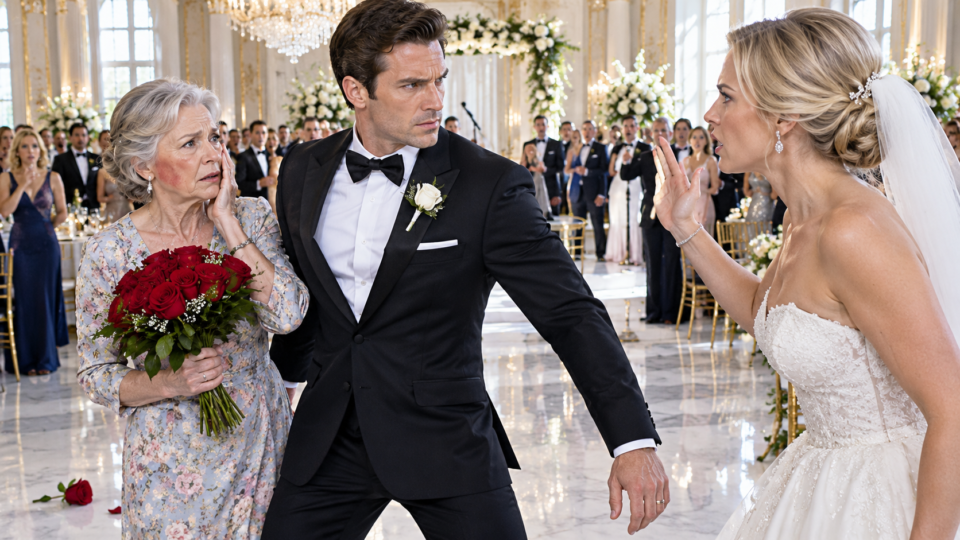
My daughter-in-law gave her mother a $4,500 Gucci bag at Christmas dinner.
She gave me a two-dollar card in the house I still owned.
For a few seconds, nobody seemed to understand why I had stopped smiling.
The roast I had cooked was steaming in the center of the dining table.
Rosemary and garlic hung warmly in the air, mixing with the faint pine smell from the Christmas tree.
Snow pressed against the windows in soft white streaks, and beyond the glass, the Hendersons’ inflatable snowman leaned sideways into the wind.
It did that every Christmas.
Daniel used to joke that the poor thing looked drunk by dessert.
The memory came so suddenly that I almost turned toward the empty chair beside me to tell him.
Instead, I tightened my fingers around the card in my cardigan pocket.
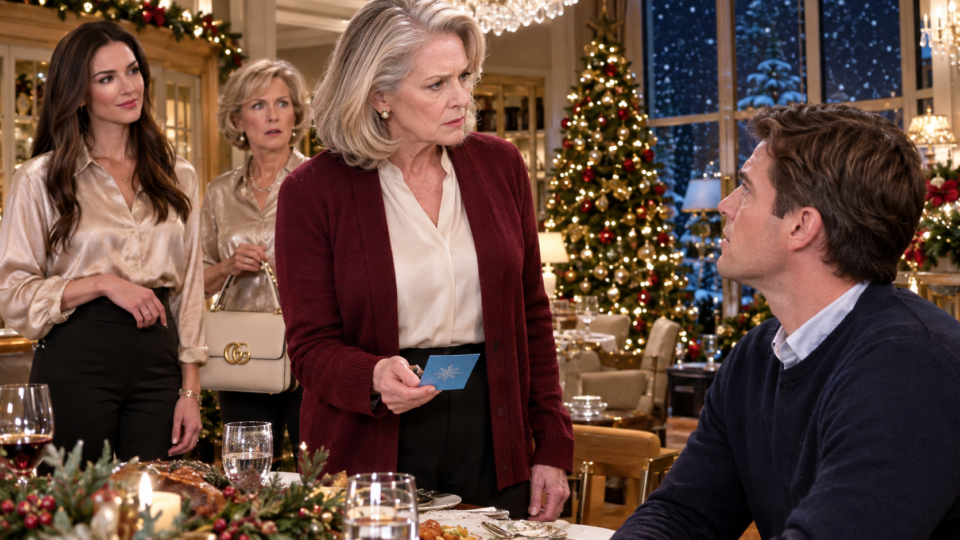
Across the room, Margaret stood in front of the window admiring herself with the cream-colored Gucci bag hanging from her shoulder.
“Oh, Brooke,” she said again. “This is too much.”
Her voice said the opposite.
Brooke smiled.
“Only the best for the best mom in the world.”
My son, Julian, lifted his wineglass and took a long drink.
He did not look at me.
That was when the humiliation changed into something else.
Until that moment, I had been trying to tell myself that it was merely an unfortunate contrast.
Brooke was allowed to spend whatever she wanted on her mother.
Margaret was allowed to enjoy an expensive present.
I had never believed that affection could be measured by receipts.
Daniel and I had spent too many Christmases counting grocery money for me to believe that.
One year, when Julian was seven, Daniel made me a jewelry box from leftover oak because we could not afford gifts for each other.
I still had it.
Another year, Julian gave me a pinecone painted gold.
I still had that too.
The price was not the wound.
The $4,500 was.
Because one month earlier, Julian had stood in my kitchen looking embarrassed and asked me for exactly that amount.
“Unexpected car repairs,” he had said.
He had rubbed the back of his neck the way he had since childhood whenever he was nervous.
“Mom, I hate to ask.”
I had barely let him finish.
“What happened?”
“Transmission. A few other things. It’s complicated.”
“Four thousand five hundred?”
He had nodded.
“I’ll pay you back in January. I promise.”
I transferred it before dinner.
No paperwork.
No questions.
He was my son.
Now I watched Margaret stroke the leather of a handbag Brooke had spent weeks discussing.
The same handbag.
The same price.
And Julian could not meet my eyes.
Brooke crossed the room toward me.
She still looked pleased with herself, her dark green dress catching the light from the chandelier.
“And this is for you, Clara. Thanks for hosting tonight.”
She handed me a small blue envelope between two fingers.
I opened it.
Snowy mountains.
Season’s Greetings.
Nothing handwritten.
No message from Brooke.
No signature from Julian.
The bookstore I visited every Saturday was three streets away. Julian knew that.
Daniel had taken me there almost every weekend during the last years of our marriage, usually complaining that I could turn a ten-minute visit into an hour.
A note saying, Mom, I’ll go with you next Saturday, would have been enough.
A photograph would have been enough.
A bookmark.
A handwritten memory.
Anything that suggested I had occupied somebody’s thoughts for more than thirty seconds.
Instead, I received the kind of card you grabbed from a grocery-store display while waiting for the cashier to scan milk.
I folded it and put it into my pocket.
Then I stood.
My old armchair shifted against the rug.
Julian looked up immediately.
“Mom?”
Brooke turned.
“Everything okay, Clara?”
I looked around my own living room.
Daniel’s photographs used to cover the mantel.
Now there were candles.
Cream candles in glass holders Brooke had bought because, according to her, the mantel had looked “visually crowded.”
Daniel’s reading lamp had been moved to the garage.
My blue rug had disappeared.
The pillows I had sewn myself were gone.
My dining table had been moved closer to the wall because Brooke said the room flowed better that way.
And my armchair—the faded brown one Daniel had bought me thirty years earlier after a winter storm knocked out our electricity—had nearly been banished to the basement.
I had refused that one.
It was the only time I had refused.
Suddenly, I understood why.
If I had let that chair disappear too, there might have been nothing left in the room that belonged to my life before Brooke decided what my home should look like.
Julian put down his glass.
He knew.
I could see it in the way his shoulders tightened.
I looked directly at him.
“Julian,” I said, keeping my hand around the card in my pocket, “I need to ask you about the $4,500.”
Silence dropped over the room.
Margaret stopped touching her handbag.
Brooke’s smile vanished.
Julian swallowed.
“Mom.”
It was only one word, but I heard the warning inside it.
Not here.
Not tonight.
Don’t embarrass us.
I had heard variations of that message for years.
Don’t make Brooke uncomfortable.
Don’t make things awkward.
Don’t turn something small into something big.
I looked at my son.
“What happened to your car?”
Brooke stared at him.
Then at me.
“What car?”
There it was.
Small.
Almost nothing.
But enough.
I felt something inside me settle.
Julian pushed back his chair.
“Mom, can we talk about this privately?”
“No.”
His face reddened.
“Please.”
“You asked me privately.”
Margaret carefully lowered herself onto the sofa.
The Gucci bag remained on her shoulder.
I continued.
“You came into my kitchen last month and told me you needed $4,500 for unexpected car repairs.”
Brooke’s expression changed.
Not guilt.
Confusion.
She turned toward Julian.
“You told her that?”
He stared at the table.
“Julian?”
“It wasn’t exactly—”
I interrupted him.
“Did my money buy that handbag?”
Margaret’s hand fell from the strap.
Brooke’s face went pale.
Then hard.
“What are you implying?”
“I’m asking my son a question.”
“You’re making it sound like I stole from you.”
“I didn’t say that.”
“You didn’t have to.”
“Then let Julian answer.”
His eyes finally met mine.
For one desperate second, I saw the little boy he had been.
The child who had once come home crying because he had broken a neighbor’s window with a baseball.
He had confessed before anyone asked.
“I did it, Mom,” he had sobbed. “I’m sorry.”
I had hugged him before I disciplined him because Daniel and I wanted him to understand that telling the truth mattered.
That boy was gone.
The man sitting at my table looked away.
“It wasn’t supposed to happen like this.”
My stomach tightened.
“What wasn’t?”
“The car thing was temporary.”
“There was no car repair, was there?”
He did not answer.
He did not need to.
Brooke stood straighter.
“Julian, what did you do?”
He rubbed both hands over his face.
“I borrowed money.”
“From your mother?”
“Yes.”
“For my Christmas shopping?”
He hesitated.
That hesitation told me more than the answer.
Brooke stepped back.
“Oh my God.”
Margaret immediately lifted the handbag from her shoulder.
“Brooke, I don’t want this if—”
“Mom, stop.”
“No, I mean it.”
“Please.”
Margaret placed the Gucci bag carefully on the sofa beside her, as if it had suddenly become dangerous.
Julian looked at me.
“I was going to pay you back.”
“That isn’t what I asked.”
“I know.”
“You told me your car needed repairs.”
“Yes.”
“Was that true?”
“No.”
The word was quiet.
It still hit me harder than shouting would have.
I nodded once.
“Thank you.”
He blinked.
“For what?”
“For finally answering.”
Brooke crossed her arms.
“This is unbelievable.”
I looked at her.
“I agree.”
Her eyes flashed.
“I didn’t know he borrowed money from you.”
“I believe you.”
That seemed to surprise everyone, including Julian.
But I did believe her.
Brooke had many faults.
She was controlling. She was dismissive. She had treated my home like a decorating project and me like a temporary inconvenience inside it.
But her confusion when I mentioned the car had been real.
Julian had lied to both of us.
That mattered.
It did not erase everything else.
But it mattered.
Julian stepped toward me.
“Mom, I can explain.”
“You can explain after dinner.”
Brooke laughed once, sharply.
“After dinner?”
“Yes.”
“You expect us to sit down and eat now?”
I looked at the roast.
I had started cooking at eight that morning.
I had peeled twelve potatoes.
I had made Daniel’s gravy recipe.
I had ironed the tablecloth.
I had polished the wineglasses.
I had done all of it because Brooke had said Christmas at my house would be “easier.”
And somehow I had ended up feeling like the least welcome person there.
“No,” I said.
Brooke frowned.
“No?”
“I don’t expect you to eat.”
I walked to the dining table.
Then I picked up my plate.
I served myself one slice of roast, potatoes and green beans.
Nobody moved.
I carried my plate to the little table beside my armchair.
Then I sat down.
The chair creaked beneath me.
I picked up my fork.
Julian stared at me.
“Mom, what are you doing?”
“Having Christmas dinner.”
He looked around helplessly.
“Can we please just talk?”
“We will.”
“When?”
“After I eat.”
Brooke whispered something under her breath.
I looked at her.
“What was that?”
“Nothing.”
“No. I think tonight is a good night to stop saying nothing.”
Her jaw tightened.
Margaret stood.
“I think I should go.”
Brooke turned quickly.
“Mom—”
“No.”
Margaret looked at me.
For the first time that evening, embarrassment replaced delight in her expression.
“Clara, I’m sorry.”
“You don’t owe me an apology.”
She glanced at the handbag.
“I didn’t know.”
“I know.”
“I can return it.”
“That is between you and your daughter.”
Julian winced.
Brooke did too.
Good.
Not because I enjoyed hurting them.
I didn’t.
But because truth had finally entered the room, and truth sometimes had sharp edges.
Margaret retrieved her coat.
Brooke followed her to the front door.
As they passed the mantel, Margaret paused.
She looked at the candles.
Then at the hallway.
Her gaze landed on one of Daniel’s photographs Brooke had moved there months ago.
It was our twenty-fifth anniversary picture.
Daniel had his arm around me.
We were both laughing.
Margaret looked from the photograph to me.
Something shifted in her expression.
She seemed to understand more than I had said.
“Good night, Clara.”
“Good night, Margaret.”
The door closed.
Snow blew briefly into the entryway.
Then it was only the three of us.
Brooke returned to the dining room.
Julian remained standing.
I cut another piece of roast.
Nobody spoke until I had swallowed.
Then Brooke said, “So what happens now?”
I put down my fork.
That was the question.
And, for once, I knew the answer.
“Now,” I said, “we discuss my house.”
Julian’s face changed.
Brooke went completely still.
And for the first time that evening, the Gucci bag was no longer the most expensive thing in the room.
CHAPTER 2: THE HOUSE THAT BECAME THEIRS
Brooke and Julian had moved into my house eleven months earlier.
That sentence sounds simpler than the reality.
It had begun with Julian calling me on a rainy February evening.
Their landlord was selling the townhouse they rented. They needed somewhere to stay while they saved for a down payment.
“Three months,” Julian had said.
“Maybe four.”
I had four bedrooms.
Daniel had been gone for almost three years.
The house had become too quiet.
So I said yes.
I told myself it would be good to hear footsteps upstairs again.
I imagined coffee with Julian in the mornings. Sunday dinners. Maybe Brooke and I would become closer.
I even cleared Daniel’s old office for them.
That was the first mistake.
Not because I should have refused my son a place to live.
Because I cleared more than a room.
I began clearing myself.
At first, Brooke was grateful.
She brought flowers the day they moved in.
“This house is gorgeous, Clara,” she told me. “You and Daniel had such good taste.”
Two weeks later, she suggested replacing the living-room rug.
A month after that, she bought new pillows.
Then curtains.
Then she said the photographs on the mantel made the room feel “busy.”
She never ordered me to move anything.
That was part of why I allowed it.
Everything came disguised as a suggestion.
“Wouldn’t the pictures look better in the hallway?”
“Wouldn’t this lamp work better upstairs?”
“Wouldn’t the dining room feel larger if we shifted the table?”
I wanted peace.
So I kept saying yes.
Julian noticed.
I know he noticed because sometimes he would catch my eye while Brooke moved something.
He would give me a little apologetic smile.
But he never said, “Leave Mom’s things alone.”
And I never made him.
That was my responsibility too.
Silence is not always kindness.
Sometimes it is permission.
Christmas night, I finally withdrew mine.
Brooke sat across from me after I finished eating.
Julian took the chair beside her.
I stayed in Daniel’s old armchair.
The Christmas tree lights blinked between us.
“First,” I said, “I want the money returned.”
Julian nodded quickly.
“Of course.”
“By January fifteenth, as you originally promised.”
“I’ll figure it out.”
“No more stories.”
“There won’t be.”
“Second, beginning February first, you’ll pay rent.”
Brooke stared at me.
“Rent?”
“Yes.”
“We’re family.”
“I know.”
“You said we could stay here while we saved.”
“I did.”
“And now you’re changing the agreement because you’re angry about a Christmas present?”
“No.”
She opened her mouth.
I held up my hand.
“I am changing the agreement because the arrangement has changed.”
Julian leaned forward.
“What does that mean?”
“You were supposed to stay three or four months. It has been eleven.”
“We’ve been saving.”
“Have you?”
Brooke looked offended.
“Excuse me?”
“I don’t know your finances. Until tonight, I thought Julian needed to borrow $4,500 because of an emergency car repair.”
Julian looked down.
I continued.
“If you can afford designer handbags, restaurant dinners and the other things I’ve watched come through this house, you can contribute to the roof over your heads.”
Brooke’s face hardened.
“My money is my business.”
“It is.”
I nodded toward the ceiling.
“My house is mine.”
Silence.
It was astonishing how strange those four words felt.
My house is mine.
I should not have needed to say them.
Brooke glanced at Julian.
He looked exhausted.
“Mom, how much rent?”
I had already decided while I ate.
“Eight hundred dollars a month.”
Brooke almost laughed.
“Eight hundred?”
“You will not find a two-room arrangement with utilities included anywhere near here for that.”
She knew I was right.
“That isn’t the point.”
“What is the point?”
“The point is that this feels punitive.”
“Consequences often feel punitive to people who have never expected them.”
Julian whispered, “Mom.”
I turned to him.
“No. Don’t ‘Mom’ me every time Brooke becomes uncomfortable.”
His face fell.
I hated that part.
I hated hurting him.
But I had spent eleven months protecting him from discomfort while he became increasingly comfortable lying to me.
Love without boundaries had not made him better.
It had made me easier to use.
I looked at Brooke.
“There is one more thing.”
She gave a humorless smile.
“Of course there is.”
“Tomorrow, Daniel’s photographs go back on the mantel.”
She blinked.
“What?”
“His lamp comes in from the garage. My blue rug comes out of storage. The dining table goes back where it was.”
“Clara—”
“And nobody moves another item in this house without asking me first.”
“I always asked.”
“No. You suggested until saying no felt rude.”
“That isn’t fair.”
“Perhaps not. But it is accurate.”
Brooke stood.
“I can’t believe this.”
I remained seated.
“That’s all right. You don’t have to believe it tonight.”
She looked at Julian.
“Are you going to say anything?”
He hesitated.
That was Julian’s problem.
He was always trying to find the sentence that would disappoint nobody.
Eventually, those sentences become lies.
“I think Mom has a point.”
Brooke stared at him.
“A point?”
“She loaned me money because I lied to her.”
“So now everything I have done is wrong?”
“I didn’t say that.”
“You didn’t have to.”
I recognized the phrase.
She had used it with me an hour earlier.
Brooke grabbed her phone from the table.
“This is ridiculous.”
She walked upstairs.
A door slammed.
Julian stayed.
For a while, neither of us spoke.
Then he said, “I am sorry.”
I looked at him.
He looked older than he had that morning.
“How did this happen, Julian?”
He rubbed his palms together.
“I don’t know.”
“Yes, you do.”
He sighed.
“Brooke wanted to do something special for Margaret.”
“So you borrowed money from me.”
“It wasn’t that simple.”
“Then make it simple.”
He looked toward the stairs.
“Things have been tight.”
“How tight?”
“We’ve had expenses.”
“What expenses?”
He hesitated.
I waited.
Finally, he said, “More than we expected.”
I almost smiled.
“That isn’t an answer.”
He leaned back.
“Brooke’s job cut bonuses this year. My commission was lower. We had some credit card balances.”
“And yet you were buying a $4,500 handbag.”
“She had talked about that bag for months.”
“For her mother.”
“Yes.”
“And you couldn’t tell your wife you couldn’t afford it?”
His silence answered me.
I studied him.
“Why did you tell me it was for your car?”
“Because you wouldn’t have loaned it to me for a handbag.”
“You’re right.”
“I knew that.”
“That should have told you something.”
He closed his eyes.
“I know.”
I wanted to stay angry.
Anger was cleaner.
But he was still my son.
I remembered his first day of kindergarten. His college graduation. The afternoon he called to tell me he was going to propose to Brooke.
He had sounded so happy.
I had wanted that happiness to last.
Maybe that was why I had ignored so much.
“What did Brooke think?”
“She thought the money came from me.”
“From where?”
“I told her I’d gotten an early commission.”
Another lie.
One for me.
One for his wife.
A bridge built from lies between two women who both trusted him.
“Does she know about your credit cards?”
He looked away.
“Most of them.”
Most.
That word chilled me.
“How much debt are you in?”
“I don’t want to talk about that tonight.”
“That is the first honest thing you’ve said.”
He looked at me sharply.
I softened my voice.
“You don’t have to tell me everything tonight. But don’t ask me for another dollar until you’re willing to tell me the truth.”
“I won’t.”
“And Julian?”
“Yes?”
“If Brooke blames me for this, that is your problem to correct.”
He nodded.
“I know.”
“No. Listen to me.”
He looked up.
“You lied to her. You lied to me. I will not become the villain because telling the truth has made your marriage uncomfortable.”
His eyes filled.
“I understand.”
I hoped he did.
The next morning, I woke before seven.
The house was silent.
Snow had covered the backyard.
For the first time in years, Christmas morning felt more peaceful than Christmas night.
I made coffee.
Then I went to the garage.
Daniel’s reading lamp was behind two cardboard boxes.
I carried it inside myself.
It was heavier than I remembered.
When I reached the living room, Julian was standing at the bottom of the stairs.
He watched me place it beside my chair.
“Need help?”
“No.”
He nodded.
Then he walked to the hallway.
Without saying anything, he lifted our anniversary photograph from the wall.
He carried it to the mantel.
One by one, he brought the others back.
Daniel holding baby Julian.
Daniel at the lake.
Daniel and me dancing at our niece’s wedding.
When he finished, he stood looking at them.
“I miss him,” he said.
My throat tightened.
“So do I.”
He touched the frame of the anniversary photograph.
“Dad would be disappointed in me.”
I could have agreed.
Instead, I said, “Your father isn’t here to decide what you do next.”
Julian looked at me.
“But you are.”
“Yes.”
“And you’re disappointed.”
“Yes.”
He flinched.
I forced myself not to rescue him from the word.
Then I added, “Disappointment isn’t the same as giving up on you.”
He nodded.
Behind us, the stairs creaked.
Brooke stood halfway down.
She wore gray pajamas, her arms folded tightly across her chest.
Her eyes moved from Daniel’s photographs to the lamp.
Then to Julian.
“I guess we’re redecorating.”
I met her gaze.
“No,” I said. “We’re remembering whose home this is.”
She turned around and went upstairs.
Three days later, I found the house listings open on Julian’s laptop.
That was when I understood Brooke was not planning to pay me rent.
She was planning to leave.
CHAPTER 3 : WHAT SILENCE COSTS
The week between Christmas and New Year’s was the coldest we had had in years.
Inside the house, it was colder.
Brooke stopped speaking to me unless necessary.
She took her coffee upstairs.
She and Julian ate out twice.
When she entered a room and saw me, her shoulders tightened.
I did not chase her.
That was new for me.
The old Clara would have baked something.
The old Clara would have knocked on their bedroom door and said we should clear the air.
The old Clara would have apologized for making Christmas uncomfortable, even though I had been the one lied to.
Instead, I went to my bookstore.
Saturday morning, I walked there through melting snow.
The bell above the door jingled when I entered.
“Clara!”
Helen, the owner, waved from behind the register.
“You survived Christmas.”
“Barely.”
She laughed.
“Family?”
“Family.”
“Say no more.”
I wandered between the shelves for nearly an hour.
For the first time since Christmas dinner, I did not think about Brooke’s face or Julian’s lie.
I thought about books.
I bought one mystery novel and a new biography Daniel would have pretended not to be interested in before stealing it from my nightstand.
At the register, Helen tucked a bookmark into the bag.
“Gift,” she said.
It was thick cream paper with a small watercolor tree.
I stared at it.
“What?”
“Nothing.”
A bookmark.
It probably cost fifty cents.
I almost cried.
Not because I wanted gifts.
Because a stranger who sold me books every Saturday knew enough about me to give me something I would use.
At home, Brooke’s grocery-store Christmas card was still in my cardigan pocket.
I took it out.
I put it beside the bookmark.
Then I understood the difference.
Attention.
That was what I had wanted.
Not money.
Not Gucci.
Not extravagance.
Attention.
To be seen.
The realization hurt more than I expected.
That evening, Julian knocked on my bedroom door.
“Can I come in?”
“Yes.”
He sat on the small chair beside my dresser.
I was folding laundry.
“We found an apartment.”
I kept folding.
“When?”
“Available February first.”
“That works.”
He seemed surprised.
“You’re okay with us leaving?”
I looked at him.
“Did you expect me to beg you to stay?”
“No.”
“Yes, you did.”
He sighed.
“Maybe.”
I placed a sweater in the drawer.
“Julian, I love you. But perhaps leaving is exactly what you need.”
“What does that mean?”
“You’re forty-one years old.”
He gave me a tired smile.
“I know.”
“You have been living in your mother’s house for almost a year while pretending you were saving money. You borrowed money from me for a handbag because you were afraid to tell your wife no.”
His smile disappeared.
“When you say it like that—”
“How else should I say it?”
He leaned forward.
“Brooke didn’t make me borrow the money.”
“I know.”
“She didn’t know.”
“I know.”
“I need you to understand that.”
“I do.”
“Because I feel like you blame her.”
I sat on the edge of the bed.
“I blame Brooke for the things Brooke did.”
He waited.
“She treated my house as if it were hers. She moved Daniel’s things. She dismissed my preferences. She handed me a generic card at Christmas after I cooked dinner for everyone and called that gratitude.”
His eyes lowered.
“And I blame you,” I continued, “for letting her.”
He looked up.
“That is the part I think you don’t want to hear.”
He said nothing.
“You watched her move your father’s photographs.”
“I thought you were okay with it.”
“Did you ask?”
“No.”
“You watched her suggest putting my chair in the basement.”
“You said no.”
“That time.”
He rubbed his face.
“I didn’t realize.”
“No. You didn’t.”
I looked at him carefully.
“And that is what hurt.”
His eyes became wet.
I continued before I lost courage.
“I spent my life paying attention to you. When you were little, I knew which cereal you liked, which teacher frightened you, which friend had hurt your feelings before you told me. When you were in college, I could hear from the first word of a phone call whether something was wrong.”
I swallowed.
“I did not expect you to spend your adult life watching me that closely. But I thought you would notice when I began disappearing inside my own house.”
“Mom.”
He covered his mouth.
For several seconds, he could not speak.
Then he whispered, “I’m sorry.”
This time, the apology sounded different.
Not defensive.
Not frightened.
Just sad.
I nodded.
“So am I.”
He cried then.
Quietly.
I let him.
Eventually, he said, “The apartment is smaller than what Brooke wants.”
“That may be good for you.”
He laughed through his tears.
“You really aren’t going to make this easy.”
“I made it easy for too long.”
He nodded.
“We can’t move in until February.”
“You may stay until then.”
“Thank you.”
“Rent starts February first, so I suggest you be out by January thirty-first.”
He stared at me.
Then he laughed again.
That was the first moment since Christmas that felt like us.
Before he left, he paused at the door.
“I’ll have your money by January fifteenth.”
“All of it?”
“Yes.”
“How?”
“I’m selling some things.”
I frowned.
“Don’t do anything foolish.”
“I’m not.”
“Julian.”
He looked at me.
“I mean it.”
“So do I.”
On January third, Brooke came into the kitchen while I was making soup.
She placed an envelope on the counter.
For one absurd second, I thought it was another card.
Instead, it contained $1,500.
“What is this?”
“Part of what Julian owes you.”
I looked at her.
“Where did it come from?”
“I returned some Christmas gifts.”
“Yours?”
“Yes.”
“You didn’t have to.”
“Yes, I did.”
I set down the spoon.
Brooke stared at the soup instead of me.
“I didn’t know about the money.”
“I know.”
“I keep feeling like you don’t believe me.”
“I believe you.”
She finally looked at me.
“Then why are you still angry?”
“Because the loan isn’t the only thing I’m angry about.”
Her expression closed.
“The house.”
“Yes.”
“I thought I was helping.”
“I know.”
“You never told me to stop.”
“I know that too.”
She blinked.
That answer unsettled her.
I continued.
“I should have spoken sooner.”
“Then how was I supposed to know?”
“You weren’t.”
I saw her preparing another argument.
I raised a hand.
“That doesn’t mean you did nothing wrong. It means we both contributed to the problem.”
Her shoulders lowered slightly.
I turned off the stove.
“When you moved in, I wanted you to feel at home.”
“You said that.”
“I meant it. But I think somewhere along the way, you heard ‘make this your home’ when I meant ‘share mine.’”
She looked toward the living room.
At Daniel’s photographs.
“At my mother’s house,” she said slowly, “everything always had to look perfect.”
I waited.
“She changed furniture constantly. If something looked old, it disappeared.”
“That explains some things.”
Brooke almost smiled.
“She hated clutter.”
“I gathered that.”
“She still does.”
Her gaze drifted toward my armchair.
“I really did think that chair was ugly.”
I laughed.
To my surprise, she laughed too.
“It is ugly,” I admitted.
Her eyes widened.
“But Daniel bought it for me.”
“I know.”
“No. I don’t think you did.”
Her smile faded.
So I told her.
About the blizzard.
About the electricity going out.
About sleeping in coats.
About Daniel finding the chair at an estate sale two days later because I had complained that our old wooden chair made my back hurt.
“He tied it to the roof of our station wagon,” I said. “Drove ten miles in another snowstorm to bring it home.”
Brooke looked at the chair again.
“I didn’t know that.”
“You never asked.”
The words were sharper than I intended.
She nodded anyway.
“No. I didn’t.”
We stood quietly.
Then she said, “I wasn’t trying to erase Daniel.”
“I know.”
“But I did.”
“A little.”
She took that in.
Then she pointed to the envelope.
“I’ll get you the rest.”
“You don’t owe me the rest.”
“My husband does.”
“Yes.”
“And we’re married.”
“Yes.”
She breathed out.
“I hate that he lied to me.”
“So do I.”
“He said he was afraid I’d think he was failing.”
I leaned against the counter.
“Would you have?”
She did not answer immediately.
That told me enough.
Finally she said, “Maybe.”
“Then you have something to think about too.”
She looked irritated.
But not angry.
There was a difference.
“You really don’t let anything slide anymore, do you?”
“I am experimenting with a new personality.”
That made her laugh again.
Before leaving the kitchen, she paused.
“Margaret returned the bag.”
I stared at her.
“She did?”
“Yes.”
“Why?”
“She said she couldn’t carry it without thinking about Christmas.”
I felt strangely sorry.
“I’m sorry.”
Brooke shrugged.
“Maybe it’s for the best.”
“What happened to the money?”
“It went toward your loan.”
I looked at the envelope.
“This is only fifteen hundred.”
“The store wouldn’t refund the rest immediately because of how it was purchased. Julian used a card for part of it.”
There it was.
Another clue.
“Which card?”
Brooke’s face changed.
“I don’t know.”
I did.
Not the specific card.
But the shape of the truth.
Julian had borrowed $4,500 from me.
Yet the handbag had not been purchased entirely with that money.
I looked at Brooke.
“How much debt are you two in?”
She went very still.
“What?”
“Julian told me you had credit card balances.”
Her expression told me he had not told her everything.
“How much did he say?”
“Not enough.”
Brooke sat down.
For the first time since I had known her, she looked frightened.
Not angry.
Not offended.
Frightened.
“I need to talk to my husband,” she whispered.
That evening, I heard their bedroom door close.
Then voices.
At first quiet.
Then louder.
I could not make out every word.
I did not try.
But once, around nine, Brooke shouted something clearly enough that I heard it from downstairs.
“How could you hide that from me?”
Then silence.
At ten thirty, Julian came downstairs.
His face was gray.
He sat across from me at the kitchen table.
“How much?” I asked.
He stared at his hands.
“Twenty-eight thousand.”
I felt my stomach drop.
“Credit cards?”
He nodded.
“Does Brooke know now?”
“Yes.”
“How long?”
“Two years.”
“What did you spend it on?”
“Everything.”
“That isn’t an answer.”
“Restaurants. Trips. Gifts. Clothes. Bills when my commissions were bad. Paying one card with another.”
He looked sick.
“I kept thinking the next quarter would be better.”
“And when it wasn’t?”
“I borrowed more.”
“Why?”
He looked toward the ceiling.
“Because I didn’t want anything to change.”
I understood then.
The handbag had never really been about Margaret.
It had been about maintaining an illusion.
The dinners.
The clothes.
The gifts.
The appearance that everything was fine.
Julian had spent thousands of dollars protecting an image of a life he could no longer afford.
And I had been doing something frighteningly similar.
Not with money.
With silence.
I had been protecting the image of a happy family.
We had both been paying for appearances.
His debt could be measured.
Mine could not.
“What are you going to do?” I asked.
He swallowed.
“Change.”
I shook my head.
“That is not a plan.”
He almost smiled.
“No.”
“So?”
“We’re meeting with a financial counselor Monday.”
“Good.”
“We’re returning anything we can.”
“Good.”
“We’re still moving.”
“Good.”
He looked at me.
“And I’m paying you first.”
“No.”
His eyebrows rose.
“No?”
“You will repay me according to the date you promised. But don’t pay me first if doing that means borrowing somewhere else.”
“I won’t.”
I reached across the table.
I took his hand.
“You cannot lie your way out of a lie.”
He squeezed my fingers.
“I know.”
This time, I believed he might actually be learning it.
Then he said something I did not expect.
“Mom, there’s another thing I need to tell you.”
My hand went cold inside his.
“What?”
He looked toward the living room.
Toward Daniel’s photographs.
Then back at me.
“The reason Brooke thought we could afford to keep spending.”
I waited.
Julian swallowed.
“I told her the house would eventually be mine.”
CHAPTER 4 : THE THING HE THOUGHT HE OWNED
For a moment, I thought I had misunderstood him.
“What did you say?”
Julian closed his eyes.
“I told Brooke that eventually the house would be mine.”
The kitchen seemed to tilt.
I withdrew my hand.
“You mean after I die.”
He flinched.
“I didn’t say it like that.”
“How did you say it?”
“That it was probably coming to me eventually.”
“Probably?”
“You don’t have other children.”
I stared at him.
He immediately realized how ugly the words sounded.
“Mom, I’m not waiting for you to die.”
“I should hope not.”
“I swear.”
“Then explain why my house was part of your financial planning.”
“It wasn’t exactly.”
“Julian.”
He rubbed his forehead.
“When we talked about buying, Brooke wanted us to save for something bigger. I told her not to worry so much because someday—years from now—the house would probably be mine.”
“And she believed that?”
“Yes.”
“Did you?”
He hesitated.
That hurt more than if he had simply said yes.
I stood.
He rose too.
“Mom.”
“Don’t.”
“I never meant—”
“I know what you meant.”
I walked into the living room.
The Christmas tree was still standing.
Daniel’s photograph was on the mantel again.
I stared at his face.
We had bought the house when Julian was four.
Daniel worked overtime for nearly six years to pay down the mortgage.
I taught piano lessons in the evenings.
We replaced the roof ourselves with help from Daniel’s brother.
We painted every room.
We planted the maple tree in the backyard.
We paid off the mortgage eleven months before Daniel died.
He had opened a bottle of cheap champagne and carried me around the kitchen.
“No bank owns our bedroom anymore,” he had shouted.
I had laughed until I cried.
Now my son had incorporated that house into a future balance sheet.
Not maliciously.
Perhaps that made it worse.
He had simply assumed.
“Did Brooke know I still own it completely?”
“Yes.”
“Did she know there is no mortgage?”
“Yes.”
“And you two talked about what you might do with it someday?”
He did not answer.
I turned.
“What did you plan?”
“Nothing.”
“Julian.”
“We talked.”
“About?”
“Renovations.”
I almost laughed.
Of course.
The rug.
The pillows.
The mantel.
The lamp.
The dining table.
Suddenly every small change felt different.
Not sinister.
I did not believe Brooke had moved into my home with a secret plan to steal it.
But somewhere along the way, she had begun imagining a future in which it belonged to them.
That future had made my presence temporary.
Even if nobody had said so.
“What renovations?”
“Opening the kitchen.”
I stared at him.
“Removing the wall?”
“Maybe.”
“The wall your father built.”
“He didn’t build the wall.”
“He rebuilt it.”
Julian looked miserable.
“I know.”
“No, you keep saying that.”
My voice rose.
“You keep saying you know, and then I discover another thing you never bothered to understand.”
“Mom—”
“This house is not an investment waiting for you.”
“I understand.”
“It is where I live.”
“I know.”
“It is mine.”
“Yes.”
“And I am alive.”
He went pale.
“I know that.”
“Do you?”
The words hung between us.
I immediately regretted their cruelty.
But not their truth.
Julian sank onto the sofa.
“I messed everything up.”
I sat in my armchair.
Neither of us spoke for a long time.
Eventually, he said, “What are you going to do?”
“With the house?”
He nodded.
“I don’t know.”
That was true.
Before Christmas, I had assumed Julian would inherit it.
Daniel and I had written our wills years earlier.
After Daniel died, I had updated mine.
Julian was the primary beneficiary.
There was nothing unusual about that.
He was my only child.
But something had changed.
Not because I wanted revenge.
Because I suddenly understood the danger of letting other people consider my life settled before I had finished living it.
“I may sell it someday.”
Julian looked surprised.
“You love this house.”
“I do.”
“Then why would you sell?”
“Because loving something doesn’t mean I have to die inside it.”
He stared at me.
I had surprised myself too.
For years, I had imagined my future as a gradual narrowing.
Daniel died.
Julian married.
I stopped traveling as much.
I stayed home more.
I preserved rooms.
I maintained traditions.
I had behaved as if the interesting part of my life had already happened.
Maybe Brooke was not the only person treating me like a temporary resident.
Maybe I had been doing it too.
The next morning, I called my attorney.
Not to punish Julian.
Not to cut him out.
To understand.
I reviewed my will.
My accounts.
The house.
My retirement.
For the first time since Daniel died, I looked at my finances not as something to preserve for Julian, but as resources meant to support the rest of my own life.
The realization was liberating.
And uncomfortable.
I had enough.
Not endless money.
But enough.
Enough to travel.
Enough to replace the old furnace without worrying.
Enough to take classes.
Enough to help Julian when there was a genuine emergency.
Enough to say no when there wasn’t.
On January fifteenth, Julian placed a cashier’s check on the kitchen table.
$3,000.
Combined with the $1,500 Brooke had already given me, it repaid the loan.
I looked at him.
“Where did this come from?”
“We sold some things.”
“What things?”
“My golf clubs.”
I frowned.
“You love those.”
“I haven’t played in a year.”
“What else?”
“Some electronics. Brooke returned clothes. I sold my watch.”
“The one your father gave you?”
His expression changed.
“No.”
I exhaled.
“Good.”
“I wouldn’t.”
“Good.”
He sat down.
“I wanted to repay you exactly when I said I would.”
I picked up the check.
“Thank you.”
“I’m sorry.”
“I know.”
He looked around the kitchen.
“Brooke and I are going to counseling.”
“Financial?”
“And marriage.”
I nodded.
“Good.”
“She almost left.”
I looked at him.
“Because of the debt?”
“Because of the lying.”
There was a difference.
He understood it now.
“She said she could handle being broke better than being fooled.”
“She is right.”
He smiled sadly.
“I told her that.”
“And how did that go?”
“Terribly.”
I laughed.
He did too.
Then he became serious.
“Mom, I need to ask something.”
“No loans.”
He laughed again.
“Not money.”
“What?”
“Did you change your will?”
I studied him.
He reddened immediately.
“Forget I asked.”
“No.”
“Mom—”
“You want the truth?”
“Yes.”
“I am reviewing it.”
He nodded.
“Okay.”
“Does that scare you?”
“A little.”
“Why?”
“Because I don’t want you to think I only care about what I get.”
“I don’t think that.”
He looked relieved.
“But I do think you started treating something as yours before it was.”
His relief disappeared.
“That’s fair.”
“And I think you need to build a life that doesn’t depend on anything I leave behind.”
“I do.”
“Good.”
He looked at Daniel’s old clock on the wall.
“I wish Dad were here.”
“So do I.”
“He’d know what to say.”
I smiled.
“No, he wouldn’t.”
Julian looked surprised.
“Your father once spent three days avoiding me because he accidentally used our mortgage money to repair his boat.”
Julian stared.
“Dad did that?”
“Yes.”
“You never told me.”
“Because by the time you were old enough to understand it, we had survived it.”
“What did you do?”
“I made him sell the boat.”
Julian laughed so loudly Brooke came into the kitchen.
“What?”
He pointed at me.
“Dad almost lost the mortgage payment because of his boat.”
Brooke looked at me.
“Seriously?”
“Your father-in-law was a good man,” I said. “He was not a saint.”
Something softened among the three of us.
Not forgiveness exactly.
Something more useful.
Reality.
People could fail without becoming monsters.
People could hurt one another without becoming enemies.
But only if they stopped pretending nothing had happened.
Brooke sat down.
“We signed the apartment lease.”
“When do you move?”
“January twenty-eighth.”
“That soon?”
She smiled slightly.
“You sound disappointed.”
“I can be ready for you to leave and still miss you.”
Her smile became real.
“Fair.”
She looked toward the living room.
“I have something for you.”
My stomach tightened.
“If it is another card—”
She laughed.
“No.”
She went upstairs.
When she returned, she carried a rectangular package wrapped in plain brown paper.
She handed it to me.
“This isn’t an apology present.”
“That sounds exactly like what someone says before giving an apology present.”
“Open it.”
I tore the paper.
Inside was a wooden frame.
In it was a photograph I had forgotten existed.
Daniel and I were standing in front of the house on the day we bought it.
Julian was four years old, sitting on Daniel’s shoulders.
I had one hand over my mouth because I was laughing.
Daniel was pointing toward the front door.
On the bottom of the frame, in small letters, Brooke had written:
Your home. Your history. Your choice.
I looked at her.
She seemed nervous.
“Where did you find this?”
“In one of the boxes from the hallway.”
“You went through my photographs?”
“With Julian.”
I looked at him.
He nodded.
“We thought you should have it.”
My eyes filled.
Brooke shifted awkwardly.
“I was wrong about the house.”
I touched the frame.
“So was I.”
She frowned.
“I kept saying yes when I meant no.”
“That doesn’t make what I did okay.”
“No.”
I looked at her.
“But it means I have something to learn too.”
She nodded.
For once, neither of us tried to win.
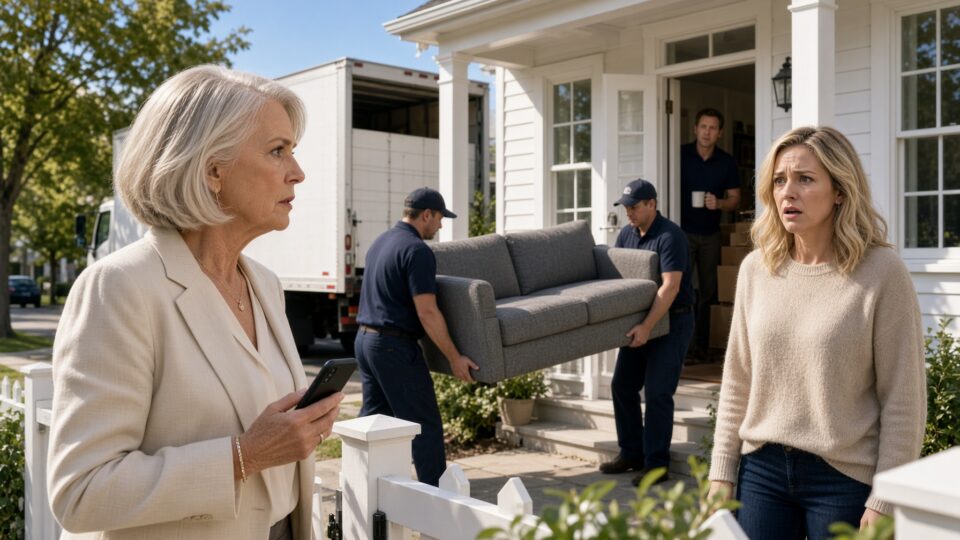
The moving truck came eleven days later.
And when the last box left my hallway, the house felt enormous.
Too enormous.
I stood alone in the living room.
Daniel’s chair was gone, of course.
He had been gone for years.
Julian’s footsteps no longer sounded upstairs.
Brooke’s perfume no longer drifted through the hallway.
There were no voices.
No slammed doors.
No laughter.
Just the ticking clock.
I sat in my faded armchair.
For a terrible moment, I wondered whether I had made a mistake.
Then I noticed something on the table beside me.
A bookstore bookmark.
And underneath it, an envelope.
This one had my name handwritten across the front.
I recognized Julian’s writing.
I opened it.
Inside was not a Christmas card.
It was a note.
Mom,
I know I can’t fix Christmas with a note. I know I can’t fix the last year by moving out.
But I finally understand something I should have understood before.
You were not lucky to have us living in your house.
We were lucky you opened it to us.
I forgot the difference.
I’m sorry.
Saturday. Ten a.m. Bookstore? My treat.
Love, Julian.
I read it twice.
Then a third time.
The two-dollar Christmas card was still in a kitchen drawer.
This piece of paper probably cost less.
But I pressed it against my chest and cried.
CHAPTER 5: WHAT I KEPT
The first Saturday after Julian moved out, I arrived at the bookstore at nine fifty-five.
He was already there.
That mattered.
Julian had never been early for anything in his life.
He stood near the front window holding two coffees.
“Peace offering,” he said.
“What kind?”
“Vanilla latte.”
I took it.
“You remembered.”
He smiled.
“I am trying this new thing called paying attention.”
We spent nearly two hours there.
He complained about the price of hardcovers.
I reminded him he had once spent $300 on sneakers.
He said we were not discussing his past crimes.
For lunch, we went to a little diner Daniel had loved.
Julian ordered his father’s usual.
Meatloaf.
Mashed potatoes.
Too much gravy.
“You know,” I said, “your father hated their meatloaf.”
Julian froze.
“What?”
“He came here because I liked the soup.”
He stared at his plate.
“My entire childhood is a lie.”
I laughed so hard the waitress looked over.
It felt good.
Not because everything was repaired.
It wasn’t.
Brooke remained guarded with me for a while.
I remained guarded with her.
Trust did not return because somebody apologized.
It returned through repetition.
Through small evidence.
She called before visiting.
She asked before moving anything when she helped me clean.
The first time she said, “Clara, would you mind if I put this vase over there?” I nearly laughed.
She noticed.
“What?”
“Nothing.”
“You’re making fun of me.”
“A little.”
She smiled.
“Fair.”
Margaret and I had coffee in February.
That surprised me most.
She brought no handbag.
“I felt terrible about Christmas,” she said.
“You didn’t do anything.”
“I enjoyed that bag for nearly twenty minutes.”
“You are allowed to enjoy a gift.”
“Not one financed by fraud.”
I laughed.
“That may be slightly dramatic.”
“I’m Brooke’s mother. Dramatic is hereditary.”
I understood Brooke better after that.
Margaret admitted she had always cared too much about appearances.
Perfect holidays.
Perfect photographs.
Perfect homes.
She had passed some of that to her daughter.
Julian had supplied his own version.
And I had contributed mine.
Three families of people pretending things were fine because admitting otherwise felt like failure.
Maybe that was what Christmas had exposed.
Not greed.
Fear.
Brooke feared looking unsuccessful.
Julian feared disappointing his wife.
I feared losing my son.
So we each surrendered something.
Brooke surrendered financial reality.
Julian surrendered honesty.
I surrendered boundaries.
The Gucci bag was simply the object expensive enough to make all three costs visible.
By spring, Julian and Brooke had settled into their apartment.
It was smaller than their old townhouse.
Brooke complained about the kitchen.
Then she planted herbs on the balcony.
Julian made a budget.
A real one.
He showed it to me once.
I pushed it back.
“I don’t need to see this.”
“I thought you’d want to know.”
“I want to know you’re dealing with it. I don’t need to supervise.”
He looked almost disappointed.
“You’re not going to check my math?”
“No.”
“Dad would.”
“Your father once used mortgage money on a boat.”
“Right.”
“Never forget.”
By June, they had paid off one credit card.
By October, two more.
I did not give them money.
That was important.
There were moments when I wanted to.
When Julian mentioned an unexpected dental bill, my first instinct was to reach for my checkbook.
I stopped myself.
He handled it.
The world did not end.
Neither did our relationship.
In fact, it became stronger.
Once I stopped being his emergency fund, I became his mother again.
There was a difference.
I changed too.
I joined a book club.
Then a watercolor class.
In May, I took a trip to Maine with Helen from the bookstore and two women from her church.
I had not traveled without Daniel since before we were married.
The first night in the hotel, I cried.
The second morning, I watched the sunrise over the water and realized crying had not ruined the trip.
Grief and happiness could occupy the same room.
That surprised me.
So did the fact that I liked traveling alone.
When I returned, Brooke came over for dinner.
She looked through my photographs.
“You look happy.”
“I was.”
“You should go somewhere else.”
“I plan to.”
“Where?”
“Maybe Italy.”
She stared at me.
“Seriously?”
“Why not?”
She smiled.
“Good for you.”
A year earlier, I might have heard surprise as criticism.
Now I simply heard surprise.
That was another thing boundaries gave me.
I no longer had to interpret every word as a threat.
In August, I made a decision about the house.
I did not sell it.
I did not promise it to Julian either.
I updated my estate plan so that my savings and property would be handled according to what made sense when the time came, with provisions for charities Daniel and I had supported and for Julian.
When I told him, he nodded.
No questions.
No percentages.
No wounded expression.
“It’s your money,” he said.
“And the house?”
“Your house.”
I smiled.
He understood.
That Christmas, I almost refused to host.
Not because I was angry.
Because I did not want to repeat the previous year.
Brooke surprised me.
“What if we do it at our apartment?”
“All of us?”
“Yes.”
“Your apartment barely fits your sofa.”
“We’ll manage.”
So we did.
Margaret came.
I came.
Julian cooked the roast.
Badly.
It was dry enough that Margaret whispered we might need dental insurance.
Brooke heard her and nearly dropped the gravy boat laughing.
There were folding chairs around the table.
The wine was inexpensive.
Nobody cared.
After dinner, we exchanged gifts.
Margaret gave Brooke a scarf.
Brooke gave her a framed photograph of the two of them from a summer picnic.
Margaret cried harder than she had over the Gucci bag.
Then Brooke handed me a small box.
I raised an eyebrow.
“Should I be nervous?”
“Probably.”
I opened it.
Inside was a brass plaque.
I read the engraving.
CLARA’S CHAIR.
I stared at her.
Brooke grinned.
“For the ugly armchair.”
I laughed.
“Absolutely not.”
“Come on.”
“You are not attaching a plaque to Daniel’s chair.”
“Then put it beside it.”
Julian handed me an envelope.
“This is mine.”
I opened it carefully.
Inside were two tickets.
Not expensive ones.
Tickets to an author talk at my bookstore.
I looked up.
“You hate historical fiction.”
“I know.”
“You complained for forty minutes the last time I recommended this author.”
“I remember.”
“And you’re going?”
He smiled.
“With you.”
I felt tears gathering.
“Julian.”
“No crying.”
“You bought me a meaningful present. You knew the risk.”
Brooke laughed.
I wiped my eyes.
Then I remembered something.
“Wait.”
I opened my handbag.
From an inside pocket, I pulled out the old blue Christmas card.
Brooke recognized it immediately.
Her face went red.
“Oh God.”
Julian groaned.
“Mom, why do you still have that?”
“I keep important historical documents.”
Margaret began laughing.
Brooke covered her face.
“Please burn it.”
“I considered framing it.”
“Clara.”
“It changed my life.”
That silenced them.
I looked down at the card.
Snowy mountains.
Season’s Greetings.
Two dollars.
Maybe less.
For months, I had thought of it as the symbol of how little I meant to them.
But that was not entirely fair.
It was the symbol of how little attention we had all been paying.
Brooke had not understood what my home meant to me.
Julian had not understood what his lies were costing.
And I had not understood that every time I swallowed a hurt to keep peace, I was teaching people that hurting me had no consequences.
The card had not changed that.
I had.
I folded it again.
Then I put it away.
“You’re really keeping it?” Brooke asked.
“Yes.”
“Why?”
I thought about Christmas dinner the year before.
The steaming roast.
The Gucci bag.
Margaret turning toward the window.
Julian refusing to meet my eyes.
My hand closing around that thin card.
The moment I finally stood.
“Because,” I said, “it reminds me of the night I stopped confusing being generous with being invisible.”
Nobody joked after that.
Brooke reached across the table.
She touched my hand.
“I am sorry.”
“I know.”
Julian covered my other hand with his.
“So am I.”
“I know that too.”
Outside their apartment window, snow had begun to fall.
Not much.
Just enough to soften the roofs and cars.
For a moment, I thought of the Hendersons’ inflatable snowman leaning sideways in the wind outside my house.
I wondered if it was still standing.
Then I realized I did not need to be there to check.
My home would be waiting for me when dinner ended.
My photographs would still be on the mantel.
Daniel’s lamp would still be beside my chair.
Nothing would have been moved without me knowing.
Nothing would have disappeared because somebody else had decided it no longer fit.
And the best part was that I no longer needed the house to remain frozen in the past either.
A few weeks earlier, I had replaced the old dining-room curtains myself.
Bright yellow.
Brooke hated them.
I knew because she had stared at them for almost ten seconds before saying, very carefully, “They’re cheerful.”
I had laughed for five minutes.
The following spring, I planned to repaint the kitchen.
After that, Italy.
Maybe Florence.
Maybe Rome.
Maybe somewhere Daniel and I had once promised ourselves we would visit and never did.
I was sixty-eight years old.
For the first time in a long time, that number did not feel like an ending.
It felt like information.
After dessert, Julian drove me home.
Snow fell harder as we crossed town.
When we pulled into my driveway, the porch light illuminated the front steps.
Julian carried my gifts inside.
He stopped in the living room.
My faded armchair sat beside the window.
Brooke’s brass plaque was tucked under his arm.
“You’re sure I can’t attach this?”
“Don’t touch my chair.”
“Yes, ma’am.”
He put the plaque on the side table instead.
Then he looked at Daniel’s photograph.
“Merry Christmas, Dad,” he said quietly.
My throat tightened.
Julian kissed my cheek.
“Merry Christmas, Mom.”
“Merry Christmas.”
At the door, he hesitated.
“You okay here alone?”
A year earlier, I might have heard pity.
Now I heard a son asking about his mother.
“Yes.”
“You sure?”
“Very.”
He smiled.
“I’ll call tomorrow.”
“You don’t have to.”
“I know.”
That was exactly why I believed he would.
After he left, I locked the door.
The house became quiet.
But it was not the old silence.
The old silence had felt like abandonment.
This silence belonged to me.
I turned off the overhead lights and left only Daniel’s lamp glowing beside the armchair.
Then I made tea.
I sat down by the window.
Across the street, the Hendersons’ snowman was leaning badly into the wind.
I laughed.
“Still drunk,” I whispered.
For a moment, I could almost hear Daniel laughing with me.
I touched the arm of the chair.
The fabric was worn smooth beneath my fingers.
Thirty-one years.
Blizzards.
Birthdays.
Arguments.
Sunday mornings.
Daniel reading the newspaper.
Julian sleeping against my shoulder when he had the flu.
Brooke suggesting the basement.
Me finally saying no.
I had once believed strength arrived dramatically.
A slammed door.
A shouted accusation.
A grand act of revenge.
It hadn’t.
Mine had arrived as a sentence spoken across a Christmas table.
I need to ask you about the $4,500.
That was all.
One question.
But asking it had required me to admit something I had avoided for years.
Keeping a family together was not the same as keeping everyone comfortable.
Forgiveness was not pretending something never happened.
Generosity was not giving until people forgot there was a person attached to what they received.
And love—
real love—
did not require me to disappear.
I took the old Christmas card from my handbag one final time.
I opened it.
Season’s Greetings.
Still blank.
I thought about writing something inside.
For a moment, I almost did.
Then I smiled.
The blank space belonged to the woman I had been.
I did not need to correct her.
I put the card into the drawer of the side table beside Daniel’s chair.
Then I picked up Julian’s note from the year before.
The one inviting me to the bookstore.
I had kept that too.
Two pieces of paper.
One careless.
One thoughtful.
Neither expensive.
Together, they told the story better than the Gucci bag ever could.
The bag was long gone.
The debt was shrinking.
The apartment was crowded but theirs.
My house was mine.
My son was learning to live without pretending.
Brooke was learning that perfection was expensive in ways money could not measure.
And I was learning that being needed was not the same as being loved.
I did not need Julian to depend on me.
I wanted him to choose me.
To call because he wanted to talk.
To come to the bookstore because he wanted to spend an hour beside me.
To remember my coffee.
To notice my yellow curtains.
To tease me about my chair.
Small things.
Attention.
That had been the gift I wanted all along.
My phone buzzed.
A message from Julian.
Forgot to tell you. Brooke says your yellow curtains are still terrible.
A second message appeared.
I told her they’re cheerful.
I laughed.
Then another.
Love you, Mom. Merry Christmas.
I typed back.
Love you too.
I considered adding more.
I didn’t.
Some things did not need explaining anymore.
I set the phone beside me and looked through the window.
Snow covered the porch railing.
The streetlights made it sparkle.
My reflection floated faintly in the glass.
For years, I had looked at that reflection and seen Daniel’s widow.
Julian’s mother.
Brooke’s mother-in-law.
The woman who owned the house everyone gathered in.
Tonight I saw Clara.
Just Clara.
A woman with places still to go.
Books still to read.
Rooms she might repaint.
Countries she might visit.
Arguments she would no longer avoid.
People she could love without surrendering herself to them.
I raised my tea toward Daniel’s photograph.
“Merry Christmas,” I whispered.
The house remained quiet.
Warm.
Mine.
And somewhere in the drawer beside me sat a two-dollar card that had once made me feel worthless.
I did not throw it away.
I kept it because its value had changed.
It no longer reminded me of what they thought I was worth.
It reminded me of the night I finally decided that was not theirs to determine.
And that was worth far more than $4,500.