My Bride Slapped My Mother in Front of Two Hundred Guests. She Thought I Would Still Say “I Do.”
Chapter 5 – THE ROSE SHE NEVER GOT TO GIVE
A year after the canceled wedding, Mom asked me to drive her somewhere.
“Where?”
“It’s a surprise.”
“I hate surprises.”
“You loved them when you were seven.”
“When I was seven, surprises were usually ice cream.”
“Stop complaining and drive.”
She directed me across town.
We eventually pulled into the parking lot of a community center.
I looked at her.
“What are we doing here?”
“Come inside.”
The building was hosting a spring charity lunch.
Nothing fancy.
Paper decorations.
Folding chairs.
A buffet arranged by volunteers.
Mom had started helping there several months earlier.
I hadn’t known how involved she’d become.
The moment we entered, people greeted her.
“Margaret!”
“There she is!”
“Did you bring them?”
Mom grinned.
“I did.”
She opened the back seat.
Inside were six buckets filled with red roses from her garden.
I stared at them.
“You cut all these?”
“Not all. I left plenty.”
“For what?”
“We’re putting one on every table.”
Something tightened in my chest.
She was bringing roses again.
It shouldn’t have mattered.
It did.
I carried two buckets inside.
Mom carried one.
I tried to take it from her.
She slapped my hand away lightly.
“I have arthritis, not glass bones.”
“Yes, ma’am.”
We placed roses in small vases.
There was no ivory silk.
No chandeliers.
No photographers.
Nobody worried about stains.
Just ordinary people eating lunch together beneath fluorescent lights.
And Mom looked happier than I’d seen her in a long time.
Halfway through the afternoon, she approached me holding one rose.
“For you.”
I took it.
“Why?”
“Because you finally learned not to cut the stems too short.”
I laughed.
Then she became serious.
“Daniel.”
“Yeah?”
“Are you happy?”
The question caught me off guard.
I thought about it.
A year earlier, I would have answered instantly.
I would have measured happiness through plans.
Career.
Apartment.
Wedding.
Future.
Now I understood the question differently.
“I think I’m getting there.”
Mom smiled.
“Good.”
“I still think about her.”
“I know.”
“Sometimes I wonder whether I overreacted.”
Mom didn’t answer immediately.
She adjusted one of the vases.
Then she said, “Do you want me to tell you that you didn’t?”
“Maybe.”
“I won’t.”
I frowned.
She looked at me.
“You made a choice. You’re the one who has to live with it. If I tell you what you should feel, I’m no better than anyone else trying to run your life.”
I smiled slightly.
“That’s annoyingly wise.”
“I’m old. We’re required to become annoying eventually.”
I laughed.
Then she touched my arm.
“But I will tell you this.”
“What?”
“You didn’t cancel your wedding because I asked you to.”
I knew that.
“You didn’t cancel because the guests were shocked.”
I nodded.
“And you didn’t cancel because you stopped loving Lauren in that moment.”
My throat tightened.
“No.”
“You canceled because you saw something you couldn’t pretend not to see anymore.”
I looked at the rose in my hand.
“Yeah.”
“Then trust the man who saw it.”
I saw Lauren again three months later.
Not intentionally.
Marcus was getting married.
Life has a sense of humor.
His wedding was smaller than mine had been.
Outdoor ceremony.
About eighty guests.
No chandeliers.
No marble floors.
No elaborate decorations.
Just trees, string lights, and a wooden arch covered in wildflowers.
I knew Lauren might be there.
Marcus’s fiancée had remained friendly with one of Lauren’s cousins.
Still, seeing her was different from expecting to.
She stood near the far side of the lawn wearing a simple navy dress.
Her hair was shorter.
She saw me at almost the same moment.
Neither of us moved.
Then she walked toward me.
“Hi.”
“Hi.”
“You look good.”
“So do you.”
Awkward silence.
Then her eyes shifted past me.
Mom had just arrived.
Lauren froze.
Mom saw her.
For a second, I was back in that ballroom.
Roses.
Silence.
A red mark.
But this wasn’t that day.
Lauren walked toward Mom.
Slowly.
She stopped several feet away.
Not too close.
“Margaret.”
“Hello, Lauren.”
“I didn’t know you’d be here.”
“Neither did I.”
Lauren nodded.
Then she said something I didn’t expect.
“I’m not going to apologize again.”
Mom raised an eyebrow.
Lauren smiled nervously.
“I mean, I am sorry. I always will be. But I’ve apologized so many times in my head that I think eventually apologies become another way of asking the other person to make you feel better.”
Mom studied her.
“That’s probably true.”
“So I just wanted to say hello.”
“Hello.”
Another silence.
Then Mom smiled.
Not warmly.
Not coldly.
Just honestly.
“Take care of yourself, Lauren.”
Lauren’s eyes glistened.
“You too.”
She walked away.
I watched her go.
Mom nudged me.
“Stop staring.”
“I wasn’t staring.”
“You were.”
“Mom.”
She smiled.
Then she reached into her handbag.
“You won’t believe this.”
“What?”
She pulled out a peppermint.
I laughed so loudly that several people turned toward us.
And something inside me finally loosened.
Later that evening, I stood beneath the string lights while Marcus danced with his new wife.
I watched them.
I expected sadness.
Instead, I felt something closer to gratitude.
Not gratitude for what happened.
I would never be grateful that Mom was hurt.
I would never turn that slap into some beautiful necessary event.
It was ugly.
Cruel.
Wrong.
But I was grateful I had listened to what it revealed.
Because the dangerous moments in life aren’t always the ones that destroy something.
Sometimes they’re the ones that show you what was already broken.
For months after the wedding, strangers told me I was brave.
I never felt brave.
I felt late.
I had missed signs.
I had excused things.
I had allowed the woman I loved to make the woman who raised me feel unwelcome.
The slap forced me to see all of it at once.
But Mom had seen it long before I did.
And she’d carried it quietly because she wanted me to be happy.
That knowledge changed me more than the canceled wedding ever could.
I learned that love without respect eventually becomes permission.
That silence can protect peace for an afternoon while destroying it over years.
That forgiveness does not always mean reconciliation.
That understanding why someone hurts people does not require volunteering to be hurt by them again.
And I learned something else.
There is no wedding beautiful enough to make an ugly marriage worth entering.
Two years after the wedding that never happened, Mom’s rose garden became enormous.
I helped expand it along the back fence.
By “helped,” I mean Mom gave orders while I dug holes.
“Deeper.”
“This is deep.”
“Another inch.”
“You can’t possibly tell from there.”
“I raised you. I know when you’re being lazy.”
I dug another inch.
“Happy?”
“Almost.”
I threw a handful of dirt toward her shoes.
She gasped.
“Daniel Bennett.”
“Sorry.”
“No, you’re not.”
She was right.
We planted six new rose bushes.
When we finished, we sat on the back steps drinking lemonade.
The late afternoon sun stretched across the yard.
Mom looked older.
I noticed that more now.
The silver in her hair.
The fine lines around her eyes.
The careful way she lowered herself onto the step.
For most of my life, I’d believed my mother was permanent.
Children do that.
Even adult children.
Then one day you notice their hands shaking slightly while they hold a glass.
And suddenly time becomes visible.
“You know,” she said, “I almost didn’t bring those roses.”
I looked at her.
“To the wedding?”
She nodded.
“Why?”
“I thought Lauren might think they were too simple.”
I laughed softly.
“You were right.”
“Apparently.”
She smiled.
Then her expression became thoughtful.
“I stood in the garden that morning for twenty minutes deciding.”
“Seriously?”
“Seriously.”
“What made you bring them?”
Mom looked across the yard.
“You.”
“Me?”
“You once told me they smelled like home.”
I remembered.
Of course I remembered.
“So I thought if Lauren was becoming family, she should have something from home.”
I couldn’t answer.
Mom took a sip of lemonade.
For her, it had been that simple.
A bouquet wasn’t decoration.
It was an invitation.
Welcome to our family.
Welcome to our history.
Welcome to the small house and the narrow garden and the woman who worked two jobs to raise the man you are marrying.
Lauren hadn’t understood what was being offered.
At the time, neither had I.
I looked toward the roses.
“Do you regret bringing them?”
Mom considered the question.
“No.”
“Really?”
“Really.”
“Even after everything?”
She nodded.
“I regret being slapped.”
I laughed despite myself.
“Fair.”
“But I don’t regret offering kindness.”
She looked at me.
“Someone else’s reaction doesn’t get to decide whether your kindness was a mistake.”
That sounded exactly like my mother.
Simple.
Stubborn.
True.
That summer, I cut a bouquet myself.
The stems were uneven.
Mom complained.
I ignored her.
I wrapped them in brown paper and brought them to her front door.
She opened it and stared at them.
“What’s this?”
“Flowers.”
“I can see that.”
“For you.”
She took them.
Then inspected the stems.
“You cut these terribly.”
“I knew you’d say that.”
“Half of them won’t fit properly in a vase.”
“Just say thank you.”
“Thank you.”
She smiled.
I kissed her cheek.
The same cheek Lauren had struck two years earlier.
There was no mark now.
Of course there wasn’t.
Skin heals.
But some moments remain.
Not because the wound stays open.
Because healing changes the shape of the person who carries it.
As I turned to leave, Mom called after me.
“Daniel.”
I looked back.
She held the roses against her chest.
For one terrifying second, I saw her exactly as she’d looked in the ballroom.
Small beneath the chandeliers.
Humiliated.
Trying not to cry.
Then the memory passed.
“What?” I asked.
She smiled.
“These are beautiful.”
I smiled back.
“Yeah.”
This time, I knew exactly what they meant.
I drove home with the windows down.
The evening air smelled like summer.
For years, I’d believed the worst thing that could happen on my wedding day was that the wedding might fail.
I had been wrong.
The worst thing would have been watching what Lauren did to my mother…
and marrying her anyway.
I still don’t know what our life would have looked like if I’d ignored that slap.
Maybe Lauren would have changed.
Maybe she wouldn’t.
Maybe we would have built the beautiful house we’d talked about and filled it with expensive furniture and photographs of smiling vacations.
Maybe everyone looking from the outside would have thought we were happy.
But every time Mom came through the door, I would have remembered.
Every Christmas.
Every birthday.
Every family dinner.
Every bouquet of red roses.
I would have remembered the sound of Lauren’s hand against my mother’s face.
And I would have remembered that when the moment came to decide what kind of man I wanted to be, I had chosen appearances over dignity.
I couldn’t live with that.
So yes, I lost a wedding that day.
I lost deposits.
Friends.
Plans.
A woman I had loved for four years.
I lost the future I’d imagined so clearly that I had mistaken imagination for certainty.
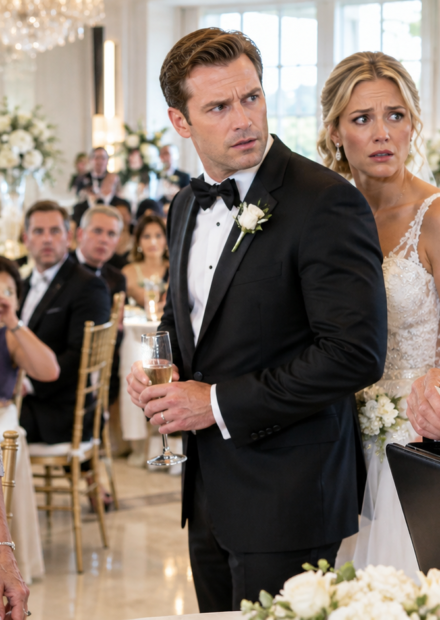
But standing there in that silent ballroom, looking at the crushed rose beneath Lauren’s jeweled shoe, I finally understood something that should have been obvious from the beginning.
A wedding is a promise made in public.
A marriage is the life you live after everyone goes home.
And if I couldn’t trust the woman beside me to treat my mother with basic human dignity when she was angry, embarrassed, or under pressure, then I had no business promising to trust her with the rest of my life.
People still occasionally ask whether canceling the wedding was difficult.
Of course it was.
It was one of the hardest things I’ve ever done.
But the decision itself?
No.
That part was simple.
My mother had walked toward my bride carrying roses from the garden where she raised me.
Lauren answered that gesture with a slap.
And when I finally looked at the woman I was about to marry, I realized the person standing before me was not the person I had promised myself she was.
So I removed my ring.
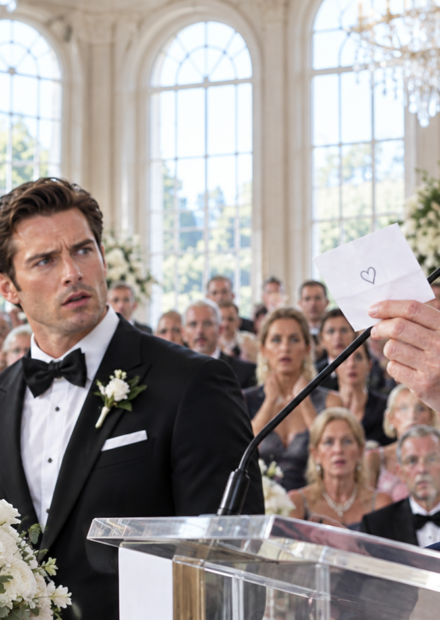
I walked to the microphone.
And before fear, money, embarrassment, or four years of memories could convince me to betray what I had just seen, I said the six words that changed all three of our lives.
“This wedding is canceled immediately.”
I used to think that was the moment my future ended.
It wasn’t.
It was the moment I stopped sacrificing the truth to protect the future I’d planned.
And sometimes, when I visit Mom and see red roses climbing along the back fence, I think about the one Lauren crushed beneath her shoe.
I don’t remember it as the flower that ruined my wedding.
I remember it as the flower that told me the truth.
And in the end, that truth saved me from making a promise I should never have made.
THE END