CHAPTER 1 : THE FIRST TIME I SAID NO
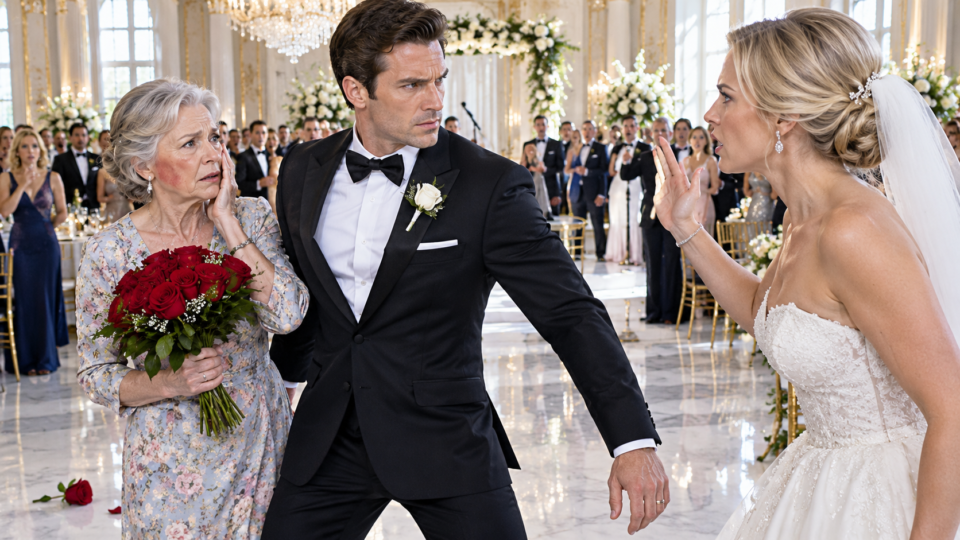
The moment I said **“no,”** my entire family went silent.
Not shocked.
Not angry.
Just confused.
As if they had never once considered the possibility that I was allowed to refuse them.
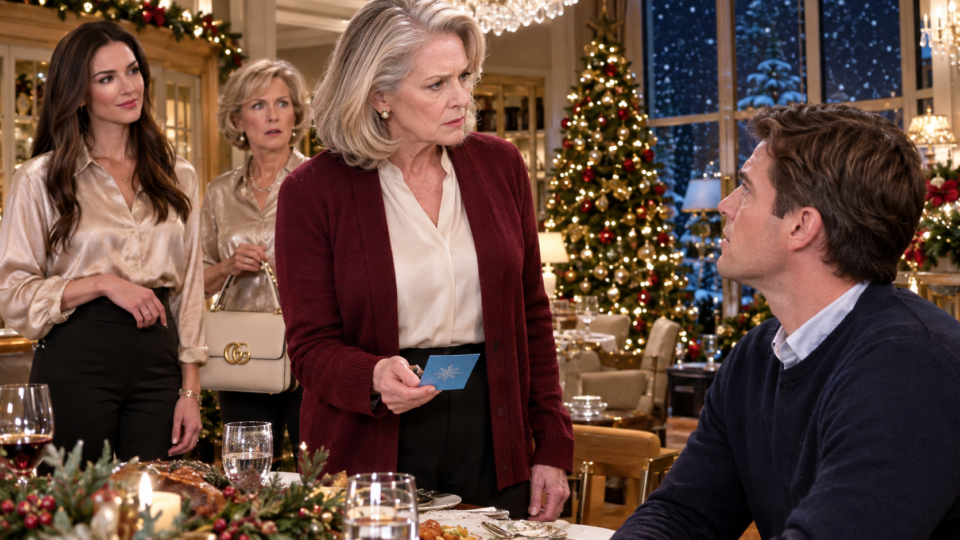
My father sat across from me at my dining table with one hand wrapped around a glass of red wine.
My mother smoothed the linen napkin across her lap.
My younger sister, Elena, leaned back in her chair with the faintest smile at the corner of her mouth.
That smile.
I knew it better than my own reflection.
She had worn it when we were children and Mom gave her the birthday necklace I had asked for because Elena “liked it more.”
She wore it when Dad used the money he had promised for my college books to buy her a used car.
She wore it whenever something that should have required sacrifice from her somehow became a sacrifice from me.
My father tapped the folder beside his plate.
“Eighty-seven thousand dollars.”
I looked at him.
“What?”
“The remaining balance for Elena’s wedding.”
He said it as though he were telling me the electric bill had arrived.
“You’ll cover it.”
No question.
No hesitation.
No embarrassment.
Just an instruction.
I stared at him.
Elena lifted her champagne.
“The venue increased the minimum.”
I looked toward her.
“The vineyard?”
“Yes.”
“And the caterer?”
“Also increased.”
“And the flowers?”
She made a small face.
“I changed the design.”
Of course she had.
Three months earlier, Elena’s wedding had supposedly been a forty-thousand-dollar event.
Then it became sixty.
Then seventy.
Now eighty-seven thousand dollars was merely the **remaining balance**.
I looked back at Dad.
“How much is the entire wedding?”
He shifted slightly.
“That isn’t the point.”
“That is exactly the point.”
Mom sighed.
“Claire, please don’t make this difficult.”
There it was.
My name was Claire Bennett.
I was thirty-six years old.
I had spent eleven years building a financial consulting firm from a one-room rented office into a company with twenty-eight employees.
I understood contracts.
I understood debt.
I understood how people disguised irresponsible decisions with emotional language.
And nobody in the world did it better than my family.
I pushed the folder toward Dad.
“I’m not paying for Elena’s wedding.”
The silence came immediately.
Mom finally looked up.
Dad blinked.
Elena’s smile disappeared.
Dad leaned forward.
“What did you say?”
“I said no.”
His eyebrows pulled together.
Not anger.
Not yet.
Confusion.
“You have the money.”
“That doesn’t make it yours.”
“Elena is your sister.”
“Yes.”
“She only gets married once.”
Elena glanced at me.
“Hopefully.”
Nobody laughed.
I asked, “Why am I responsible for paying?”
Dad leaned back, clearly irritated that I was forcing him to explain something he considered obvious.
“Because you’re in a position to help.”
“I’ve been in a position to help for years.”
“And you have.”
“That isn’t an answer.”
Mom placed her napkin beside her plate.
“Claire.”
Her voice had that careful softness she used when she was about to say something cruel and wanted everyone to remember that she had said it quietly.
“You don’t have children.”
I stared at her.
“What does that have to do with anything?”
“You earn more than all of us.”
“So?”
“You have savings.”
“Yes.”
“A large house.”
I looked around.
At the dining room.
At the pendant lights I had chosen.
At the oak table I had bought.
At the hardwood floors I had paid to replace after a pipe burst two winters earlier.
At the home I had spent three years paying for while my parents and Elena lived there without contributing a single dollar toward the mortgage.
Mom continued.
“What exactly are you saving all that money for?”
The words were so casually invasive that for several seconds I could only stare at her.
Then Elena spoke.
“I don’t know why you’re acting like we’re stealing from you.”
I almost laughed.
Instead I asked, “How much have you personally saved for this wedding?”
Her jaw tightened.
“That’s private.”
I looked at Dad.
He looked away.
That told me enough.
Mom’s mouth flattened.
“If you don’t do this for your sister, then maybe you should leave this family for good.”
There it was.
Leave.
Just like that.
The room was warm.
Too warm.
The smell of roasted potatoes and rosemary hung in the air.
Outside, rain tapped softly against the kitchen windows.
Three people sat at a table I had purchased, inside a house I owned, eating groceries I had paid for, telling me that if I refused to spend another eighty-seven thousand dollars on them, I no longer deserved to belong to the family.
And something inside me shifted.
Not violently.
Not dramatically.
Just enough.
Enough to become dangerous.
I looked at Dad.
At Mom.
At Elena.
For years, I had thought we were a family with complicated dynamics.
That night, I saw something else.
A system.
And every system depends on rules.
Their most important rule had always been simple:
**Claire gives.**
Claire fixes.
Claire pays.
Claire forgives.
Claire does not make people uncomfortable by mentioning what Claire has already done.
My father looked impatient now.
“Can we settle this?”
I stood.
The legs of my chair scraped sharply against the floor.
All three of them looked up.
Finally.
“I’m not paying for the wedding.”
Mom frowned.
Dad’s expression hardened.
Elena stared at me.
Then I said:
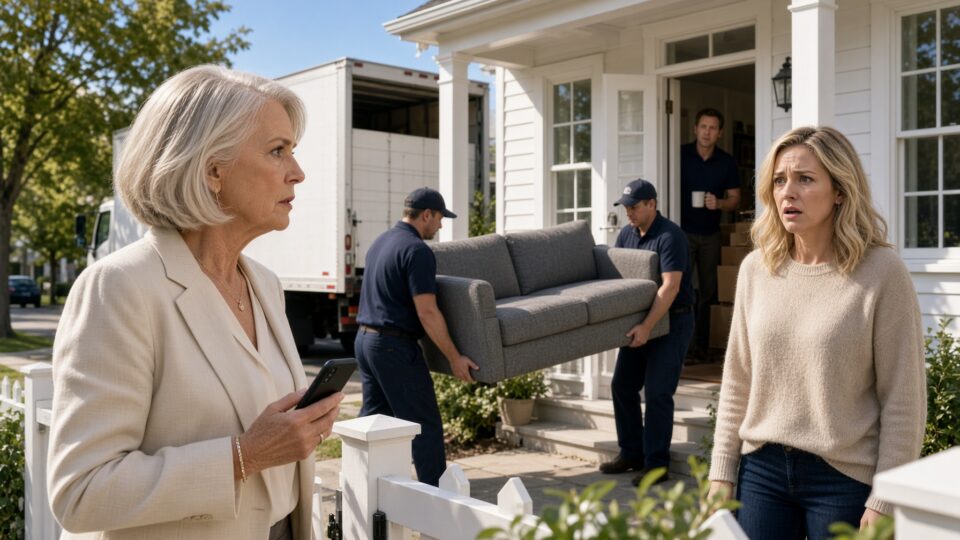
“Actually, all three of you need to move out.”
Dad laughed.
It was one short sound.
Almost amused.
“Don’t be ridiculous.”
“I’m serious.”
Mom stood.
“Claire.”
“You’ve lived here for three years.”
“Because you asked us to.”
“I asked you to stay six months.”
Dad waved one hand.
“This is our home.”
I looked at him.
“Your home?”
“Yes.”
I walked toward the built-in cabinet near the living room and opened the bottom drawer.
Inside was a folder.
I carried it back.
Set it directly in front of him.
He opened it.
The deed lay on top.
My name appeared in black letters.
**CLAIRE MARIE BENNETT.**
Owner.
Sole owner.
Dad stared at it.
Then something strange happened.
He smiled.
Not warmly.
Not nervously.
Almost pityingly.
“You might want to check that again.”
My skin went cold.
“What does that mean?”
He closed the folder.
“Exactly what I said.”
I looked at Mom.
She had gone very still.
Elena was no longer smiling.
Dad stood and carried his wineglass toward the kitchen.
As he passed me, he said quietly:
**“You’re not the only person who has paperwork.”**
That was the first moment I realized the wedding was not the real problem.
And saying no was not the beginning of the argument.
It was the moment I accidentally discovered that my family had already made decisions about my life without me.
—
I barely slept.
At 2:13 in the morning, I was still sitting in my office with the deed in front of me.
I had purchased the house four years earlier.
There was no co-borrower.
No second owner.
No family trust.
No shared equity agreement.
I knew because I had personally reviewed every page at closing.
Still, my father’s expression bothered me.
Not the threat.
The confidence.
Dad had always been good at bluffing when he was angry.
But this had not looked like a bluff.
At seven the next morning, I called my attorney.
Marcus Lee had handled my business incorporation, the house closing and enough of my contracts to understand that I did not panic over paperwork.
So when I said, “I need you to verify my property title immediately,” he stopped joking.
“What happened?”
“My father says I may not own my house the way I think I do.”
A pause.
“Did you sign anything recently?”
“No.”
“Refinance?”
“No.”
“Home equity line?”
“No.”
“Power of attorney?”
“No.”
Another pause.
“Claire, where are your original closing documents?”
“In my office safe.”
I turned toward it.
The safe stood behind a painting.
I crossed the room.
Entered the code.
Opened the door.
My passport was there.
Tax files.
Company documents.
Insurance policies.
But the thick envelope containing the certified deed copy was gone.
I stopped breathing.
“Marcus.”
“What?”
“My deed is missing.”
“Don’t accuse anyone yet.”
“I didn’t say anything.”
“I know your voice.”
I stared at the empty space.
Marcus continued.
“Do not sign anything. Do not let anyone remove documents from the house. I’ll run the title.”
After we hung up, I stood alone in the office.
Then I heard footsteps.
Mom appeared in the doorway.
“You’re up early.”
“So are you.”
“I couldn’t sleep after what you did.”
What I did.
I almost admired it.
She wore a pale blue robe I had bought her the previous Christmas.
I asked, “Have you been inside my office?”
Her face changed almost imperceptibly.
“No.”
“Has Dad?”
“I don’t know.”
“Elena?”
“Claire, this is getting paranoid.”
“My certified deed is missing.”
Mom crossed her arms.
“Why would any of us want your deed?”
“That is exactly what I’m trying to understand.”
She sighed.
“Your father is upset.”
“He told me I might not own my own house.”
“He says things when he feels cornered.”
“He didn’t look cornered.”
Mom’s eyes shifted toward the hallway.
That tiny movement told me more than her answer.
I stepped closer.
“What did he do?”
“Nothing.”
“Mom.”
“Stop interrogating me.”
“This is my house.”
Her expression sharpened.
“There. That.”
“What?”
“This obsession with reminding everyone that it’s yours.”
I stared at her.
“I pay for it.”
“We’re your family.”
“And?”
“You make us feel like guests.”
A bitter laugh escaped me.
“You are guests.”
Her face changed.
I immediately knew I had finally said the thing nobody was supposed to say.
Three years earlier, Dad’s business had collapsed.
He owned a small construction supply company.
A larger competitor entered the market.
Two major clients defaulted.
Then Dad suffered a mild heart attack during the worst month of the company’s decline.
My parents were drowning.
Their house was heavily mortgaged.
Their savings had disappeared into the business.
I had just moved into my new home.
Four bedrooms.
Quiet neighborhood.
Too much space for one person.
So I said:
“Stay with me until things stabilize.”
Six months.
That was the plan.
Then Dad’s recovery took longer.
Then their old house sold.
Then Mom said apartment rents were unreasonable.
Then Elena ended a relationship and “needed somewhere safe.”
One year became two.
Two became three.
Nobody ever asked when they should leave.
At first, I didn’t mind.
I loved hearing Mom in the kitchen.
Dad repaired little things around the house.
Elena and I watched terrible reality television together on Sunday nights.
Then small changes began.
Mom replaced my curtains.
Dad converted half my garage into storage.
Elena turned my guest bedroom into a closet without asking.
My mail began appearing opened on the kitchen counter.
Someone duplicated my spare key.
Mom started telling relatives:
“Come to our place for Thanksgiving.”
Our place.
I noticed.
But I told myself it didn’t matter.
Family helps family.
That sentence can hide an extraordinary amount of damage.
Around noon, Elena came downstairs wearing leggings and an oversized sweatshirt.
She poured coffee.
I watched her.
“Did you take anything from my office?”
She froze for half a second.
“No.”
“My deed is missing.”
“That sounds like a you problem.”
“You live here.”
“So?”
“So if somebody enters my locked office—”
She rolled her eyes.
“Oh my God, Claire.”
There it was.
The tone.
The implication that my boundaries were an inconvenience.
I said, “You have thirty days.”
She stopped stirring her coffee.
“What?”
“To move out.”
She stared at me.
“You’re serious?”
“Yes.”
“You’re throwing me out because you don’t want to pay for my wedding?”
“No. I’m asking you to leave because I finally understand that staying here has made you believe you are entitled to things that belong to me.”
Her face flushed.
“My fiancé lives forty minutes away.”
“Then live with him.”
“Our lease doesn’t start until after the wedding.”
“That is unfortunate.”
“You’re unbelievable.”
“No. I’ve been incredibly predictable. That’s why this feels so shocking.”
She slammed the mug into the sink.
Coffee splashed across the counter.
“You know what? Fine.”
She walked toward the stairs.
Then turned.
“But if the wedding gets ruined, I hope you can live with that.”
I looked at her.
“I’ve been living with your choices for years.”
She disappeared upstairs.
At 2:40 p.m., my phone rang.
A woman introduced herself as Amanda Pierce from Willow Crest Events.
Elena’s wedding planner.
“Ms. Bennett, we need your authorization on the final vendor release.”
I sat straighter.
“My authorization?”
“Yes. The updated guarantee.”
“I haven’t guaranteed anything.”
Silence.
Then:
“I’m sorry?”
“I did not agree to fund Elena Bennett’s wedding.”
Another silence.
Longer this time.
Amanda’s voice became careful.
“Ms. Bennett, your signed sponsorship documents are already in the file.”
Every muscle in my body went still.
“Email them to me.”
She hesitated.
“Of course.”
Thirty seconds later, the documents arrived.
I opened the attachment.
Venue contract.
Catering.
Flowers.
Entertainment.
Photography.
Transport.
There, at the bottom:
**Claire M. Bennett.**
My name.
My address.
My financial information.
My signature.
A signature that looked almost perfect.
Almost.
I called Marcus.
He answered immediately.
“I was about to call you.”
“Someone forged my signature.”
He went silent.
“On what?”
“Elena’s wedding contracts.”
“How much?”
I scrolled to the final page.
My stomach dropped.
“Marcus.”
“How much?”
I whispered:
**“One hundred and sixty-four thousand dollars.”**
He swore.
Then he said something that made the wedding amount suddenly feel small.
“Claire, I finished the title search.”
I gripped the phone.
“And?”
“There’s an application pending against your property.”
“What kind of application?”
His voice hardened.
“A secured credit line.”
My mouth went dry.
“How much?”
“Three hundred thousand.”
I stood so fast the chair rolled backward.
“I didn’t apply for that.”
“I know.”
“Then who did?”
“We don’t know yet.”
He paused.
“But Claire…”
“Yes?”
“Whoever submitted it had a copy of your deed, your tax information, and enough personal identification to make the application look legitimate.”
I looked toward the hallway.
Toward the bedrooms where my family had lived for three years.
And suddenly every opened envelope, every missing document, every casual invasion of privacy rearranged itself inside my mind.
Marcus lowered his voice.
**“Someone inside that house has been building a financial identity around you.”**
CHAPTER 2 : THE $164,000 WEDDING
Marcus told me to behave normally.
It was the hardest professional advice I had ever followed.
For the next six hours, I pretended nothing had changed.
Dad watched television.
Mom cooked.
Elena disappeared for a bridal fitting.
I sat in my office and created a timeline.
The fraudulent wedding agreement had been signed nineteen days earlier.
The home-equity application had been submitted eleven days later.
Both used the same scanned identification.
Both listed an email address that looked like mine but contained one extra letter.
The wedding documents listed me as:
**Primary Family Sponsor.**
I read those three words repeatedly.
Family sponsor.
Not sister.
Not guest.
Not even individual.
Resource.
At dinner, Dad acted as though the previous night had never happened.
Finally I asked:
“How much did you tell Elena I would pay?”
His fork stopped.
Mom looked at me.
Dad said, “We’ve already discussed this.”
“No. You gave me a number.”
“Claire.”
“How much did you promise?”
Elena wasn’t home yet.
Dad glanced toward Mom.
That glance mattered.
“Why are you asking?”
“Because I spoke to the wedding planner.”
His face changed.
Mom whispered, “Claire.”
I ignored her.
“The total guaranteed amount is one hundred sixty-four thousand dollars.”
Dad set his fork down.
“You shouldn’t be calling vendors and embarrassing Elena.”
I laughed.
He frowned.
It wasn’t funny.
But there are moments when a sentence is so insane laughter becomes the only possible response.
“I’m embarrassing Elena?”
“You could have discussed it privately.”
“My forged signature is on a contract.”
Mom’s face lost color.
Dad’s did not.
That frightened me more.
He said, “Nobody forged anything.”
“I did not sign it.”
“You agreed months ago to help.”
“I said I might contribute.”
“Same thing.”
“No.”
His voice hardened.
“You always twist language when money is involved.”
I stared at him.
“I run a financial firm.”
“Exactly.”
He pointed at me.
“You hide behind technicalities.”
“A signature is not a technicality.”
Mom stood.
“Enough.”
“No.”
I looked at her.
“Not this time.”
She sat slowly.
I turned back to Dad.
“Did you sign my name?”
He didn’t answer.
“Dad.”
“I handled paperwork.”
“That isn’t what I asked.”
“I was trying to get things moving.”
My pulse hammered.
“You signed my name?”
Before he answered, Mom said:
“Your father didn’t sign it.”
Everything stopped.
Dad looked at her sharply.
“Evelyn.”
Mom’s eyes dropped.
I asked:
“Then who did?”
Nobody spoke.
The front door opened.
Elena walked in carrying a white garment bag.
She saw us.
“What?”
Mom began crying.
Elena’s expression changed.
I already knew.
I didn’t want to know.
But I knew.
I held up my phone.
“Did you sign my name on your wedding contracts?”
Elena froze.
Dad stood.
“Claire, calm down.”
I looked at him.
“I am calm.”
That scared him.
I turned back to Elena.
“Did you?”
She stared at the floor.
Then said:
“I knew you’d pay eventually.”
There are betrayals that explode.
And betrayals that arrive quietly.
This one barely made a sound.
“You forged my signature.”
“I copied it.”
“That is forging.”
“Don’t make it sound criminal.”
“It is criminal.”
Her face tightened.
“I was under pressure.”
“From whom?”
“Everyone!”
She dropped the garment bag onto a chair.
“The venue needed confirmation. Vendors needed deposits. Daniel’s family kept asking what was covered. Dad said you would handle it.”
I looked at Dad.
He did not deny it.
Elena continued.
“You always say no at first.”
I stared at her.
“What?”
“You complain. You ask questions. Mom talks to you. Then you help.”
The words landed harder than I expected.
Because she wasn’t lying.
That was exactly how it worked.
She had reduced my boundaries to a predictable sequence.
No.
Pressure.
Guilt.
Payment.
She shrugged.
“I just skipped the drama.”
Something cold moved through me.
“You didn’t skip the drama, Elena.”
My voice was quiet.
“You skipped my consent.”
She rolled her eyes.
“You’re being so extreme.”
I took out my phone.
“Say that again.”
“What?”
“I want to remember exactly what you said when the attorney asks why you forged financial documents.”
Her face changed instantly.
“Attorney?”
Dad stepped between us.
“Stop threatening your sister.”
“She committed fraud.”
“She made a mistake.”
“A mistake is putting the wrong date on a form.”
I pointed toward the documents.
“This required my Social Security number.”
Elena’s face went white.
I saw it.
So did Mom.
I asked:
“Where did you get my financial information?”
No answer.
“Elena.”
She looked toward Dad.
He said, “Enough.”
“No.”
I stepped closer.
“Where did she get it?”
Dad’s jaw tightened.
Finally he said:
“From the household files.”
My stomach twisted.
“You mean my files.”
“Family records.”
“There are no family records. There are my records.”
He snapped:
“This is exactly what I mean. Everything with you is mine, mine, mine.”
I laughed again.
“My Social Security number is, in fact, mine.”
Elena shouted:
“You have everything!”
The room went silent.
Her eyes filled with tears.
“You have the company. The house. The money. Everyone respects you. Everything works out for you.”
I stared at her.
“Is that what you think?”
“Yes!”
“You think everything worked out?”
“You never struggle.”
I almost couldn’t speak.
“You’ve lived in my house for three years.”
“So?”
“You have watched me leave at six in the morning and come back at ten at night.”
“You like working.”
“I worked because twenty-eight people depended on my company succeeding.”
“You don’t understand.”
“Then explain it.”
Her mouth trembled.
“You don’t know what it’s like being your sister.”
There it was.
The true wound.
Not money.
Comparison.
“Try me.”
She wiped her face angrily.
“Every time I failed, Mom said, ‘Claire will figure it out.’ Every time Dad needed something, ‘Ask Claire.’ Every time my car broke down, every time rent went up, every time there was a problem…”
She looked at me.
“You were always the answer.”
My anger shifted.
Not disappeared.
Shifted.
Because suddenly I could see another part of the machine.
My parents had not only trained me to rescue.
They had trained Elena to expect rescue.
She whispered:
“I grew up knowing if things got bad enough, you would fix them.”
I said:
“They taught you to expect that.”
Her face softened slightly.
Then I finished:
“But you still chose to use my name.”
Her softness disappeared.
Rightfully.
I wasn’t going to let understanding become absolution.
The doorbell rang.
Nobody moved.
It rang again.
I opened the door.
Elena’s fiancé, Daniel Walsh, stood outside.
He was holding a bottle of wine.
“Hey. I thought we were doing dinner.”
He stopped.
Looked around.
“What happened?”
Elena wiped her face.
“Nothing.”
I almost admired how quickly the lie came.
Daniel looked at me.
Then at Dad.
Then Mom.
Finally Elena.
“What happened?”
I said:
“Elena signed my name on the wedding financing.”
He stared at her.
“What?”
“Claire is exaggerating.”
I handed him my phone.
He read the document.
His face changed.
Slowly.
“Elena.”
She stepped toward him.
“Daniel, I can explain.”
His voice became very quiet.
“Did Claire agree to pay for our wedding?”
Elena didn’t answer.
He looked up.
“Did she?”
Dad interrupted.
“We all understood Claire would contribute.”
Daniel ignored him.
“Elena.”
Her eyes filled.
“No.”
He stared at her.
“You told me your sister offered.”
“She was going to.”
“That’s not what I asked.”
He looked at the total.
“One hundred sixty-four thousand?”
“We changed some things.”
His face went pale.
“We?”
She said nothing.
Daniel removed his engagement ring from the chain he wore beneath his shirt—a sentimental habit because his job made wearing rings difficult.
He placed it on the table.
Elena stared.
“What are you doing?”
“I need to think.”
“Daniel.”
He backed away.
She grabbed his arm.
“You’re leaving me over money?”
He looked at her.
“No.”
His expression broke my heart a little.
“I can marry someone who is broke.”
He looked at the forged signature again.
**“I can’t marry someone who believes another person owes her a life.”**
Then he walked out.
Elena collapsed into a chair.
Mom turned toward me.
And said the sentence that finally destroyed the last illusion I had left.
**“Look what you’ve done.”**
—
“Look what I’ve done?”
My voice was so quiet Mom almost stepped backward.
Elena was crying.
Dad looked furious.
Mom pointed toward the door Daniel had just walked through.
“You didn’t have to tell him like that.”
“I told him the truth.”
“This could ruin the wedding.”
“There should not be a wedding financed with fraud.”
“Claire!”
“No.”
One word.
Again.
It was becoming easier.
Mom stared.
I continued.
“Look what happened the second I stopped fixing everything.”
Nobody answered.
“You’re all angry at me because consequences arrived before I could intercept them.”
Dad slammed his palm against the table.
“Enough!”
The plates jumped.
He stood.
“You think because you make more money than everybody else, you control this family.”
I looked at him.
“No.”
Then I pointed around the room.
“You think because I make more money, you control me.”
He stepped toward me.
Mom said his name.
He stopped.
I wasn’t afraid.
That seemed to make him angrier.
“You want us out?”
“Yes.”
“Fine.”
“Good.”
He blinked.
He had expected resistance.
Negotiation.
Tears.
“Thirty days,” I said.
“You can’t evict your parents.”
“I can end permission for adults to live in a home I own.”
“You’re unbelievable.”
“I’ll have formal notice delivered tomorrow.”
Mom gasped.
“Formal notice?”
“Yes.”
“You would put your own mother through a legal eviction?”
“No. I’m giving you thirty days to leave voluntarily.”
Elena lifted her head.
“Where am I supposed to go?”
I looked at her.
“You’re thirty-one.”
Her mouth opened.
I continued.
“Figure it out.”
She stared at me as if I had slapped her.
For the first time in her adult life, I had given her a problem without immediately attaching myself to the solution.
It terrified her.
That night, I moved every personal document into an off-site safe deposit box.
The next morning, Marcus came to the house with a mobile notary and a fraud investigator.
Dad hated every second of it.
He called it humiliation.
Marcus called it evidence preservation.
We learned three things.
First, the home-equity application had not been completed.
It could be frozen.
Second, someone had uploaded tax returns from my office files.
Third, the application listed the purpose of the loan as:
**Family property consolidation.**
I looked at Marcus.
“What does that even mean?”
He turned his laptop.
“It means somebody tried to present your house as a shared family asset.”
Dad was standing in the doorway.
Marcus looked at him.
“Mr. Bennett, were you involved?”
Dad laughed bitterly.
“I’m not speaking to some lawyer in my daughter’s kitchen.”
Marcus glanced around.
“Technically, it is your daughter’s kitchen.”
I almost smiled.
Dad did not.
After Marcus left, Dad followed me into the living room.
“You’re destroying this family over paperwork.”
I turned.
“Why did you apply for three hundred thousand dollars against my house?”
His face went still.
There it was.
Confirmation.
“You knew?”
“I know now.”
He sat down.
Suddenly he looked older.
Not defeated.
Tired.
“The business debt didn’t disappear.”
“What debt?”
“The company.”
“You closed it three years ago.”
“I still owed suppliers.”
“How much?”
He didn’t answer.
“How much?”
“Two hundred and twenty thousand.”
I stared.
“Dad.”
“I had arrangements.”
“With what money?”
“I was managing.”
“You live here for free.”
His jaw tightened.
“That was temporary.”
“Three years.”
“Do you enjoy humiliating me?”
“No.”
I sat across from him.
“But I think you’ve confused being ashamed with being humiliated.”
He looked away.
“Why three hundred thousand?”
He rubbed his forehead.
“The wedding needed money.”
I felt sick.
“You were going to borrow against my house to pay for Elena’s wedding and your debt.”
“I would have paid it back.”
“With what?”
Silence.
“With what, Dad?”
He snapped:
“I don’t know!”
The words echoed.
For the first time, his authority cracked.
Not because I defeated him.
Because there was nothing underneath it.
He whispered:
“I was drowning.”
And there it was.
The sentence I had spent my life responding to.
I need help.
I’m drowning.
I didn’t know what else to do.
Usually, my body reacted before my brain.
I would calculate.
Fix.
Transfer.
Restructure.
Rescue.
This time, I did nothing.
Dad looked at me.
Perhaps waiting for the familiar machinery to start.
It didn’t.
Finally he said:
“I thought the house could carry it.”
I felt something in my chest go still.
Not you.
The house.
My income.
My credit.
My competence.
My life.
Things that could carry weight.
“You never asked me.”
“You would have said no.”
“Yes.”
“That’s why.”
I stared at him.
He had just said it plainly.
Consent was an obstacle.
Mom appeared in the doorway.
Her face was gray.
“I told you this would happen.”
Dad turned.
“Not now.”
She stepped into the room.
“No. Now.”
He stood.
“Evelyn.”
“You said she’d never know.”
I looked between them.
“Know what?”
Mom’s hands trembled.
Dad’s face hardened.
“Nothing.”
I stood.
“What don’t I know?”
Mom began crying.
Not loudly.
Almost silently.
“I’m sorry.”
My pulse quickened.
“For what?”
She looked toward the hall closet.
“There’s a box.”
Dad shouted:
“Evelyn!”
She flinched.
Then looked at me.
“In the attic.”
“What box?”
Her voice cracked.
**“The one with your grandmother’s letters.”**
I stared at her.
“My grandmother?”
Grandma Rose had died when I was twenty-two.
She had been the one person in my family who used to tell me:
**You do not owe people pieces of yourself just because they love you.**
I had thought all of her personal papers were lost when her house was cleared.
Mom whispered:
“We didn’t lose them.”
And suddenly, the forged wedding contract was no longer the oldest lie in the house.
CHAPTER 3 : THE MONEY THEY TOOK BEFORE I KNEW
The box was dusty.
Brown cardboard.
My name written across one side in Grandma Rose’s handwriting.
**CLAIRE.**
I sat on the attic floor.
Mom stayed near the stairs.
Dad refused to come up.
Inside were letters.
Birthday cards.
Photographs.
A small jewelry case.
And an envelope from a bank.
I opened it.
Grandma had established an account for me.
Forty-two thousand dollars.
At twenty-two, that would have changed my life.
I had graduated with student debt.
Worked two jobs.
Shared an apartment with three people.
Delayed graduate school because I couldn’t afford it.
I looked at Mom.
“What happened to this money?”
She closed her eyes.
“Your father’s business.”
The room tilted.
“What?”
“He had a crisis.”
“When?”
“The year Grandma died.”
I stared at the statement.
“You took it?”
“It was more complicated.”
“No.”
My voice sharpened.
“Did you take money Grandma left for me?”
Mom cried.
“Yes.”
“How?”
“You signed a family authorization.”
“I signed funeral paperwork.”
“There was an authorization included.”
My stomach turned.
“You hid it?”
“We needed money.”
“You stole from me.”
“We saved the business.”
“I was twenty-two.”
“You were doing well.”
“I was waiting tables at night!”
“You always managed.”
There it was.
Again.
The oldest tax placed on capable people.
**You can handle it.**
I laughed.
Then I cried.
Not because of forty-two thousand dollars.
Because suddenly I saw the architecture.
At twenty-two, they took money because Claire could handle it.
At twenty-seven, they asked me to cover Dad’s medical expenses because Claire could handle it.
At thirty-one, I saved Elena from a lease she couldn’t afford because Claire could handle it.
At thirty-three, my parents moved into my house because Claire could handle it.
At thirty-six, they tried to put one hundred sixty-four thousand dollars of wedding costs and three hundred thousand dollars of debt against my name.
Because Claire could handle it.
I pulled out a letter.
Grandma’s handwriting shook slightly.
**My sweet Claire,**
**You are strong. Be careful. Families sometimes confuse a strong daughter with a daughter who does not need protecting. Those are not the same thing.**
My vision blurred.
I kept reading.
**Your mother loves you. But she worries about Elena differently. Elena asks loudly. You endure quietly. Loud needs are often mistaken for larger needs. Do not let them make that mistake forever.**
I covered my mouth.
Mom sat beside me.
“I hated her for writing that.”
I looked at her.
“You read it?”
“Yes.”
“All of these?”
“Yes.”
“Why didn’t you give them to me?”
She whispered:
“Because she made me feel like a bad mother.”
I stared.
“And instead of changing, you hid the evidence.”
She began sobbing.
I wanted to comfort her.
That instinct appeared immediately.
Old programming.
Mom hurts.
Claire fixes.
I stayed where I was.
After several minutes, she said:
“You never needed me the way Elena did.”
I looked at her.
“I needed you.”
“No. You were always independent.”
“I became independent.”
She looked at me.
There is a difference between those sentences.
I said:
“I needed you. I just learned very early that needing you didn’t change anything.”
Her face collapsed.
“I’m sorry.”
“I know.”
“No.”
She grabbed my hand.
“I need you to understand.”
I gently removed it.
“That is part of the problem.”
She stared.
“You want me to understand so you can feel better.”
“That’s not fair.”
“Maybe not.”
I stood.
“But for once, I don’t have to make this easier for you.”
I carried the box downstairs.
Dad was in the kitchen.
He saw it.
His shoulders fell.
“So she told you.”
“You stole Grandma’s money.”
“It saved the company.”
“Temporarily.”
“We kept a roof over this family.”
I looked around my house.
“And now you tried to borrow against mine.”
He said nothing.
I placed Grandma’s letter on the table.
Dad didn’t read it.
I asked:
“Did you ever plan to tell me?”
“No.”
The honesty almost hurt less.
“Why?”
He looked at me.
“Because you were doing so well.”
I laughed bitterly.
“So success made me easier to steal from?”
“That’s not what I meant.”
“It is exactly what you meant.”
He sat.
Suddenly he looked tired.
“I was proud of you.”
“Privately?”
He flinched.
Because he knew.
Whenever Elena struggled, the family gathered around her.
Whenever I succeeded, the family moved on.
My achievements had become evidence that I needed nothing.
Dad whispered:
“I thought you were the one person I didn’t have to worry about.”
I stared at him.
“Maybe I wanted someone to worry about me.”
He looked down.
That silence was the closest thing to an answer I had ever received.
—
Daniel postponed the wedding forty-eight hours later.
Not canceled.
Postponed.
Elena blamed me.
Of course she did.
She stormed into my office holding her phone.
“He called the venue.”
I kept typing.
“Elena.”
“He canceled the date!”
“Postponed.”
“Same thing!”
“No.”
“He says he wants counseling before we get married.”
“That sounds responsible.”
She stared at me.
“Are you enjoying this?”
I stopped.
“No.”
“Yes, you are.”
“Why would I enjoy watching my sister’s life fall apart?”
“Because finally I’m the failure and you’re the perfect one.”
I stood.
“Do you really believe that?”
“Yes.”
“Then you still haven’t understood anything.”
She folded her arms.
“You got everything.”
I stared at her.
“Grandma left me forty-two thousand dollars.”
Her expression changed.
“What?”
“Mom and Dad took it.”
Silence.
I continued.
“I worked two jobs because I thought there was no money.”
Elena sat slowly.
“I didn’t know.”
“No. You didn’t.”
She looked toward the door.
“Why would they do that?”
“To save Dad’s business.”
“That’s horrible.”
I almost laughed at the irony.
“Yes.”
She looked at me.
Then realization appeared.
“You think that’s what I did.”
“I think you were taught the same rule they were.”
“What rule?”
“That if Claire has something, the family can use it.”
She looked away.
“That’s not fair.”
“You forged my signature.”
Tears filled her eyes.
“I said I was sorry.”
“No, you said I was being extreme.”
She looked down.
I sat opposite her.
“Elena, I understand something now.”
She waited.
“Mom and Dad damaged both of us.”
Her eyes lifted.
“They taught me that love meant rescuing people.”
I pointed toward her.
“And they taught you that being loved meant being rescued.”
She began crying.
“But understanding why you did something doesn’t erase your responsibility for doing it.”
She nodded.
Slowly.
That was new.
No argument.
No defense.
Just a nod.
Three days later, she moved out.
Not dramatically.
No shouting.
Daniel’s sister offered her a spare room temporarily on one condition:
Elena attended counseling.
Dad hated the humiliation of moving into a two-bedroom rental.
Mom packed quietly.
On the last evening, I came downstairs and found Dad standing beside the dining table.
The same table.
The same place where he had told me I would pay for the wedding.
He touched the back of one chair.
“You really want us gone.”
“Yes.”
He nodded.
“What happens to us?”
I felt the old reflex again.
Plan.
Research.
Find better apartment.
Pay deposit.
Fix.
I pushed it down.
“You figure it out.”
He looked hurt.
Good people often panic the first time you stop protecting them from discomfort.
“I’m your father.”
“Yes.”
“I raised you.”
“Yes.”
“And that means nothing?”
I looked at him.
“It means a lot.”
He waited.
“It doesn’t mean everything.”
He swallowed.
I continued.
“Being my father gives you a relationship with me.”
I pointed toward the walls.
“It does not give you ownership of my house.”
Then toward myself.
“Or me.”
The next morning, they left.
The silence afterward frightened me.
For almost an hour.
Then I sat alone at my kitchen table.
No television upstairs.
No one opening cabinets.
No one asking whether I had paid the water bill.
No wedding plans.
No resentment disguised as conversation.
Only silence.
And for the first time, I learned:
**Peace and loneliness are not the same thing.**
CHAPTER 4 : WHEN THE FIXER STOPPED FIXING
Marcus recommended criminal charges against Elena.
Legally, he was right.
Emotionally, I wasn’t ready.
Instead, we froze all contracts, documented the fraud and required written repayment agreements for every vendor deposit that could not be recovered.
Elena owed forty-eight thousand dollars.
Dad’s fraudulent loan application was more complicated.
Because the loan never funded, Marcus negotiated with the bank’s fraud department.
But there was still something wrong.
A document appeared in the application package that none of us understood.
A notarized family asset declaration.
My name was not signed.
Dad’s was.
Mom’s too.
It claimed that when I purchased the house, my parents had contributed **$110,000 toward the down payment.**
They had not.
Marcus asked:
“Why invent that?”
I knew.
“To create a beneficial ownership argument.”
He nodded.
“If the loan was challenged, your father could claim a family equity interest.”
My stomach turned.
He had not merely tried to borrow against my home.
He had prepared a story to explain why he had the right.
I drove to his apartment.
Dad opened the door.
He looked tired.
Mom wasn’t home.
I placed the document on the coffee table.
“What is this?”
He read it.
Then sat down.
“I hoped you wouldn’t find that.”
“Why?”
“I was scared.”
“You were preparing to claim part ownership of my house.”
“I wasn’t going to take it from you.”
“What exactly does ‘take it’ mean to you?”
He looked away.
“I thought if the lender questioned me, I needed something.”
“So you invented a contribution.”
“I put money into that family for decades.”
I stared.
“So did I.”
“That’s different.”
“Why?”
He couldn’t answer.
Then I saw it.
An old framed photograph on the bookshelf.
Dad.
Mom.
Elena.
Me.
At my college graduation.
I remembered that day.
Dad had told me he was proud.
Then, before dinner, he spent an hour helping Elena through a breakup over the phone.
I had resented it.
Then felt guilty for resenting it.
That pattern again.
I sat.
“Dad.”
He looked at me.
“When did you start believing everything I had was available to you?”
He was silent for a long time.
Then he said:
“When you started saving us.”
The answer stunned me.
He rubbed his hands together.
“The first time you paid one of my debts, I hated myself.”
I said nothing.
“The second time, I hated it less.”
He looked at me.
“The third time, I expected it.”
There it was.
The transformation of gratitude into entitlement.
He whispered:
“I don’t know when I stopped asking.”
I did.
It happened slowly.
Every time I gave without requiring accountability.
Every time I called it love.
Every time I protected him from the shame that might have forced him to change.
He continued.
“You made it easy.”
That hurt.
Because it was partly true.
Not the theft.
Not the fraud.
Those were his choices.
But I had participated in the system.
I had believed generosity without boundaries was virtue.
Sometimes it is.
Sometimes it is permission.
I said:
“I helped create this.”
Dad looked surprised.
“But I didn’t create your decisions.”
He nodded.
“No.”
“You’re responsible for those.”
“Yes.”
The word came quietly.
The first clean admission I had ever heard from him.
Then he looked at the document.
“I’ll sign whatever Marcus needs.”
I stood.
As I reached the door, he said:
“Claire.”
I turned.
“I’m sorry.”
I waited.
He swallowed.
“I spent years calling you strong because it made asking more from you easier.”
My eyes filled.
He continued.
**“I confused your ability to survive with permission to keep hurting you.”**
That was the first apology from my father that did not contain the word **but**.
—
Eleven months passed.
Not everything healed.
That mattered.
I did not want one dramatic confrontation followed by a magical family reunion.
Real people do not change because somebody gives a powerful speech.
They change because they wake up the next morning and make a different choice.
Then another.
Then another.
Mom began therapy.
At first, she treated therapy like confession.
She wanted to report that she had cried enough and therefore deserved forgiveness.
Her therapist apparently disagreed.
Eventually Mom stopped asking when I would “move past everything.”
She started asking what I needed.
That was harder for her.
Dad sold his expensive truck.
He found consulting work with another construction company.
He created a repayment plan.
I did not ask for one.
He insisted.
Elena moved into a small apartment.
She sold the unused designer wedding dress.
Canceled the luxury honeymoon.
Took additional work managing events on weekends.
Daniel did not immediately return.
He met her for coffee.
Then counseling.
Then dinners.
He told her:
“I want to know who you are when nobody rescues you.”
That sentence nearly ended them.
Eventually it saved them.
One rainy Saturday, Elena appeared at my house.
My house.
I still enjoyed saying that.
She stood on the porch holding an envelope.
“Can I come in?”
I hesitated.
Then opened the door.
We sat at the kitchen table.
She placed the envelope between us.
I opened it.
A check.
Four hundred dollars.
I looked at her.
“What is this?”
“First payment.”
“For what?”
“Everything.”
“Elena.”
“I know it’ll take years.”
“Probably.”
“Maybe ten.”
“Possibly.”
She nodded.
“I still need to do it.”
I watched her.
“Why?”
Her eyes filled.
“Because for the first time in my life, I need to know what it feels like to carry something instead of handing it to you.”
I looked down at the check.
Four hundred dollars.
Compared with what she owed, almost nothing.
Compared with who she had been one year earlier, enormous.
I said:
“You know repayment doesn’t buy forgiveness.”
“I know.”
“It doesn’t guarantee Daniel marries you.”
“I know.”
“It doesn’t erase the signature.”
“I know.”
I looked at her.
“Then okay.”
She breathed out.
I deposited the check.
Not because I needed four hundred dollars.
Because she needed to make the payment.
Sometimes accepting accountability from someone is part of allowing them to grow
CHAPTER 5 : WHAT MY GRANDMOTHER REALLY LEFT ME
Two years after the vineyard disaster, Elena called me.
“I’m getting married.”
I smiled.
“To Daniel?”
“Very funny.”
It was Daniel.
They had spent eighteen months rebuilding.
No engagement announcement.
No luxury planning.
No social-media countdown.
Just work.
They chose a small garden ceremony behind a local restaurant.
Forty guests.
A simple dress.
No orchestra.
No custom champagne wall.
No imported flowers.
The entire wedding cost less than the deposit on her original venue.
Three weeks before the ceremony, I asked Elena to meet me.
I handed her an envelope.
She immediately pushed it back.
“No.”
I laughed.
“You don’t even know what it is.”
“If it’s money, no.”
“It’s a gift.”
“No.”
“Elena.”
“I said no.”
For a second, we both froze.
Then laughed.
That word.
No.
Once, our family treated it like betrayal.
Now Elena was using it to protect something.
Herself.
Her progress.
Her independence.
I opened the envelope myself.
Inside was a gift certificate for a weekend trip at a small coastal inn.
Nothing extravagant.
She looked at me.
“You don’t have to.”
I smiled.
“I know.”
Her eyes filled.
I pushed it toward her.
**“That’s why this time it actually means something.”**
She accepted it.
On the wedding day, Dad walked her down the aisle.
Mom cried.
Daniel cried more.
I cried the least, which everyone accused me of doing competitively.
At the reception, Elena stood to make a toast.
She looked at Daniel.
Then Mom and Dad.
Then me.
“I spent most of my life believing love meant somebody would catch me before I hit the ground.”
She swallowed.
“I was wrong.”
Her eyes found mine.
“Sometimes love is the person who finally moves their hands away and says, ‘You need to learn to stand.’”
The room became quiet.
“I hated my sister when she did that.”
A few guests laughed.
“So much.”
I did too.
Elena continued.
“But if Claire had paid for my first wedding, I would have walked into marriage believing the same thing I believed about everything else.”
She looked at Daniel.
“That someone else was responsible for making my life work.”
Daniel took her hand.
She finished:
“Thank you for not paying.”
I raised my glass.
“You’re welcome.”
Everyone laughed.
But Dad didn’t.
He was crying.
—
Three months later, Mom called.
“We found something.”
That sentence had caused enough trouble in my family that I almost hung up.
“What?”
“One more letter.”
I groaned.
“Please tell me nobody stole another inheritance.”
Mom laughed.
“No.”
That was progress too.
We met at my parents’ apartment.
Dad made coffee.
Mom handed me an envelope.
Grandma Rose had addressed it:
**TO BE OPENED WHEN CLAIRE FINALLY STOPS TRYING TO SAVE EVERYONE.**
I stared at the words.
“You’re kidding.”
Mom shook her head.
“She gave it to me with the other papers.”
“And you kept it.”
“Yes.”
“Why?”
Mom looked embarrassed.
“Because I thought the condition was insulting.”
Dad muttered:
“It was accurate.”
Mom glared at him.
I opened the letter.
Grandma’s handwriting was uneven.
She had written it shortly before she died.
**Claire,**
**If you are reading this, then either your mother finally listened to me or life forced her to. I suspect life.**
I laughed.
Mom covered her face.
I continued.
**There is something people rarely tell generous women. Giving is not automatically love. Sometimes giving is fear. Fear of being disliked. Fear of being called selfish. Fear that if you stop being useful, people will stop needing you.**
I stopped reading.
The words reached somewhere deep.
Somewhere I had avoided looking.
Because if I was honest, Dad had not been the only person who benefited from the old system.
So had I.
Being the fixer made me important.
Needed.
Indispensable.
If everyone required something from me, nobody had time to decide whether they simply wanted me.
I kept reading.
**You will eventually meet people who love you for what you provide and people who love you for who you are. The difficult part is that sometimes they will be the same people.**
**Do not hate them for learning the wrong lesson from your generosity. But do not continue teaching it either.**
My eyes blurred.
At the bottom, one final paragraph:
**A boundary is not a wall built to keep love out. It is a door that teaches love how to enter.**
I lowered the letter.
Nobody spoke.
Dad finally said:
“She always did have a flair for drama.”
Mom laughed through tears.
I folded the letter carefully.
For most of my life, I believed my value came from how much I could carry.
Money.
Responsibility.
Fear.
Other people’s mistakes.
Other people’s shame.
Other people’s emergencies.
I thought love meant stepping underneath whatever was falling and holding it there until everybody else was safe.
But love without boundaries had not made my family grateful.
It had made them dependent.
And dependency had slowly become entitlement.
My father stopped asking.
My mother stopped seeing me.
My sister stopped believing my consent mattered.
And I stopped noticing how exhausted I had become.
All because we had confused sacrifice with love.
That changed the night I said no.
Not because the word itself was powerful.
Because for the first time, I was willing to let the consequences remain where they belonged.
Dad had to face his debt.
Mom had to face what she had done to both daughters.
Elena had to face the kind of woman she had become.
And I had to face something too.
I had to admit that rescuing everyone had become my own way of controlling uncertainty.
If I fixed everything, nobody could fall apart.
If nobody fell apart, nobody could leave.
It had taken me thirty-six years to understand that keeping people dependent on your strength does not guarantee love.
Sometimes it only guarantees need.
Years later, Elena still tells the story of the dinner.
Her version gets more dramatic every time.
According to her, I stood up so fast the table shook.
It didn’t.
According to Dad, I looked “like a prosecutor.”
I probably did.
According to Mom, nobody breathed for thirty seconds.
Impossible.
But everyone agrees on the sentence.
**“Actually… all of you need to move out.”**
When Elena tells the story now, people usually laugh.
Then someone asks:
“Were you furious?”
She always says:
“Oh, absolutely.”
Then she looks at me.
“And thank God she did it.”
The first four-hundred-dollar check is framed in my office now.
Not because I needed the money.
Because it was the first thing Elena ever gave me that required something from her.
Dad eventually paid back every dollar he had borrowed from me after moving into the house.
It took years.
Mom returned Grandma’s forty-two thousand dollars from savings she and Dad rebuilt slowly.
I tried to refuse it.
She said:
“No.”
I laughed.
Then accepted.
Some debts are not about money.
Sometimes repayment is simply the physical proof that somebody has finally stopped expecting you to absorb the cost.
The original $164,000 wedding never happened.
The $300,000 loan never funded.
My house remained mine.
But the most important thing I recovered was not money.
It was not property.
It was not even Grandma’s letters.
It was the right to exist inside my own family without constantly proving my love through sacrifice.
For years, I thought saying no would make me selfish.
Instead, saying no finally made honesty possible.
And if there is one thing I learned from everything that happened, it is this:
**Love is not measured by how much of yourself you are willing to give away.**
**Being strong does not mean you deserve less protection.**
**Being successful does not turn your life into a family emergency fund.**
**And being related to someone does not give them unlimited access to your money, your home, your time, your forgiveness, or your future.**
Sometimes the most loving thing you can do is stop rescuing someone from the consequences that might finally teach them how to stand.
Because the night I told my family to leave was not the night I abandoned them.
**It was the night I stopped abandoning myself.**