CHAPTER 1 : THE GIFT I NEVER RECEIVED
Two hundred and twenty wedding guests applauded when my millionaire son announced that he had bought me a lake house two years earlier.
I was his mother.
I had never seen it.
For a few seconds, I thought I had misunderstood him.
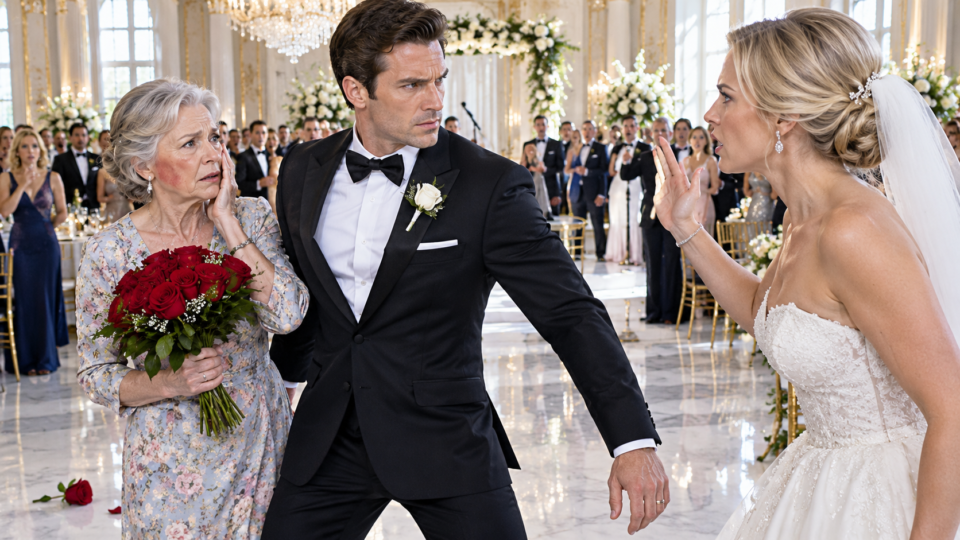
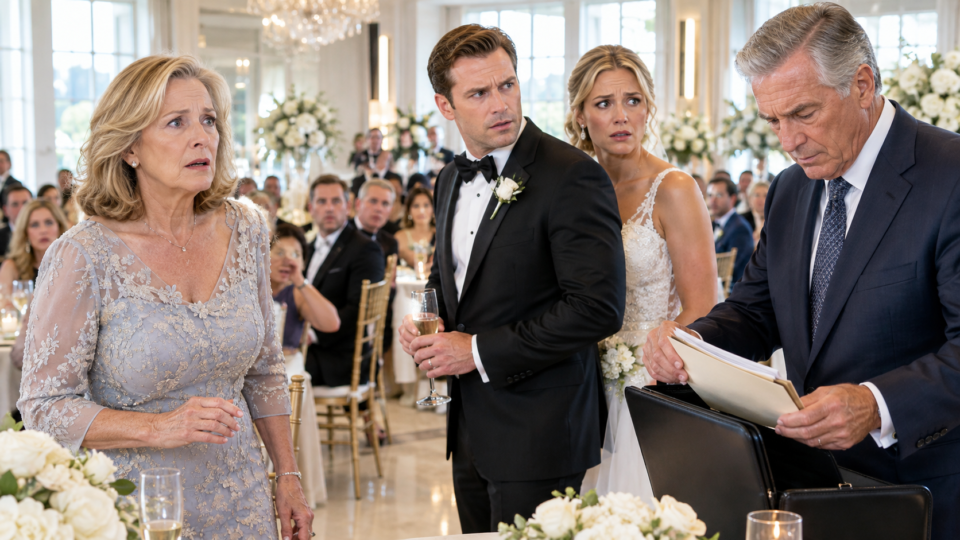
The ballroom was glowing with candlelight and crystal. White roses spilled from tall glass vases. A string quartet had stopped playing while David stood beside his new wife, Victoria, holding a champagne glass and thanking everyone who had helped them reach that day.
He looked impossibly handsome in his black tuxedo.
Proud.
Successful.
Happy.
I had spent most of the evening watching him from my table and remembering a skinny ten-year-old boy who used to leave his muddy shoes beside my kitchen door.
Then he raised his glass toward me.
“And Mom,” he said, smiling, “I know you hate being thanked in public, but I hope you finally admit I was right about the Willow Lake house.”
People laughed.
I smiled because everyone else did.
David continued.
“She fought me on it, but buying that place for her was still one of the best things I’ve ever done.”
The room erupted in applause.
A woman beside me touched my arm.
“How wonderful,” she whispered.
I looked at David.
Then at Victoria.
Then back at my son.
“David,” I said.
My voice somehow carried farther than I expected.
“What lake house?”
The applause died unevenly.
A few people kept clapping before realizing no one else was.
David stared at me.
Victoria went completely still beside him.
The happiest room I had ever stood in became so quiet I heard someone place a champagne glass onto a table.
David gave a small laugh.
It was the kind of laugh people use when they believe they are standing inside a misunderstanding that will be funny in thirty seconds.
“Mom,” he said. “The Willow Lake house.”
I waited.
He lowered his glass.
“You’ve lived there for two years.”
A strange heat moved through my face.
“I live in the same apartment I’ve lived in for years.”
The smile weakened on David’s mouth.
I could see him searching my expression for a joke.
“You’re kidding.”
“No.”
“Mom.”
“I’m not kidding.”
“Twenty-four months.”
“I’m telling you the truth.”
He pulled his phone from his pocket.
Victoria caught his wrist.
“David, please. Not here.”
He looked at her hand until she let go.
Then he called his executive assistant.
“Rachel,” he said when she answered. “I need you to check something immediately.”
I wanted him to stop.
Not because I was afraid of the truth.
Because I was ashamed.
I had spent years making sure David never felt responsible for me.
After his father left, I worked mornings in a school cafeteria and evenings cleaning offices. Later I moved into classroom cleaning because the hours were steadier. I packed David’s lunches, attended every parent conference I could, and learned how to make twenty dollars last three days when it needed to.
When his business took off, I promised myself I would never become one of those mothers who treated a successful child like a retirement plan.
So I never asked.
Not when my rent increased.
Not when my car needed a transmission.
Not when my doctor changed one of my prescriptions and the copay made me stare too long at my bank balance.
Sometimes I waited until payday.
Sometimes I told myself I could stretch things another week.
And all that time, I had assumed David simply didn’t know.
Or didn’t notice.
Or had become too busy.
Rachel’s voice came through the phone.
David put her on speaker.
“Yes,” she said. “The monthly family support transfers have gone out on schedule.”
“To what account?”
There was typing.
“Mercer Household Services.”
I looked at Victoria.
So did half the room.
Victoria’s parents were seated two tables from the head table.
Her father, Charles Mercer, had built Mercer Household Services into a luxury property-management company that handled estates, vacation homes, domestic staffing, and private residences for wealthy families.
David had mentioned the company before.
I had never used it.
Victoria spoke quickly.
“There’s an explanation.”
David turned toward her.
He had not accused her of anything.
That frightened me.
Then I looked at Charles Mercer.
He did not look surprised.
He lowered his eyes toward the table.
That frightened me more.
David’s voice became quiet.
“Rachel. Who authorized Mercer to receive my mother’s support payments?”
“I’d have to pull the original setup documents.”
“Do it.”
“David,” Charles said.
It was the first time he had spoken.
“This really isn’t the place.”
I almost laughed.
Everyone suddenly cared about privacy after discussing my supposed house, my supposed money, and my supposed life in front of two hundred and twenty people.
Before David could answer, a man near the ballroom entrance approached us carrying a black document case.
I recognized him only vaguely.
He had been seated several tables away.
“Mrs.—”
He stopped, perhaps realizing he did not know whether he should address me in front of everyone.
“I’m Martin Hale,” he said instead. “I’m a property attorney.”
I stared at him.
“I know who you are,” David said. “We met at the Willow Lake closing.”
Martin nodded.
Then he looked at me.
“I’ve been trying to reach you for months.”
My stomach tightened.
“Me?”
“Yes.”
He placed the case on an empty chair and opened it.
Inside was a thick folder.
He removed a recorded deed.
Then he turned it toward me.
My full legal name was printed across the page.
I read it twice.
Owner.
Me.
The county records said I had owned the Willow Lake property for almost two years.
According to the county, I had a lake house.
According to my own life, I had spent that morning deciding whether I could put off replacing a cracked pair of work shoes until the following Friday.
“I don’t understand,” I whispered.
Martin removed several more documents.
Property-tax notices.
Insurance correspondence.
Maintenance records.
Then an authorization form.
“This allowed Mercer Household Services to handle correspondence and certain property matters on your behalf.”
“I never signed that.”
My answer came so quickly that Martin stopped speaking.
At the bottom of the page was a signature.
It resembled mine.
From a distance, it might have convinced someone.
But I had spent a lifetime signing school permission slips, checks, birthday cards, lease agreements, medical forms, report cards, job applications, and Christmas cards.
I knew the shape of my own hand.
The first letter was wrong.
The final stroke was wrong.
Even the pressure looked wrong.
“That isn’t mine.”
Victoria whispered, “David—”
Martin pointed to the notary seal.
“There’s another problem.”
Charles looked up.
Martin’s expression had changed.
“The notary listed here died six months before the date on this authorization.”
No one spoke.
I felt the paper trembling in my hands.
David turned to Charles.
“What do you know about this?”
Charles pushed his chair back slightly.
“I’m not discussing business records in a ballroom.”
“My mother’s signature is forged.”
“You don’t know that.”
“I know my own signature,” I said.
Charles looked at me for the first time.
There was irritation in his eyes.
Not sympathy.
Not concern.
I understood something then.
Maybe it was small.
Maybe it meant nothing.
But when an innocent person hears that a dead notary supposedly witnessed a forged signature, they usually ask how that could have happened.
Charles did not ask.
He wanted the conversation to stop.
David looked back at me.
His face had lost all color.
Then he asked a question I would remember for the rest of my life.
“Mom, when was the last time you got a birthday card from me?”
The forged document suddenly felt heavier.
“I don’t know.”
“Think.”
“David—”
“Please.”
I thought.
His birthday cards had once been ridiculous things with cartoons on the front because he knew I loved stupid jokes.
Later they became elegant cards from expensive stationery stores.
I kept them all.
There was a box beneath my bed filled with them.
I searched my memory.
“Maybe two years ago.”
David closed his eyes.
“I sent one three weeks ago.”
I said nothing.
“Last year too. Christmas cards. Mother’s Day. Flowers twice. I sent you a bracelet for your birthday last year.”
“I never got a bracelet.”
His eyes opened.
The expression on his face broke something inside me.
For two years I had quietly believed success had changed my son.
I believed the dinners he canceled meant his work mattered more.
I believed the missing cards meant he no longer thought about small things.
I believed the silence meant he was building a life where I no longer fit easily.
And David had apparently believed something about me too.
“You never answered,” he said.
“I never received them.”
“I thought you were angry.”
“At what?”
“I didn’t know.”
His voice cracked.
“I thought maybe you hated the house. I thought maybe I pushed too hard.”
“What house?”
He almost laughed, but there was no humor in it.
“The one I thought you were living in.”
The cruelty of it became clear all at once.
Someone had not merely taken money.
Someone had created two different realities.
David believed I had moved into a beautiful lake house, received his support, opened his letters, accepted his gifts, and chosen not to answer.
I believed my son had become distant, stopped sending personal things, and slowly left me behind.
Neither of us had confronted the other because each of us had been trying not to intrude.
Someone had understood us well enough to use that.
David stepped toward me.
I stepped back.
Not because I blamed him.
Because I could not process any more.
“Mom.”
“I need to see the house.”
“Tomorrow,” he said. “I’ll take you.”
“No.”
His face tightened.
“I want to come.”
“I know.”
“Then why—”
“Because I’m tired of people explaining my own life to me before I’ve had a chance to look at it.”
He became silent.
Martin took a pen from his case and wrote an address on a piece of paper.
He handed it to me.
Forty-three minutes from my apartment.
For almost two years, a house had existed forty-three minutes away with my name on its deed.
I folded the address into my purse.
Victoria had not moved.
She was still standing beside the wedding table, surrounded by white roses, staring at me.
Charles had stopped looking irritated.
For the first time, he looked afraid.
And as I left my son’s wedding reception before the cake had been cut, I understood that by sunrise I would be standing at the door of a home that legally belonged to me.
I just had no idea whose life I was going to find on the other side.
CHAPTER 2 : THE HOUSE THAT WAITED FOR ME
I did not sleep.
I sat at my kitchen table until four in the morning wearing the same blue dress I had worn to the wedding.
My apartment looked exactly as it always had.
The refrigerator hummed.
The faucet in the kitchen sink dripped once every few minutes.
A stack of grocery coupons sat beneath the ceramic rooster David had painted for me when he was nine years old.
Nothing had changed.
That was what made everything feel impossible.
Somewhere forty-three minutes away was another kitchen.
Another refrigerator.
Another set of rooms.
A house that had belonged to me for almost two years without ever becoming part of my life.
At four-thirty, I changed into slacks, a sweater, and the comfortable sneakers I wore on cleaning nights.
At five, I made coffee.
At five-fifteen, my phone rang.
David.
I let it ring three times before answering.
“Mom.”
“I’m here.”
“I’m outside your building.”
I went to the window.
His car was parked beneath the streetlight.
“You said you were going alone,” he said. “I know. I’m not asking to come inside the house. I just didn’t want you driving after no sleep.”
“I’ve driven after worse.”
“I know.”
Something in his voice made me close my eyes.
He remembered.
There had been mornings when I worked until midnight and drove him to school at seven because his bus route changed.
Mornings when I had survived on coffee and determination.
“I need to do this myself,” I said.
“I understand.”
“Do you?”
“No,” he admitted. “But I’m trying.”
That answer mattered.
I looked at his car again.
“Go home.”
“I don’t have one right now.”
I understood what he meant.
The wedding.
Victoria.
The hotel suite they were supposed to leave from that morning for their honeymoon.
“I’m sorry.”
“Don’t be.”
There was a pause.
Then he said, “Call me when you get there.”
I agreed.
Willow Lake was still covered in morning mist when I arrived.
The neighborhood was the kind of place I had only ever seen through a windshield.
Large homes sat far apart among pine trees and stone walls.
The road curved beside the lake until my navigation system told me I had reached the address.
I slowed.
Then I stopped in the middle of the driveway.
The house was beautiful.
That was almost the worst part.
It was not some neglected property purchased in my name as part of a careless financial scheme.
It was a home someone had chosen.
Gray stone.
Wide windows.
A deep porch facing the water.
A dock reaching into the still lake.
There were hydrangeas along the walkway and two Adirondack chairs beneath a maple tree.
I knew immediately why David had bought it.
When he was twelve, we spent one summer afternoon at a public lake because it was the only vacation I could afford.
We ate sandwiches from a cooler.
David skipped rocks.
I told him that if I ever became rich, I would live somewhere I could see water from my kitchen window.
I had forgotten saying it.
He had not.
I covered my mouth.
For the first time since the ballroom, I cried.
Not because I wanted the house.
Because my son had remembered something I had said when he was twelve years old.
Someone had taken that memory and turned it into evidence that he did not care about me.
Martin had explained before I left the wedding that there was a secured key box attached inside the porch cabinet.
As the recorded owner, I had every right to enter.
The code David had been given at closing still worked.
The key felt cold in my hand.
I stood at the door for almost a minute.
Then I unlocked my house.
The first thing I noticed was the smell.
Not food.
Not perfume.
Not pets.
Cleaning solution.
Furniture polish.
The house was immaculate.
It was also empty.
Not empty of furniture.
Empty of life.
A cream sofa sat in the living room with perfectly arranged pillows.
There were books on shelves, but when I pulled one free, its spine barely opened.
Decorative bowls sat on tables.
A vase held artificial branches.
There were no shoes beside the door.
No half-read newspaper.
No photographs.
No coat.
No forgotten coffee cup.
No life.
I walked through the rooms slowly.
Someone had furnished the house in colors I liked.
Blue.
Soft green.
Warm wood.
The kitchen window overlooked the lake.
I stood in front of it and imagined David remembering my old sentence.
Someday I’d like to see water from my kitchen window.
My phone rang.
I did not answer.
I opened cupboards.
Plates.
Glasses.
Pots.
Everything new.
The refrigerator was nearly empty except for bottled water.
Upstairs, the main bedroom faced the lake.
A blue quilt covered the bed.
On the dresser sat a framed photograph.
I stopped.
It was a picture of David and me.
He was seventeen.
I was wearing my work uniform.
We were standing outside his high school graduation.
I picked it up.
That was when I understood the house had not been bought casually.
He had tried to make it mine.
Someone else had made sure it never reached me.
Downstairs, beside the mudroom, I found a narrow door marked OWNER STORAGE.
It was locked.
The same key opened it.
Inside were shelves.
Boxes.
Flowers long dead inside delivery packaging.
Two unopened holiday baskets.
A package from a jewelry store.
Cards.
Dozens of envelopes.
My knees nearly gave out.
I sat on the floor.
The first envelope I touched had David’s handwriting.
MOM.
Three weeks earlier.
The birthday card.
I opened it.
I will never forget what it said because I had spent two years telling myself the opposite.
He wrote that he was sorry work had made him difficult to reach.
He wrote that he hoped I knew how much he loved me.
He wrote that after the wedding we needed to spend more time together.
He wrote, You gave me every safe place I ever had. I hope the lake house gives some of that back to you.
I pressed the card against my chest.
Then I opened another.
Christmas.
Another.
Mother’s Day.
Another.
The package from the jewelry store contained a simple silver bracelet engraved on the inside.
You first. Always.
I cried harder.
When I finally forced myself to stand, I saw a white binder on the shelf.
MERCER HOUSEHOLD SERVICES.
PROPERTY MANAGEMENT LOG.
My name was printed beneath it.
The entries were neat.
Landscaping inspected.
Cleaning completed.
Security checked.
Mail collected.
Package received.
Mail collected.
Package received.
Mail collected.
My heart began pounding.
The house had not been forgotten.
Someone had been coming here regularly.
Someone had been collecting everything David sent.
I called him.
He answered before the first full ring.
“Mom?”
“I found your cards.”
Silence.
“All of them?”
“Enough.”
He made a sound that might have been relief or pain.
“I found the bracelet.”
Another silence.
Then he said, “Where?”
“In a locked storage room.”
“What?”
“There’s a property-management binder.”
I heard movement.
“I’m coming.”
“No.”
“Mom.”
“Give me thirty minutes.”
“Why?”
“Because I need to understand what I’m looking at.”
He breathed out.
“Thirty.”
I took the binder into the kitchen.
The earliest entries began shortly after the closing.
Mercer Household Services had visited the property every week.
The logs listed cleaning, landscaping, utilities, deliveries, and mail collection.
At first I thought it might have been legitimate.
Maybe David had hired them to maintain the house.
Then I found a section labeled CLIENT COMMUNICATION.
Every line listed the same thing.
Owner communication handled through authorized representative.
Authorized representative.
The forged form.
Someone had created a system where every attempt to reach me could legally—or at least apparently legally—be diverted.
I called Martin.
When I explained what I had found, his voice sharpened.
“Photograph every page. Don’t remove anything yet.”
“Why?”
“Because if those are business records maintained in the ordinary course of managing the property, they may matter.”
I stared through the kitchen window.
“How did you try to contact me?”
“Certified letters first.”
“To my apartment?”
“The authorization instructed us to send all property correspondence through Mercer Household Services.”
“So you never had my apartment address?”
“I eventually located it independently. That’s why I had been trying to reach you directly.”
“What made you suspicious?”
He hesitated.
“A tax notice was returned in a way that didn’t make sense. Then I noticed inconsistencies in the authorization.”
“The dead notary.”
“That came later.”
I looked again at the binder.
“Martin, why would anyone do this?”
“I can tell you what the paperwork does. I can’t tell you why someone wanted it done.”
Twenty minutes later, David arrived.
He entered slowly.
The moment he stepped into the living room, his face changed.
“You’ve never been here.”
It was not a question.
“No.”
He looked around.
“I picked that sofa.”
I said nothing.
“The blue quilt upstairs. I picked that too.”
He walked toward the framed graduation picture.
Then toward the lake.
“I thought you lived here.”
“I know.”
His shoulders folded forward.
“I thought you hated it.”
“Why?”
“Because you never thanked me.”
That should have angered me.
Instead it made me sad.
“You thought I would accept a house and never say thank you?”
His eyes filled.
“I told myself maybe you were uncomfortable. Maybe I embarrassed you. Victoria said—”
He stopped.
The room seemed to shrink.
I turned.
“What did Victoria say?”
David did not answer immediately.
Then he sat down.
“She said you were overwhelmed.”
“When?”
“After the closing.”
“I wasn’t at the closing.”
“I know that now.”
“What did she tell you?”
He looked at the floor.
“That you didn’t want me making a big thing out of the house. That you appreciated it but wanted independence. She said you asked her family’s company to handle the move and the bills because you didn’t want me controlling everything.”
I stared at him.
“Did that sound like me?”
“Yes.”
The answer hurt until he continued.
“Because you’ve spent my entire life refusing help.”
That was true.
Painfully true.
“She said you wanted space,” he whispered. “So I gave it to you.”
I sat across from him.
“And when I didn’t answer your cards?”
“I thought that was part of the space.”
“And when I kept living in my apartment?”
“I didn’t know.”
“You never came by?”
“Victoria told me you weren’t comfortable having people show up without warning. Every time I suggested visiting, something happened. Work. Travel. Wedding planning. And then…”
“And then two years passed.”
He nodded.
There it was.
The part no forged signature could explain away.
Someone had deceived us.
But we had made the deception easier because both of us had been too careful with each other.
He had been afraid of becoming the wealthy son who controlled his mother with money.
I had been afraid of becoming the poor mother who expected her wealthy son to solve her problems.
Between those two fears, silence had grown.
Someone had lived inside that silence.
David opened the management binder.
He read several pages.
Then he looked toward the locked storage room.
“Rachel is pulling every transfer.”
“Good.”
“I want Martin here.”
“Good.”
“I also want Victoria here.”
“No.”
He looked at me.
“Why?”
“Because I want the records before the explanations.”
For the first time that morning, David almost smiled.
“That sounds like you.”
“It should. I’m still your mother.”
His smile vanished again, but something softer replaced it.
At eleven-seventeen, Rachel emailed him the first batch of payment records.
David read them on his phone.
Then he handed it to me.
Twenty-four transfers.
One every month.
All marked for my benefit.
All deposited into Mercer Household Services.
The memo line on most of them read:
HOUSEHOLD SUPPORT AND OWNER SERVICES — WILLOW LAKE.
I looked around the spotless house.
Twenty-four payments.
Twenty-four months.
Twenty-four opportunities for someone to tell the truth.
Then David scrolled farther.
His face hardened.
“What?”
He turned the screen toward me.
Attached to the original payment instructions was the same authorization Martin had shown us at the wedding.
My forged signature.
The dead notary.
And beneath it was the name of the Mercer employee who had submitted the paperwork.
The account authorization had not come from some unknown clerk.
It had been submitted from Charles Mercer’s executive office.
CHAPTER 3 : TWO YEARS OF SILENCE
Charles Mercer arrived at Willow Lake shortly after one that afternoon.
Victoria came with him.
I had expected David to confront them the moment they walked through the door.
Instead, he stood beside the kitchen window with his arms folded and said nothing.
Martin Hale sat at the table with the documents arranged in front of him.
I remained in the chair at the head of the table.
That choice was deliberate.
It was my house.
My name.
My stolen mail.
My forged signature.
I would not sit quietly at the edge of my own life while someone else explained it.
Victoria entered first.
She had changed out of her wedding gown.
Her hair was tied back.
There was no makeup on her face.
Twenty-four hours earlier, she had been a bride beneath chandeliers.
Now she looked younger and more frightened.
Charles looked angry.
That told me more than fear would have.
Angry people often believe they have lost control of a situation they expected to control.
His eyes went immediately to the binder.
“You removed company records.”
“They were in my house,” I said.
He looked at me.
“Those records belong to Mercer Household Services.”
“The house belongs to me.”
“Technically—”
David moved.
Only one step.
Charles stopped speaking.
“Don’t say technically,” David said.
His voice was quiet.
“If her name is on the deed, say the house belongs to her.”
Charles looked at Martin.
“I assume you advised this.”
“I advised the recorded owner of her rights.”
Victoria pulled out a chair.
“Can we please talk without turning this into some kind of interrogation?”
I looked at her.
“Did you know I had never been here?”
She blinked.
“Of course I knew you hadn’t moved in.”
David’s head turned toward her.
The room became silent.
Victoria seemed to realize what she had said.
David spoke slowly.
“You told me she had.”
“No. I said—”
“You told me my mother wanted privacy after the move.”
“I was trying to keep you from pressuring her.”
“Pressuring me into what?” I asked.
She looked at me.
No answer.
I opened the management binder.
“Your company came here every week.”
“My father’s company.”
“Fine. His company.”
Charles leaned forward.
“We maintained the property.”
“With money David sent for me.”
“With funds allocated for household support.”
“For a household with no one living in it.”
“There were expenses.”
“Twenty-four months of expenses?”
“Insurance. Landscaping. Cleaning. Security. Utilities.”
I nodded.
“And my birthday cards?”
He said nothing.
“The bracelet?”
Nothing.
“The Christmas gifts?”
Victoria spoke.
“They were kept safe.”
I stared at her.
“From whom?”
Her face tightened.
“That isn’t what I meant.”
“It is exactly what you meant.”
Martin slid the authorization across the table.
“Did either of you witness her signing this?”
Charles looked at the page.
“This document was processed by my office.”
“That was not my question.”
“I would need to review internal records.”
David laughed once.
It was a terrible sound.
“You submitted it.”
“My office submitted it.”
“From your executive account.”
“Again, I would need to review—”
“The notary was dead.”
Charles became silent.
David leaned both hands on the table.
“The notary was dead for six months before that document was supposedly signed.”
Victoria whispered, “Dad.”
Charles looked at her sharply.
That one glance changed everything.
It was not the look of a father hearing bad news from his daughter.
It was a warning.
Be quiet.
I saw it.
Martin saw it.
David definitely saw it.
He straightened.
“Victoria.”
She looked at him.
“Did you know the authorization was false?”
“No.”
Too fast.
David closed his eyes.
“You didn’t even look at it.”
“I know what document you mean.”
“Then answer me again.”
She swallowed.
“I knew your mother hadn’t signed it personally.”
The sentence entered the room like smoke.
David stared at her.
I did not move.
Martin spoke.
“What did you believe authorized it?”
Victoria looked toward her father.
Charles said, “Do not answer legal questions without counsel.”
I almost smiled.
Yesterday this was a misunderstanding.
Now it required counsel.
David pushed away from the table.
“You knew.”
Victoria stood too.
“David, listen to me.”
“You knew.”
“I was trying to handle something you refused to see clearly.”
“What?”
“Your mother never wanted your money.”
“That was my decision to make.”
“No. It wasn’t just your decision. We were building a life.”
I felt something cold settle inside me.
There it was.
Not the whole truth.
But the emotional center of it.
Victoria turned toward me.
“This isn’t personal.”
I laughed.
She flinched.
“You forged permission in my name, intercepted my mail, controlled property that belonged to me, and took money my son thought he was sending me.”
“I did not take your money.”
“Then where is it?”
She looked at her father.
Charles answered.
“The funds were applied to property expenses and contracted management services.”
“Contracted by whom?”
No one spoke.
“Not me.”
Charles tapped the authorization.
“That document—”
“Is forged.”
His jaw tightened.
David looked at Victoria.
“How much did you know?”
She began crying.
I wish I could say it moved me.
It did not.
Not then.
“I knew the house was being managed through Dad’s company.”
“You told me Mom had moved in.”
“I told you the transition was being handled.”
“You told me she wanted us to stop asking.”
“She did want independence.”
“How would you know? You barely spoke to her.”
Victoria looked at me.
That was true.
We had always been polite.
Never close.
I had assumed that was simply her nature.
Now I wondered whether distance had been useful to her.
She sat again.
“David, from the beginning, every time you talked about your mother, you talked about what you wanted to give her. A house. Money. A car. Trips. You didn’t understand how much that affected everything.”
“Everything meaning what?”
“Our future.”
His expression changed.
“You thought giving my mother a house threatened our future?”
“It wasn’t one house.”
“What was it?”
“It was the idea that there would never be a limit.”
I found my voice.
“I never asked him for anything.”
“I know.”
The answer surprised me.
Victoria wiped her face.
“You didn’t have to ask. David kept offering.”
“So you decided for both of us?”
“I thought if the house was maintained and the expenses were handled, you were still being provided for.”
“Without knowing I owned it?”
She looked down.
David stared at her as if she had become a stranger.
“And the support payments?”
Victoria did not answer.
Charles did.
“They were not personal spending money. The transfers were categorized as household support.”
“Because I categorized them that way for accounting,” David snapped. “They were supposed to pay Mom’s living expenses.”
“Then your instructions were imprecise.”
Martin spoke before David could.
“The instructions may be relevant to the financial dispute. They do not explain the forged authorization.”
Charles looked at him.
Martin continued.
“They also do not explain why correspondence intended for the property owner was intentionally routed through a third party who knew she had never occupied the property.”
Victoria stood.
“I can’t do this.”
“Yes, you can,” I said.
She looked at me.
For the first time in two days, I saw anger beneath her fear.
“You think I wanted to hurt you?”
“I think you were willing to.”
“That isn’t the same thing.”
“It is when I’m the one who got hurt.”
Her face crumpled.
I did not raise my voice.
“For two years, I thought my son had forgotten me.”
David looked away.
“For two years, he thought I was ignoring him.”
Victoria whispered, “That wasn’t supposed to happen.”
The words struck harder than any denial.
I stood.
“What was supposed to happen?”
She stared at me.
I stepped closer.
“What exactly was supposed to happen, Victoria?”
She looked toward Charles.
He said, “Enough.”
“No,” David said.
Charles turned.
David’s expression was unlike anything I had ever seen on my son’s face.
Not rage.
Grief.
“Let her answer.”
Victoria pressed both hands against the back of the chair.
“You were supposed to eventually move in.”
I stared.
“When?”
“I don’t know.”
“You didn’t tell me I owned it.”
“We were going to.”
“When?”
“After the wedding.”
David recoiled.
“Why after the wedding?”
Victoria began speaking faster.
“Because everything was chaos. The business was expanding. We were planning the wedding. You were traveling. Your mother was working. It became easier to keep the property maintained until there was a better time.”
“For two years?”
“I know how it sounds.”
“No,” I said. “You know what it was.”
She looked at me.
“You used my silence.”
She shook her head.
“You used David’s trust.”
“No.”
“You used the fact that I don’t ask for money.”
Her eyes filled again.
“You used the fact that he was afraid of insulting me by pushing.”
No answer.
“And every month that passed made telling the truth harder, so instead of stopping, you had your father’s company keep collecting the money and the mail.”
Charles stood.
“This conversation is over.”
I turned toward him.
“Did you know I had never signed that authorization?”
His jaw tightened.
“I relied on representations made to me.”
“By your daughter?”
“By people involved in the property.”
“Name them.”
Silence.
Martin’s pen stopped moving.
I looked at Victoria.
She was staring at her father.
The frightened bride from the ballroom was gone.
In her place was someone realizing the person beside her might allow her to carry the entire blame.
“Dad,” she whispered.
Charles looked toward the door.
“Do not.”
Victoria’s mouth opened.
David said nothing.
Neither did I.
Sometimes the most useful thing a person can do is leave silence alone.
Victoria began to cry again.
This time when she spoke, her voice was barely audible.
“I told him you hadn’t signed it.”
Charles closed his eyes.
Martin looked up.
David went completely still.
Victoria continued.
“I told him you didn’t know about the house yet.”
Charles slammed his palm onto the table.
“That is enough.”
She jumped.
I did not.
“Then why create the authorization?” I asked.
Victoria looked at me.
“Because the company couldn’t manage everything without owner permission.”
“So you manufactured permission.”
Her lips trembled.
“My father said it could be corrected later.”
Charles turned toward her.
“You have no idea what you are saying.”
“I know exactly what I’m saying.”
For the first time, anger entered her voice.
“You said David had already bought the house for her, so eventually she would agree anyway.”
David whispered, “Oh my God.”
Victoria looked at him.
“I didn’t think it would become this.”
“What did you think forgery would become?”
“I thought it was temporary.”
“And the dead notary?”
She shook her head.
“I didn’t know about that.”
Charles grabbed his coat.
Martin stood.
“I strongly suggest no original records connected with this property or these transfers be destroyed, altered, or removed.”
Charles glared at him.
“Is that a threat?”
“It is advice.”
Charles walked out.
The front door slammed.
Victoria stayed behind.
She looked at David.
He removed his wedding ring.
He did not throw it.
He did not make a speech.
He simply set it on the kitchen table between them.
The small sound it made against the wood seemed louder than the ballroom applause had been.
Victoria stared at it.
David’s voice was almost a whisper.
“You let me believe my mother stopped loving me.”
“I never said that.”
“You didn’t have to.”
She reached for him.
He stepped back.
And suddenly I understood that the house had not only been kept from me.
For two years, it had been used to build a wall between a mother and her son, one careful silence at a time.
CHAPTER 4 : WHAT THE RECORDS COULD NOT HIDE
The truth did not arrive all at once.
It came in pages.
Transfer records.
Invoices.
Maintenance logs.
Delivery confirmations.
Emails David already had in his own files but had never understood in the right context.
That was the strangest part.
Once we knew what had happened, so much of the truth had been visible all along.
David had an email from Victoria telling him I was “still settling into the new arrangement.”
I had never seen the house.
There was another telling him I preferred all property communication to go through Mercer Household Services because I felt “overwhelmed by paperwork.”
No one had ever asked me.
Another said I wanted David to stop sending gifts to my apartment because I was “trying to simplify.”
The gifts had gone to Willow Lake instead.
Then Mercer employees had collected them.
Martin found repeated notes in the management log instructing staff that the owner was not to be contacted directly.
No new mystery was needed.
The betrayal was painfully ordinary.
Victoria had decided that managing David’s relationship with me was easier than allowing us to have one.
Charles had given that decision paperwork, procedures, accounts, and the appearance of legitimacy.
David had trusted his fiancée.
I had trusted my son’s silence.
And for two years, nobody challenged the version that required the least uncomfortable conversation.
The financial records took longer to untangle.
Some of David’s monthly payments had genuinely paid taxes, insurance, utilities, landscaping, cleaning, and security.
Other amounts had been charged as management fees to Mercer Household Services.
Whether every fee was lawful or recoverable was something Martin refused to guess about before a complete review.
But one fact was simple enough even for me.
I had never hired Mercer Household Services.
I had never approved a management agreement.
I had never authorized anyone to collect money on my behalf.
My name had been used to make decisions I had never made.
That mattered to me more than the amount.
David wanted to repay everything immediately.
I refused.
We were sitting in my apartment when he offered.
He had come over three days after the wedding carrying two cups of coffee and looking as though he had aged five years.
“Let me fix the money part,” he said.
“No.”
“Mom.”
“No.”
“You delayed medication because of money.”
My head snapped up.
“How do you know that?”
He looked ashamed.
“I asked.”
“Asked whom?”
“You.”
I frowned.
“You mentioned once that a refill had to wait until Friday.”
I remembered.
I had said it casually over the phone months earlier.
I did not realize he had noticed.
“I thought you meant the pharmacy was out,” he said.
“I managed.”
“That isn’t the point.”
“It is to me.”
He stood and began pacing across my little living room.
“I sent enough every month that you shouldn’t have been choosing between things.”
“I did not know.”
“I know.”
“That is why you cannot fix it by writing another check.”
He stopped.
“What do you want me to do?”
It was the first time he had asked the right question.
Not what can I buy?
Not what can I solve?
What do you want me to do?
I looked around my apartment.
At the old sofa.
At the lamp with the crooked shade.
At the photograph of David in his first business suit.
“Sit down.”
He sat.
“Talk to me.”
So we did.
Not about Mercer.
Not at first.
We talked about the two years.
I told him how many times I had started to call and stopped because I assumed he was busy.
He told me how many times he had started to visit Willow Lake and allowed Victoria to convince him I wanted privacy.
I told him I had felt foolish when friends asked whether my successful son took care of me.
He told me he had felt hurt when I never acknowledged the gifts.
I admitted there were days I resented him.
He admitted there were days he resented me.
That was painful.
It was also necessary.
“I thought you didn’t need me anymore,” I said.
He looked at me.
“I thought you didn’t want me anymore.”
We sat with that.
Two grown adults.
Mother and son.
Both supposedly protecting each other.
Both lonely.
Then David asked, “Why didn’t you tell me when things got tight?”
“Because I raised you.”
“What does that have to do with it?”
“Everything.”
I smiled sadly.
“I spent your childhood trying to make sure you never felt poor just because we were.”
His eyes filled.
“You think I didn’t know?”
“I hoped you didn’t.”
“I knew when you ate toast for dinner and told me you weren’t hungry.”
I stared at him.
He smiled through tears.
“I knew when you wore the same winter coat for nine years.”
“That was a good coat.”
“It was a terrible coat.”
I laughed.
For the first time since the wedding, the laugh did not hurt.
Then he became serious.
“I never bought the house because I thought you were poor.”
“I know.”
“I bought it because of the lake.”
“I know that now too.”
He lowered his head.
“I should have come.”
“Yes.”
He looked up, surprised.
I did not soften it.
“You should have come to my apartment. You should have asked me directly. You should not have let anyone tell you what your mother wanted for two years.”
He nodded.
“You’re right.”
“And I should have called you and said I missed you instead of punishing you in my head for not knowing I was lonely.”
He shook his head.
“You didn’t—”
“Yes, I did.”
We had both made mistakes.
That did not make us equally responsible for what Victoria and Charles had done.
It simply meant healing required more than identifying villains.
It required changing ourselves too.
A week after the wedding, Victoria asked to meet me alone.
I almost refused.
Then I remembered the forged signature.
The locked room.
The cards.
I agreed because I wanted to hear her explanation without David in the room.
We met at Willow Lake.
She stood in the living room where the artificial branches were still arranged perfectly in the vase.
She looked around.
“I chose those.”
“The branches?”
“The furniture.”
David had asked me to help because he wanted everything ready before he told you.
“Ready for what?”
“Your new life.”
“My new life did not include knowing about it.”
She closed her eyes.
“I know.”
“Why didn’t you tell me?”
“At first, because it was supposed to be a surprise.”
“And later?”
She sat.
“Because I panicked.”
“About what?”
“About David.”
I remained standing.
She looked toward the lake.
“When we first started dating, I loved how loyal he was. He remembered everyone. Employees. Friends. You. He never forgot where he came from.”
Her mouth twisted.
“Then I started imagining what that meant for our future.”
“You thought I would become a burden.”
“Yes.”
I appreciated the word more than another excuse.
“Even though I never asked for anything.”
“That made it worse in a strange way.”
“How?”
“Because David offered more when you refused.”
I frowned.
“He wanted to prove you could accept help without losing independence. The more you resisted, the more determined he became.”
“So you decided to manage us.”
“Yes.”
“And your father?”
“He said wealthy families use intermediaries all the time. Property managers. Family offices. Assistants. He said if everything went through professionals, there would be boundaries.”
“Whose boundaries?”
She looked at me.
“Hers.”
Meaning her own.
“What happened with the authorization?”
She took a long breath.
“The company needed owner authority for certain things. You hadn’t been told about the house yet. My father said we could use an interim document and replace it after you signed the real paperwork.”
“With my forged signature.”
“I didn’t sign your name.”
“Who did?”
“I don’t know.”
I studied her.
That answer might have been true.
It might not.
Martin had already warned me not to turn myself into an investigator.
Some questions belonged to lawyers and whatever authorities became involved.
So I asked the question only Victoria could answer.
“When did you decide not to tell David I still didn’t know?”
Tears filled her eyes.
“The first month.”
“Why?”
“Because he asked how you reacted.”
“What did you say?”
“That you cried.”
My throat tightened.
She looked down.
“I knew he wanted that answer.”
I thought of David standing in the house, telling me he had chosen the sofa.
“Then what?”
“After that, every question required another answer.”
“Another lie.”
“Yes.”
“The cards?”
“I told the staff to hold them.”
“The gifts?”
“The same.”
“Why?”
“Because if they reached your apartment, you would call him.”
There it was.
Simple.
Ugly.
Complete.
“You separated us on purpose.”
Her face folded.
“I told myself it was temporary.”
“Temporary things have endings.”
“I know.”
“You had twenty-four months.”
“I know.”
“No. You know now.”
She looked at me.
I walked toward the window.
The lake was gray beneath the afternoon sky.
“Do you know what I hate most?”
She did not answer.
“You made me ashamed of loving my own son.”
She began crying.
“I told myself not to call because I didn’t want to be needy. I told myself not to ask why he stopped sending cards because adults get busy. I told myself not to complain because he had worked hard for his life.”
I turned.
“And all that time, you were standing between us.”
“I’m sorry.”
“I believe you are.”
She looked almost relieved.
I continued.
“That does not repair it.”
The relief disappeared.
“I don’t know what happens between you and David. That is between you and him. I don’t know what happens between your father’s company and the people reviewing those records. That is not mine to decide either.”
I touched the windowsill.
“But this house is mine.”
She nodded.
“My name is mine.”
Another nod.
“My relationship with my son is mine.”
She began crying harder.
“And you will never manage any of them again.”
“I understand.”
I believed she finally did.
Before leaving, she placed a key on the table.
The Mercer master key.
Then she walked out.
I watched her cross the porch and disappear down the driveway.
That evening, Martin called.
“The company has agreed to surrender all property-control functions immediately pending resolution.”
“And the mail?”
“All of it will be returned.”
“What about the money?”
“The accounting is still underway.”
I looked around the house.
For the first time, I had come there alone without feeling like an intruder.
“Martin?”
“Yes?”
“I want every authorization canceled.”
“We can do that.”
“I want every company contact removed.”
“Yes.”
“And from now on, if somebody wants permission to do something in my name, they can ask me.”
There was a pause.
Then he said, “That seems more than reasonable.”
I hung up.
The house became quiet.
I walked to the storage room and carried David’s unopened cards into the living room.
One by one, I began opening the two years someone had tried to keep from me.
CHAPTER 5 : THE LIFE I CHOSE FOR MYSELF
I did not move into the lake house immediately.
That surprised everyone.
David most of all.
“You don’t like it?” he asked.
“I love it.”
“Then why are you still paying rent?”
“Because for two years, everyone made decisions about that house without me.”
He nodded slowly.
“So now I’m going to take my time making one.”
That became the first rule of my new life.
I would take my time.
The legal and financial consequences moved forward around me, but I refused to let them become the center of my existence.
Martin handled the property issues.
Other professionals reviewed the forged authorization, the management charges, and the business records.
Some funds were restored.
Some matters took longer.
I learned quickly that justice on paper rarely arrives with the dramatic speed people expect.
There were letters.
Meetings.
Requests.
Statements.
Questions.
I answered what I knew.
When I did not know something, I said so.
I never again allowed anyone to make me feel foolish for asking to read a document before signing it.
Charles Mercer stopped contacting me directly.
That was fine.
I had nothing left to say to him.
Victoria and David separated.
He did not tell me every detail, and I did not ask.
That was another boundary I learned to respect.
I knew he had taken off his ring at Willow Lake.
I knew the honeymoon never happened.
I knew there were lawyers involved in sorting out what came next.
But his marriage was his life.
For once, I did not want other people’s decisions to become mine.
What mattered to me was my son.
And rebuilding something damaged by two years of lies was slower than exposing the lies themselves.
At first, David called every morning.
Then every evening.
Then sometimes in between.
Eventually I told him to stop.
He looked wounded.
“You don’t want me calling?”
“I want you calling because you want to talk to me, not because you are checking whether I still love you.”
His face changed.
I reached across my kitchen table and took his hand.
“I still love you.”
He looked down.
“You don’t have to earn it every day.”
“I feel like I do.”
“That is what we need to fix.”
So we created habits instead of apologies.
Wednesday dinner.
No assistants.
No work calls unless something was truly urgent.
Once a month, we drove somewhere together.
Sometimes it was Willow Lake.
Sometimes it was the diner where I used to take him after school when I had enough money for pie.
The first Wednesday, he arrived twenty minutes early carrying groceries.
“You know I can buy my own food,” I said.
“I know.”
“Then why are you holding three bags?”
“Because your refrigerator contains mustard, yogurt, and something that may once have been lettuce.”
“That lettuce is fine.”
“Mom, it has become a liquid.”
I laughed.
We cooked spaghetti.
He burned the garlic.
I complained.
He told me I had spent his childhood burning toast.
I told him that was intentional.
He said nobody intentionally makes smoke alarms part of breakfast.
The ordinary sound of us arguing in my small kitchen felt more valuable than anything in the Willow Lake house.
A month later, he helped me carry the first box into the lake house.
Not movers.
Not Mercer Household Services.
Not staff.
Us.
The box contained photographs.
I placed them around the living room.
Real photographs.
David missing his two front teeth.
His high school graduation.
My parents.
My sister.
A photograph of me at twenty-three, standing beside a terrible used car I had loved.
The staged house began disappearing.
Not physically.
Emotionally.
The decorative books were replaced by books I had actually read.
I put my old ceramic rooster in the kitchen.
David stared at it.
“You brought that?”
“You painted it.”
“I was nine.”
“It shows.”
He laughed.
The cream sofa stayed.
So did the blue quilt.
I discovered David really did know what colors I liked.
But I changed other things.
I replaced the artificial branches with fresh flowers.
I put a battered wooden table from my apartment beside the kitchen window.
A designer would probably have hated it.
I loved it.
That table had held birthday cakes, unpaid bills, homework, grocery lists, divorce papers, college applications, and a thousand cups of coffee.
I wanted something in that house that had survived with me.
The day I officially moved, I stood at the kitchen window and looked over the lake.
The water caught the afternoon light.
David came beside me.
“You said this once,” he said.
“What?”
“That you wanted to see water from your kitchen.”
“When?”
“That day at the public lake.”
I smiled.
“I barely remember.”
“I do.”
He leaned against the counter.
“I was twelve. You bought sandwiches and those cheap orange drinks.”
“They were on sale.”
“You told me they were fancy vacation drinks.”
“They had foil tops. That made them fancy.”
He laughed.
Then his expression changed.
“I thought this house would say everything I didn’t know how to say.”
I looked at him.
“What were you trying to say?”
“Thank you.”
My throat tightened.
“You never needed a house for that.”
“I know that now.”
He looked around.
“I think I kept trying to pay you back.”
“For raising you?”
“For everything.”
I shook my head.
“You cannot repay childhood.”
“I know.”
“You cannot repay love.”
“I know.”
“You can only continue it.”
His eyes filled.
I reached for his hand.
“So continue it.”
He squeezed my fingers.
That night, after David left, I sat alone on the porch.
For the first time, the silence did not frighten me.
I thought about the wedding.
Two hundred and twenty people applauding a gift I had never received.
I thought about Victoria freezing beside David.
Charles lowering his eyes.
Martin opening the black document case.
My forged signature.
A dead notary’s seal.
Twenty-four transfers.
Twenty-four months.
The locked storage room filled with love letters disguised as ordinary cards.
For a long time, I believed the worst thing stolen from me was money.
Then I believed it was the house.
It was neither.
The worst thing stolen from me was certainty.
I had lost certainty that my son knew me.
David had lost certainty that I loved him.
Once doubt enters a relationship, it begins explaining everything.
A missed call becomes rejection.
A canceled dinner becomes proof.
A forgotten holiday becomes confirmation.
Silence becomes an answer even when nobody has actually spoken.
That was how two years disappeared.
Not through one enormous lie.
Through dozens of small ones placed exactly where questions should have been.
But the truth worked the same way in reverse.
One conversation.
One dinner.
One returned card.
One honest apology.
One question asked directly instead of through another person.
Those things accumulated too.
Six months after I first walked through the front door, David came to the lake house carrying a small cardboard box.
“No more gifts,” I warned.
“It’s not a gift.”
He placed it on the kitchen table.
Inside were the cards I had sent him during the same two years.
I stared at them.
“I thought you received these.”
“I did.”
“Then why are they here?”
“I kept them.”
He sat across from me.
“I realized something.”
“What?”
“You never stopped writing.”
I looked at the envelopes.
Birthday.
Christmas.
Congratulations on a company award I had read about in the newspaper.
One card simply because I saw a joke that reminded me of him.
“I thought you were moving away from me,” I said.
“You still kept reaching.”
“Not enough.”
“Maybe.”
He smiled.
“But enough that we should have figured it out sooner.”
I nodded.
“We should have.”
There was no point pretending otherwise.
We had been deceived.
But we had also allowed pride, caution, and fear to keep us from asking simple questions.
Are you okay?
Did you get my card?
Why haven’t I seen your new house?
Why do I miss you?
Those questions would have destroyed the lie in days.
We promised never again to let politeness become silence.
A year after I first walked through the front door, I hosted a small dinner at Willow Lake.
Not two hundred and twenty people.
Eight.
David.
A few friends.
My sister.
Martin, who had become less of an attorney in my mind and more the man who once walked into a wedding carrying the strangest folder of my life.
We ate on the porch.
No speeches were planned.
Naturally, David made one anyway.
He raised his glass.
I groaned.
“Absolutely not.”
Everyone laughed.
“This will be short,” he promised.
“That is what you said at your wedding.”
The laughter became quieter.
David looked at me.
Then at the lake.
“A year ago, I told a room full of people that I had given my mother this house.”
He paused.
“I was wrong.”
No one moved.
“A house is paperwork. Keys. Walls. Money. I thought buying it meant I had done something important.”
He looked directly at me.
“What mattered was whether she knew I was thinking about her. Whether I showed up. Whether I asked instead of assumed.”
My eyes burned.
He lifted the glass slightly.
“So this time, I’m not making a gift announcement.”
“Good.”
“I’m saying thank you for letting me come back.”
I stood and kissed his cheek.
“You were never gone as far as you thought.”
Later, after everyone left, I cleaned the kitchen myself.
David had offered.
I chased him out.
Some habits are worth keeping.
When the last plate was dry, I turned off the lights and stood at the window.
Moonlight stretched across Willow Lake.
My reflection floated in the glass.
For years, I had thought strength meant needing nothing.
David had thought love meant providing everything.
Victoria had exploited both mistakes.
Now I understood something better.
Love was not proving you could survive without someone.
It was not proving you could buy them safety.
It was knowing when to knock on a door yourself.
Knowing when to ask a question.
Knowing when silence had lasted too long.
I walked through the living room.
The house finally looked imperfect.
A blanket was crooked on the sofa.
David had left a coffee mug on the side table.
There were shoes near the door.
Fresh flowers leaned unevenly in a vase.
Photographs covered the shelves.
The ceramic rooster stood proudly in the kitchen despite being objectively ugly.
This was no longer the life someone had designed for me.
It was mine.
Before going upstairs, I opened the drawer where I kept David’s recovered letters.
The first card from the locked storage room was on top.
You gave me every safe place I ever had.
I hope the lake house gives some of that back to you.
I read the line once more.
Then I closed the drawer.
The house had never been the gift.
The truth was.
And after losing two years to someone else’s lies, my son and I had finally learned the simplest lesson of all.
No one would ever speak for us again.
THE END